Mastering Spoken English
English Vowel Sounds
The Core of English Pronunciation
Vowels are the heart of English sounds. Unlike consonants, which involve obstructing airflow, vowels are made with an open vocal tract. Your tongue, lips, and jaw do all the work, shaping the sound as it comes out. English is notorious for having a large and tricky set of vowel sounds—far more than the five letters (a, e, i, o, u) suggest. Mastering them is the single biggest step toward clear, natural-sounding speech.
To talk about these sounds precisely, linguists use the (IPA), a system where each symbol represents exactly one sound. We'll use these symbols to guide you.
Pure Vowels (Monophthongs)
The simplest vowels are monophthongs, or pure vowels. This means your tongue and lips hold a single, steady position throughout the sound. Think of the sound in "tree" or "hot." The position of your tongue—how high or low, and how far forward or back it is in your mouth—determines the sound.
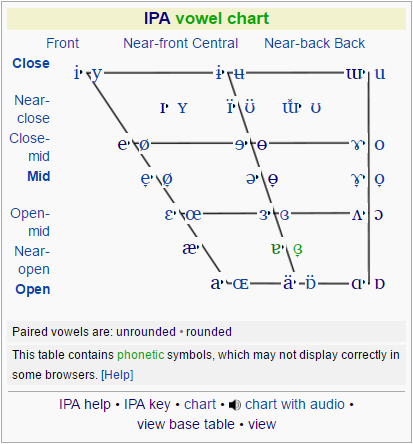
We can group these pure vowels into two main categories: long/tense vowels and short/lax vowels. Tense vowels require more muscle tension in your mouth and are typically longer. Lax vowels are quicker and more relaxed.
The difference between tense and lax vowels is often what separates words like 'sheep' and 'ship', or 'pool' and 'pull'.
| Tense (Long) Vowels | Example | Lax (Short) Vowels | Example |
|---|---|---|---|
| /iː/ | tree, sheep | /ɪ/ | ship, sit |
| /uː/ | blue, food | /ʊ/ | put, book |
| /ɑː/ | father, car | /æ/ | cat, back |
| /ɔː/ | thought, law | /ɒ/ | hot, not (in British English) |
| /ɜː/ | bird, nurse | /ə/ | about, sofa (the 'schwa' sound) |
| /ɛ/ | bed, head | ||
| /ʌ/ | cup, luck |
The most common vowel sound in English is /ə/, known as the schwa. It's the weak, unstressed sound you hear at the beginning of "about" and the end of "sofa." Learning to use the schwa correctly will instantly make your speech sound more natural, as it appears in thousands of words.
Gliding Vowels (Diphthongs)
Diphthongs are two vowel sounds fused into one. Your mouth starts in the position for one vowel and glides smoothly into the position for another, all within a single syllable. Think about the sound in the word "coin." You can feel your tongue and lips moving as you say it.
| Diphthong | Starting Sound → Ending Sound | Example Words |
|---|---|---|
| /eɪ/ | /e/ → /ɪ/ | pain, face, day |
| /aɪ/ | /a/ → /ɪ/ | time, my, buy |
| /oʊ/ or /əʊ/ | /o/ or /ə/ → /ʊ/ | go, note, boat |
| /aʊ/ | /a/ → /ʊ/ | now, house, cow |
| /ɔɪ/ | /ɔ/ → /ɪ/ | boy, noise, coin |
| /ɪər/ | /ɪ/ → /ər/ | near, here, beer |
| /ɛər/ | /ɛ/ → /ər/ | hair, care, there |
| /ʊər/ | /ʊ/ → /ər/ | poor, tour, sure |
The key to a good diphthong is the smooth glide. It's not two separate, choppy sounds. It's one continuous, changing sound. Practice saying them slowly at first, feeling the movement in your mouth, and then speed up until it feels like a single, fluid unit.
Ready to test your knowledge? This quiz will help you check your understanding of English vowels.
How are vowel sounds produced differently from consonant sounds?
What is a monophthong?
Consistent practice is the best way to internalize these sounds. Try listening for them in songs, movies, and conversations, and practice producing them yourself until they become second nature.