Mastering Spoken and Heard French
Understanding French Phonetics
The Music of French
Why do some French words sound so different from how they’re spelled? The answer lies in phonetics, the study of speech sounds. Unlike English, French has very consistent pronunciation rules. Once you learn the system, you can confidently pronounce words you’ve never seen before.
Think of it like learning musical notes. Each letter or combination of letters corresponds to a specific sound. Mastering these sounds is the first major step toward speaking French clearly and understanding it when you hear it.
Vowels and Consonants
French vowels are pure and crisp. They don't glide into other sounds like many English vowels do. For example, the English word "go" has a sound that moves from 'o' to 'w'. In French, the sound for 'o' is short and sharp. There are more vowel sounds in French than in English, which is why a single letter like 'e' can be pronounced in several ways (or not at all).
The good news is that most French consonants sound very similar to their English counterparts. A few are different. The French 'r' is produced in the back of the throat, not with the tip of the tongue like in English. Another key difference is that final consonants are often silent. For example, in trop (too much) and les (the), the 'p' and 's' are not pronounced.
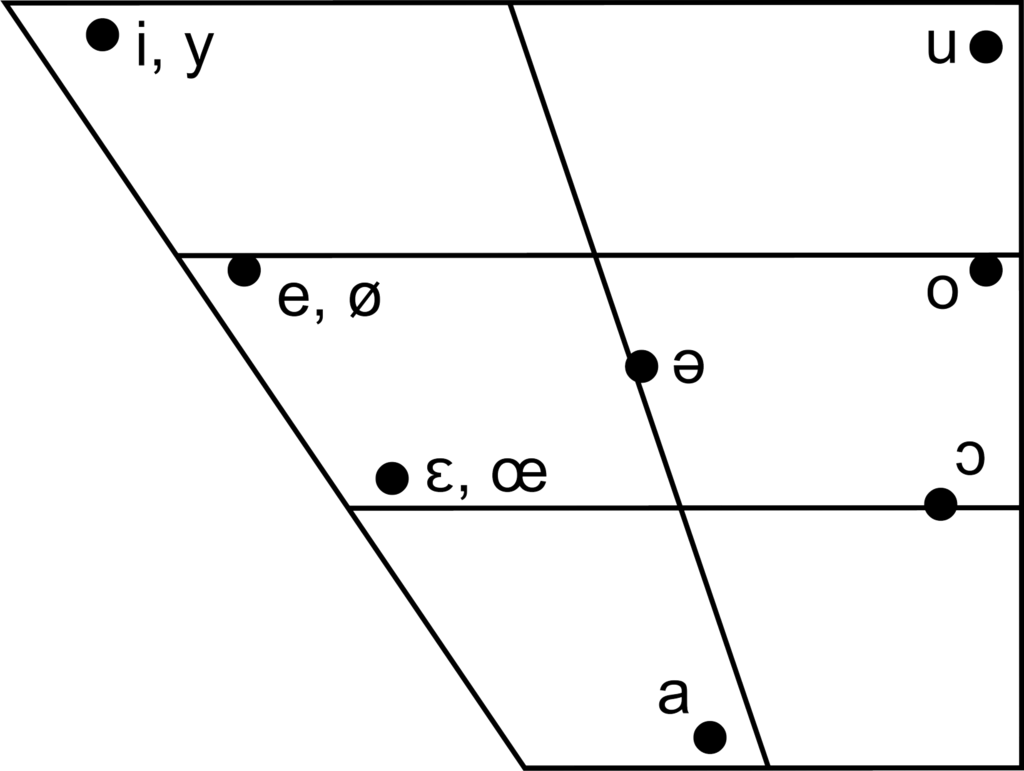
To help learners master these sounds, linguists created the International Phonetic Alphabet (IPA). Each symbol in the IPA represents exactly one sound. Learning the IPA for French is like getting a cheat sheet for pronunciation.
| Letter(s) | IPA Symbol | Example Word |
|---|---|---|
| a | /a/ | la (the) |
| i, y | /i/ | lit (bed) |
| ou | /u/ | nous (we) |
| é | /e/ | thé (tea) |
| è, ê | /ɛ/ | mère (mother) |
| o | /o/ | beau (beautiful) |
| u | /y/ | tu (you) |
| eu, œu | /ø/ | deux (two) |
The French 'u' sound /y/ can be tricky. Try saying the English 'ee' sound, but round your lips tightly as if you're about to whistle. That's the sound in tu.
Nasal Vowels
A signature feature of French is its nasal vowels. These are produced by passing air through both the mouth and the nose. In English, we do this at the end of words like "sing," but in French, the vowel itself is nasalized.
Nasal sounds happen when a vowel is followed by an 'n' or 'm' in the same syllable. The 'n' or 'm' isn't pronounced as a consonant; it just tells you to make the preceding vowel nasal.
| Spelling | IPA Symbol | Example Word | English Approximation |
|---|---|---|---|
| an, am, en, em | /ɑ̃/ | an (year), enfant (child) | The 'on' in "song" |
| on, om | /ɔ̃/ | on (we), nom (name) | The 'on' in "bonbon" |
| in, im, ain, aim, ein | /ɛ̃/ | vin (wine), pain (bread) | The 'an' in "sang" |
| un, um | /œ̃/ | un (a/one), parfum (perfume) | No direct English equivalent |
To practice, try saying a vowel like "ah" and then pinch your nose. Now, try to make the same sound but let air flow through your nose. You should feel a slight vibration. That's the beginning of a nasal vowel.
Making Connections
Spoken French flows smoothly because words are often linked together. This is achieved through liaisons and elisions.
liaison
noun
The pronunciation of a normally silent final consonant of a word when the next word begins with a vowel or silent 'h'.
Liaisons are mandatory in certain cases, like between a determiner and a noun (un ami), but optional in others. They are a key part of sounding natural.
Elision is a bit different. It's when a vowel at the end of a short word is dropped when the next word begins with a vowel sound. The dropped vowel is replaced by an apostrophe.
For example, le ami becomes l'ami (the friend), and je ai becomes j'ai (I have). This avoids a clash of vowel sounds and makes the phrase easier to say.
Now, let's review these core phonetic concepts.
Ready to test your understanding?
What is the primary reason that French pronunciation can seem inconsistent to an English speaker, according to the text?
Which of the following best describes a key difference between French and English vowels?
Consistently practicing these sounds is the best way to improve. Listen carefully to native speakers and try to mimic the way they connect words and produce vowels. It takes time, but your ear will adapt.