Mastering SPHR Certification
Strategic HR Management
Beyond Paperwork
Human Resources is often seen as the department that handles hiring, payroll, and compliance. While these administrative tasks are essential, they're only one piece of the puzzle. Strategic HR management elevates the role of HR from a support function to a core driver of business success.
Think of a company's overall business plan as a destination. The CEO and other leaders have decided where the company needs to go. Strategic HR is responsible for making sure the company has the right people, with the right skills, in the right roles to get there. It's about designing a people strategy that directly supports and enables the business strategy.
This means moving beyond reactive problem-solving and focusing on proactive, long-term planning for the organization's most valuable asset: its people.
Aligning People with Purpose
The foundation of strategic HR is alignment. Every HR initiative, from recruitment to performance reviews, should be a direct reflection of the company's broader objectives. This requires HR leaders to have a deep understanding of the business, its market, and its goals.
For example, if a tech company's strategic objective is to be the market leader in innovation, its HR strategy must support this. What does that look like in practice?
- Recruitment: Sourcing candidates from top engineering programs and competitors known for creativity.
- Compensation: Structuring pay and bonuses to reward experimentation and successful new product launches.
- Culture: Fostering an environment where taking calculated risks is encouraged and failure is treated as a learning opportunity.
Conversely, if a retailer's objective is to be the lowest-cost provider, its HR strategy would look very different. The focus would be on operational efficiency, process improvement training, and staffing models that minimize labor costs while maintaining customer service.
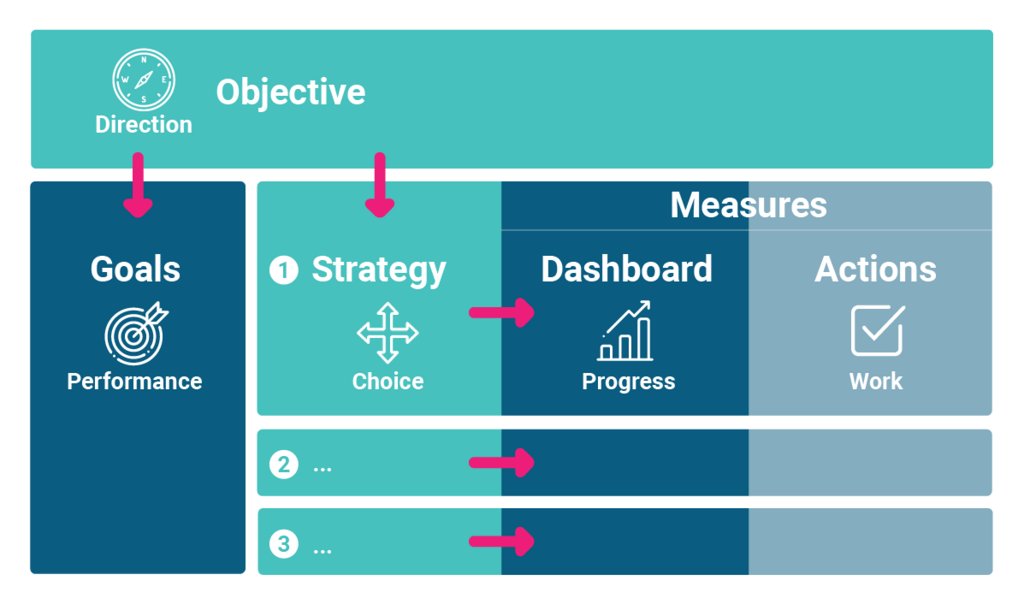
Strategic Alignment ensures that the program’s objectives are directly connected to the overall goals of the organization.
Building the Team for Tomorrow
A key part of strategic HR is looking ahead. Workforce planning isn't just about filling today's open positions; it's about anticipating the skills and roles the organization will need in the future. HR leaders must ask questions like:
- What new technologies will impact our industry in the next five years?
- What skills will our employees need to stay competitive?
- Which roles are at risk of becoming obsolete, and how can we reskill those employees?
This forward-looking approach is tied to talent management, which is the complete process of attracting, developing, retaining, and transitioning employees. It involves creating clear career paths so employees can see a future for themselves at the company. It also includes robust succession planning to identify and develop the next generation of leaders, ensuring the organization has a strong leadership pipeline.
Shaping a High-Performing Culture
Organizational development (OD) is the work of improving an organization's overall health and effectiveness. Strategic HR uses OD to shape a culture that supports business goals. This can involve anything from designing team structures that foster collaboration to managing the human side of a major change, like a merger or acquisition.
A strategic HR leader acts as a trusted advisor to the executive team. They use data and insights about the workforce to inform business decisions. They have a seat at the table not just to talk about people, but to contribute to discussions about market expansion, product development, and financial performance. This strategic mindset is what transforms HR from a cost center into a value creator.
Ready to test your understanding of strategic HR?