Mastering Spatial Intelligence
Introduction to Spatial Intelligence
What is Spatial Intelligence?
Have you ever easily navigated a new city just by looking at a map once? Or pictured how to rearrange your furniture to perfectly fit your space? If so, you were using your spatial intelligence. It’s the ability to think in three dimensions. It lets you visualize objects, shapes, and spaces in your mind's eye.
Think of it as your brain’s internal GPS and 3D modeling software, all rolled into one. It allows you to mentally rotate objects, gauge distances, and understand how different parts of a system fit together.
This isn't just about being good with maps. Spatial intelligence is a fundamental way we interact with the world. It helps us understand our position relative to other objects and navigate our surroundings, from walking across a room to driving a car.
More Than Just Directions
We use spatial skills constantly in everyday life, often without realizing it. Packing a suitcase efficiently, assembling flat-pack furniture, or even playing a game of chess requires a strong sense of spatial awareness. It's the skill that helps a painter compose a scene or a dancer move gracefully across a stage.
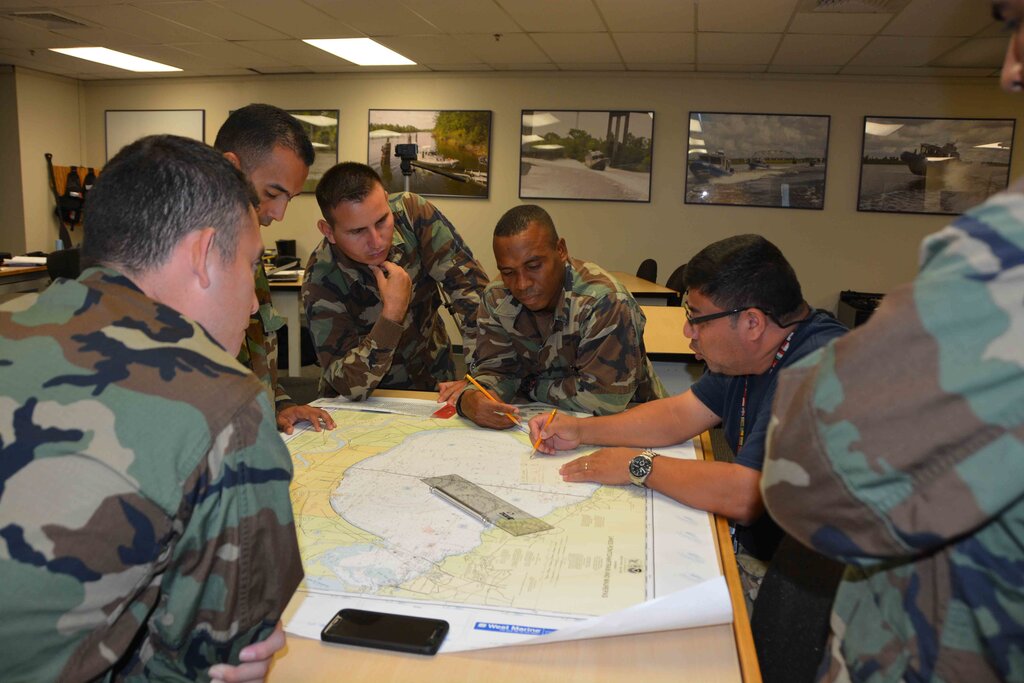
In the professional world, spatial intelligence is critical. Architects and engineers visualize complex structures before they're built. Surgeons must understand the three-dimensional relationships of organs within the body. Pilots and air traffic controllers constantly track the positions of aircraft in the sky. Even fields like fashion design and urban planning depend heavily on these abilities.
How Your Brain Sees the World
Several cognitive processes work together to form our spatial intelligence. One key process is mental rotation, the ability to imagine what an object would look like from a different angle without physically turning it. It’s what you do when you try to solve a Rubik's Cube or figure out which key on your keychain fits a lock.
Another process is spatial working memory, which lets us temporarily hold and manipulate spatial information. When someone gives you verbal directions, you use your spatial working memory to create a mental map of the route. This skill is also what allows you to remember where you left your keys or to retrace your steps when you've lost something.
A Key to STEM Success
Strong spatial reasoning is a powerful predictor of success in Science, Technology, Engineering, and Mathematics (STEM). This connection makes sense when you consider what these fields demand.
Chemists must visualize molecules in 3D to understand their interactions. Geologists interpret 2D maps to understand the 3D structure of the earth. Engineers design everything from microchips to bridges by manipulating shapes and structures in their minds and on computers.
In mathematics, spatial skills help with understanding geometry and visualizing complex functions. In computer science, they aid in designing algorithms and understanding data structures. The ability to think spatially allows professionals in these fields to see patterns, solve complex problems, and innovate. It’s a foundational skill that helps turn abstract concepts into tangible realities.
Now, let's test your understanding of these concepts.
Which of the following best describes spatial intelligence?
The cognitive process of imagining an object from a different viewpoint without physically moving it is known as ______.
Spatial intelligence is a fascinating cognitive ability that blends perception, memory, and problem-solving, helping us navigate and shape the world around us.