Mastering Spanish From Zero to Conversational Fluency
Spanish Pronunciation
The Spanish Alphabet
The Spanish alphabet is almost identical to the English one, which is great news. It makes getting started much easier. For a long time, Spanish had 29 letters, but in 2010, the official alphabet was trimmed down to 27 letters, just like English, plus the unique letter ñ.
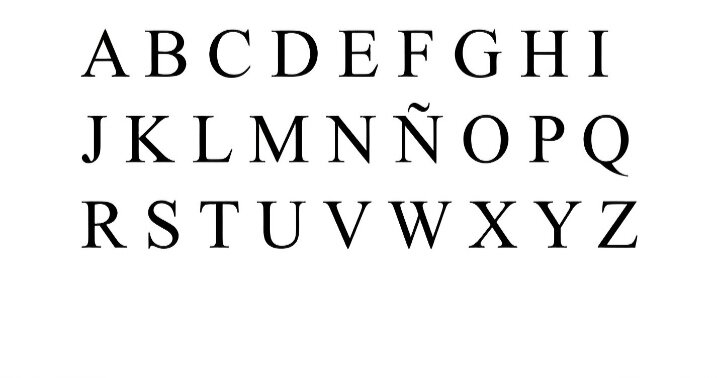
The letters ch (like in chocolate) and ll (like in llama) used to be considered separate letters, but now they're just pairs of letters. However, their unique sounds are still very important. The star of the show is the ñ, which is a completely separate letter from n.
The Five Vowel Sounds
Here's one of the best things about Spanish pronunciation: the vowels are simple and consistent. Each vowel has one, and only one, sound. Unlike English, where 'a' can sound different in 'cat,' 'car,' and 'cake,' in Spanish, an a is always an a.
The cornerstone of Spanish pronunciation lies in mastering the five pure vowels: A, E, I, O, and U.
Once you learn these five sounds, you can correctly pronounce the vowels in any Spanish word you see. Let's break them down.
| Vowel | Sound like... | Example Word |
|---|---|---|
| A | the 'a' in "father" | amigo (friend) |
| E | the 'e' in "they" | elefante (elephant) |
| I | the 'ee' in "see" | si (yes) |
| O | the 'o' in "go" | hola (hello) |
| U | the 'oo' in "moon" | uno (one) |
That's it. Practice these five pure sounds. They are the foundation of clear Spanish pronunciation.
Key Consonant Sounds
Many Spanish consonants sound just like their English counterparts, such as m, p, t, and f. But a few are different and need special attention. Mastering these will make a huge difference in how well you're understood.
Here are the most important consonants to focus on.
| Letter(s) | Sound | Example |
|---|---|---|
| C | Like 'k' before a, o, u. Like 's' before e, i. | casa, comer, cubo; cena, cine |
| G | Like 'g' in 'go' before a, o, u. Like 'h' in 'hat' before e, i. | gato, gota, gusto; gente, gigante |
| H | Always silent. | hola, hotel, hoy |
| J | Like the 'h' in 'hat'. | jamón, viaje |
| LL | Like the 'y' in 'yes'. | llama, calle |
| Ñ | Like the 'ny' in 'canyon'. | año, español |
| R / RR | A light tap of the tongue for a single r. A strong trill for rr or r at the start of a word. | pero, caro; perro, rojo |
| Z | Like the 's' in 'see'. (In Spain, it's like 'th' in 'think'). | azul, corazón |
Rules of Stress
Knowing which syllable to emphasize, or stress, is key to sounding natural. Thankfully, Spanish has very consistent rules for this. The rules depend on the last letter of the word.
Rule 1: If a word ends in a vowel, -n, or -s, the stress falls on the second-to-last syllable. Examples: ca-sa, ha-blan, li-bros
Rule 2: If a word ends in any other consonant, the stress falls on the last syllable. Examples: ha-blar, fe-liz, pa-pel
But what about words that don't follow these rules? That's where accent marks come in. An accent mark (´), called a tilde, tells you exactly which syllable to stress, overriding the rules above.
For example, the word teléfono (telephone) ends in a vowel, so it should have stress on the second-to-last syllable (fo). But the accent on the 'e' tells you to stress that syllable instead: te-lé-fo-no.
Ready to test your knowledge? Let's see what you've learned.
How many letters are in the official Spanish alphabet as of 2010?
In Spanish, the vowel 'a' has multiple different pronunciations depending on the word, just like in English.
Mastering these fundamentals is the first and most important step. With consistent sounds and clear rules, you're well on your way to speaking and reading Spanish with confidence.