Mastering Sourdough Bread Techniques
Starter Microbiology
The Starter Ecosystem
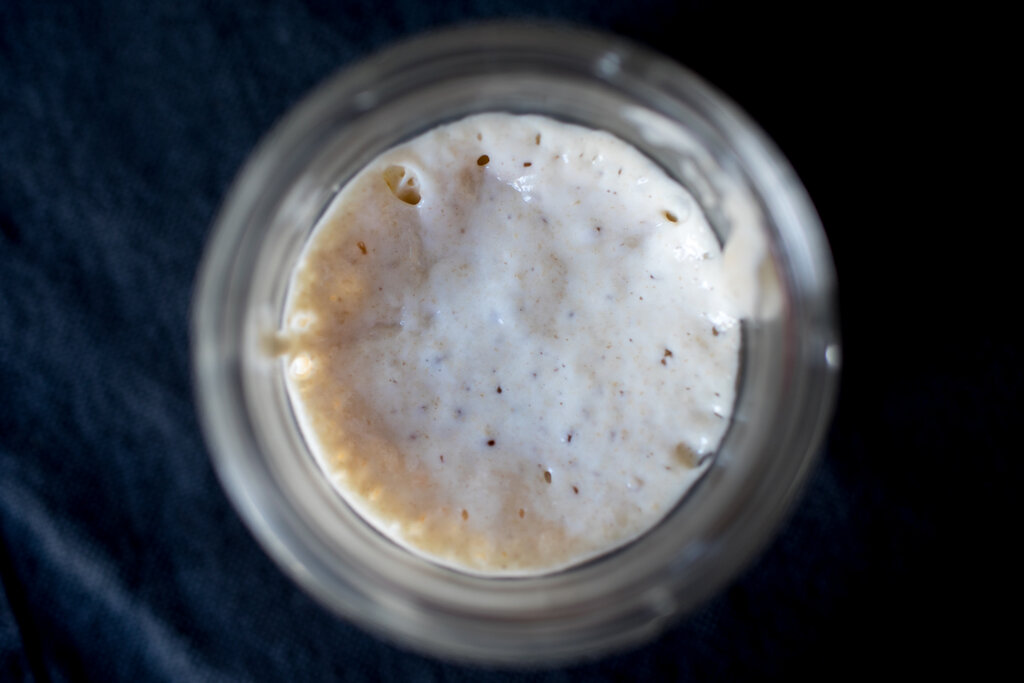
A mature sourdough starter is more than just a mix of flour and water; it's a bustling, symbiotic city of microorganisms. The two primary residents are wild yeasts (like Saccharomyces cerevisiae) and (LAB). These aren't competitors, but partners working together to create the leavening and flavor unique to sourdough.
The yeast's main job is to consume simple sugars in the flour and produce carbon dioxide and ethanol. The CO2 gas gets trapped in the gluten network, causing the dough to rise. The LAB, in turn, consume sugars that the yeast can't, and they produce lactic and acetic acids. This acidification lowers the dough's pH, which not only adds flavor but also protects the starter from unwanted mold and pathogens. It's a self-preserving system.
Tuning Your Flavor Profile
The balance between lactic and acetic acid is what allows a baker to control the final flavor of their bread. This balance is not random; it's a direct result of the conditions you create for your starter, primarily temperature.
Warmer fermentation temperatures (around 78-85°F or 25-29°C) favor the LAB that produce milder lactic acid, leading to a less tangy, more creamy-tasting loaf. Cooler temperatures (around 65-70°F or 18-21°C) give the acetic acid-producing bacteria an edge, resulting in a bread with a more pronounced, vinegary tang.
Think of it this way: a warm proof creates a mellow loaf, while a cool proof creates a sharp one.
Feeding, Ratios, and Peak Activity
How you feed your starter, often called a when prepared for a bake, directly impacts its behavior and flavor contribution. The feeding ratio, expressed as starter:flour:water by weight, determines the timeline of fermentation. A common starting point is a 1:2:2 ratio. This means for every 10g of starter, you add 20g of flour and 20g of water.
A smaller feed (like 1:1:1) will peak very quickly, as the high concentration of microbes rapidly consumes the small amount of fresh flour. A larger feed (like 1:5:5) dilutes the microbial population, giving them a much larger food source. This slows fermentation, taking longer to peak but often resulting in a stronger, more vigorous rise with a milder flavor profile.
| Ratio (Starter:Flour:Water) | Peak Time | Flavor Impact |
|---|---|---|
| 1:1:1 | Fast (2-4 hours) | More acidic, tangier |
| 1:2:2 | Medium (4-8 hours) | Balanced, classic sourdough |
| 1:5:5 | Slow (8-12+ hours) | Milder, less sour |
Using your starter at its 'peak' is crucial. This is the point when it has risen to its maximum height, is full of bubbles, and has a domed top. At this stage, the yeast is most active and ready to leaven your dough. If you wait too long, the starter will begin to fall, indicating the microbes have run out of food and the culture is becoming overly acidic.
Flour Choice and Dough Feel
The type of flour you use to feed your starter matters. Whole grain flours like rye and whole wheat contain more minerals and a wider variety of microbes than white flour. This extra nutrition acts like a turbo-boost for your starter, speeding up fermentation. Many bakers maintain their primary starter with white flour for consistency but build their levain with a percentage of whole grains to increase activity before a bake.
The microbial activity also directly impacts dough rheology—the way dough stretches and flows. As LAB produce acids, the pH of the dough drops. This tightens the gluten network, making it stronger and more elastic. However, if fermentation goes too far, the high acidity triggers enzymes (proteases) that begin to break down gluten, turning your strong, elastic dough into a sticky, soupy mess. This is why managing fermentation time and temperature is the key to both flavor and structure.
What are the two primary types of microorganisms that work in symbiosis within a mature sourdough starter?
A baker wants to achieve a milder, more creamy-flavored sourdough loaf. Which fermentation temperature range should they aim for to favor the production of lactic acid over acetic acid?
Mastering these microbial relationships gives you ultimate control over your final loaf, allowing you to dial in the perfect flavor and texture.