Mastering Sound Design for Media
Sound Design Fundamentals
The Unseen Art
In the early days of cinema, films were silent. Music was often played live in the theater to accompany the on-screen action, but the world of the film itself was quiet. That all changed in 1927 with The Jazz Singer, the first feature-length “talkie.” Suddenly, sound wasn’t just an accompaniment; it was part of the story.
This shift marked the birth of sound design, though the term itself wouldn't be coined until decades later. Pioneers like Murray Spivack created the roars for King Kong (1933) by mixing lion and tiger growls and playing them backward. Later, visionaries like Walter Murch (Apocalypse Now) and Ben Burtt (Star Wars) elevated the craft, treating sound as an equal partner to the visuals. They didn't just record sounds; they designed entire auditory worlds, from the hum of a lightsaber to the thwump of helicopter blades.
More Than Just Noise
Sound does more than just tell you what's happening. It tells you how to feel. A creaking door in an empty house creates suspense. The swell of an orchestral score during a reunion scene amplifies joy. Our brains are wired to react to audio cues, often on a subconscious level.
Think of a horror movie without its eerie music and sudden, sharp noises. It wouldn't be nearly as scary. Or a comedy without the perfectly timed sound effects that punctuate a joke. Sound gives scenes emotional weight and context. It can establish a location, signal a change in mood, or draw your attention to a critical detail. This psychological power is the sound designer's greatest tool.
The Building Blocks
Effective sound design is built from several key components layered together to create a full, immersive experience. Understanding these basic elements is the first step in learning how to craft a sonic landscape.
| Element | Description |
|---|---|
| Dialogue | Any spoken words by characters. This is often the primary carrier of the narrative. |
| Music | The score or soundtrack that sets the mood, enhances emotion, and provides rhythm. |
| Sound Effects (SFX) | Sounds that are artificially created or enhanced, like explosions or laser blasts. |
| Foley | Sounds created in a studio to sync with the actions of characters, like footsteps or rustling clothes. |
| Ambience | The background sounds that establish a location, such as birds chirping in a forest or traffic in a city. |
Each element serves a specific purpose. Dialogue drives the plot, music guides emotion, and effects add realism or fantasy. Foley artists bring characters' movements to life, while ambient tracks ground the scene in a believable space. A skilled sound designer blends these layers seamlessly, so the audience isn't just watching a story—they're experiencing it.
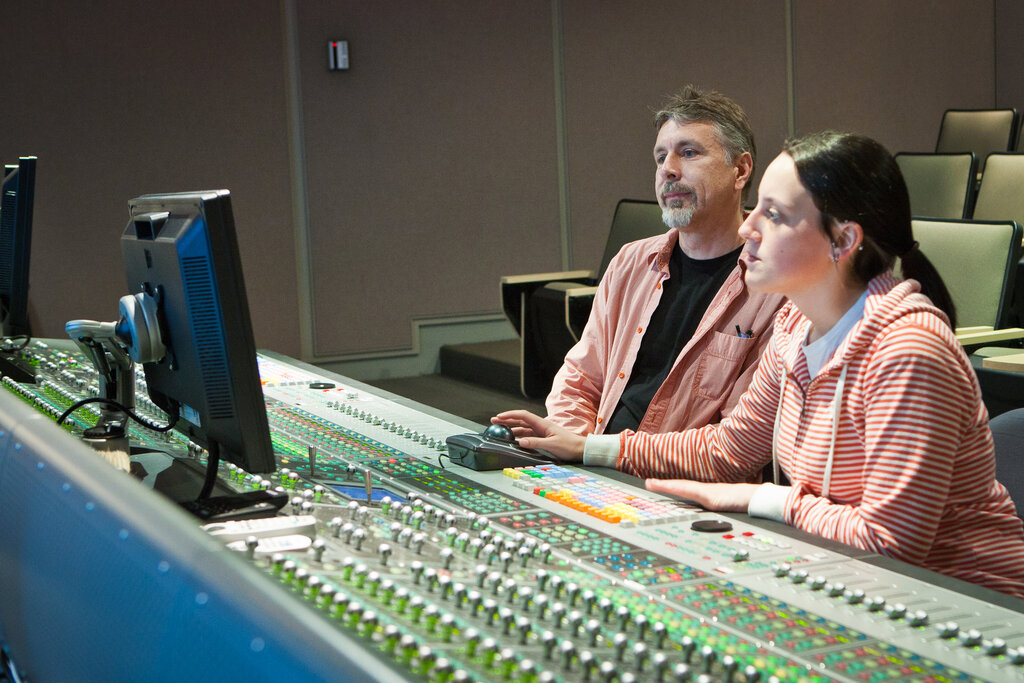
Students will gain an understanding of the types of sound used in these productions and their role in storytelling.
Now, let's test your knowledge of these foundational concepts.
Which film is widely recognized as the first feature-length "talkie," marking the beginning of the sound era in cinema?
What is the primary psychological function of sound design in a film?
By mastering these basic elements and understanding their psychological impact, you can begin to see—and hear—how sound shapes the media we consume every day.