Mastering Social Media Marketing
Introduction to Social Media Marketing
More Than Just Posts
Social media marketing is the practice of using social platforms to connect with an audience, build a brand, and drive sales. It’s not just about posting updates or pretty pictures. It’s about creating a conversation and building a community around your business or idea.
At its core, social media marketing is about meeting people where they are and giving them a reason to connect with you.
Think of it this way: traditional advertising is like shouting with a megaphone at a crowd. Social media marketing is like joining a discussion at a party. You listen, you share, and you build relationships. This shift has made it an essential part of how businesses communicate in the digital age.
A Quick Trip Through Time
It wasn't always like this. Early social platforms were mainly for connecting with friends. Think of the days of MySpace or early Facebook, where the goal was to share personal updates with people you already knew. Over time, these platforms exploded in size and scope.
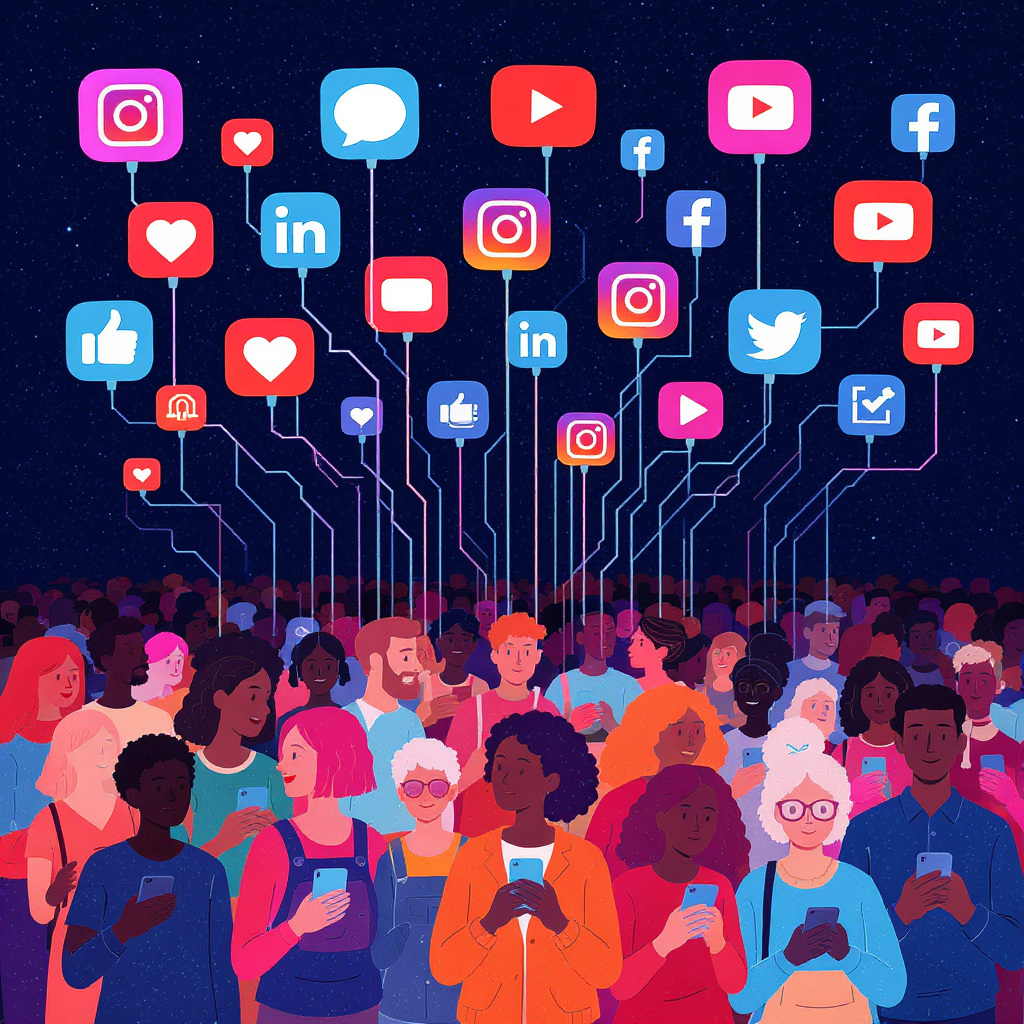
Today, we have a huge ecosystem of platforms, each with its own culture. From the visual storytelling of Instagram to the professional networking of LinkedIn and the short-form videos of TikTok, the landscape is vast and constantly changing. This evolution turned social media from a simple social tool into a powerful engine for business, culture, and communication.
Changing How We Choose
The rise of social media has fundamentally changed how we make decisions. Before, you might see a TV commercial or a newspaper ad. That was a one-way street; the company talked, and you listened.
Now, the conversation is a two-way dialogue. People discover new products through influencers they follow, ask brands questions directly in comments, and share their own reviews with a global audience. Your friend's post about a great new coffee shop carries more weight than a billboard.
Social media platforms have permeated every aspect of modern life in the digital age, profoundly impacting communication, information consumption, & decision-making.
This shift gives consumers more power. They can research, compare, and get real-world opinions before ever spending a dollar. For businesses, this means reputation is more important than ever. A great customer experience can be shared widely, but so can a poor one.
Why Businesses Bother
So, why do businesses invest time and money into social media? The benefits are clear and direct. It’s one of the most effective ways to reach goals that once required huge budgets.
| Benefit | What It Means |
|---|---|
| Brand Visibility | Being where your audience spends their time. It’s like setting up a shop in the busiest town square. |
| Customer Engagement | Having a direct line to customers to answer questions, share news, and build a connection. |
| Direct Feedback | Getting instant, unfiltered opinions on products and services to learn and improve. |
Beyond these core benefits, social media allows businesses to tell their story in their own voice. It’s a space to show the people and values behind the brand, not just the products they sell.
Authenticity and consistency are the two pillars of building trust on social media.
Authenticity means being genuine. People connect with realness, not a corporate robot. It's about having a consistent voice, personality, and look that feels true to your brand. Consistency means showing up regularly. Building an audience takes time, and posting reliably keeps you on their radar and reinforces your message. Together, these principles turn followers into a loyal community.
Ready to test your knowledge on these foundational concepts?
Which analogy best describes the difference between traditional advertising and social media marketing?
True or False: The primary purpose of early social media platforms like MySpace was for businesses to market their products.