Mastering Soccer Formations
Introduction to Soccer Formations
What is a Formation?
A soccer formation is the way a team's players, except for the goalkeeper, are arranged on the field. Think of it as a team's blueprint for a match. It provides structure, helps balance defense and attack, and gives each player a clear role and starting position.
Formations are described by a series of numbers that represent defenders, midfielders, and forwards. For example, a 4-4-2 formation means there are four defenders, four midfielders, and two forwards. The goalkeeper isn't included in this count; they have their own unique position.
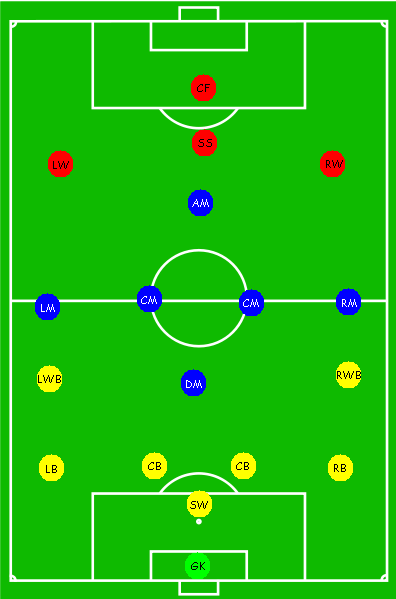
This numerical shorthand gives a quick snapshot of a team's general strategy. It tells you how many players are assigned to defending, controlling the middle of the field, and trying to score.
A Quick Trip Through Time
In the early days of soccer, strategy was simple: score as many goals as possible. Formations were incredibly aggressive, with some teams playing with as many as eight forwards. The game was chaotic and heavily focused on attacking, with little thought given to organized defending.
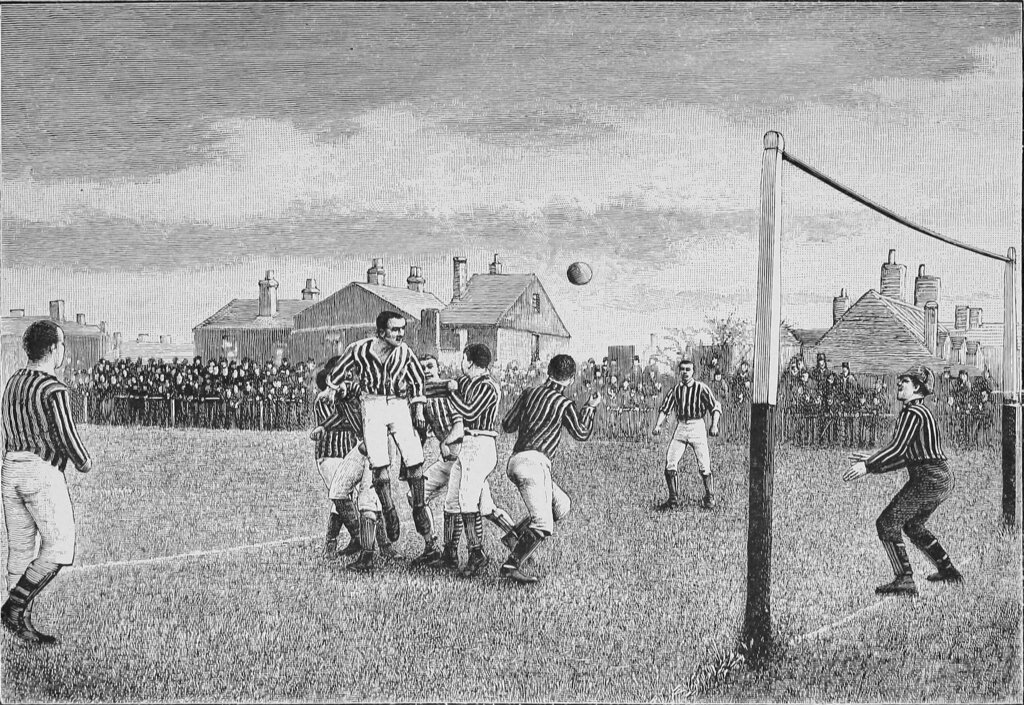
Over time, coaches realized that a strong defense was just as important as a potent attack. Formations began to evolve to be more balanced. The introduction of the back-pass rule and the offside rule also forced tactical shifts. Defenses became more organized, and the midfield emerged as the crucial link between stopping goals and creating them.
This led to the rise of balanced formations like the classic 4-4-2, which provided solid defensive cover and multiple attacking options. In modern soccer, formations are more fluid than ever. Teams might start with one formation but change their shape multiple times during a game to react to what's happening on the field.
Formations, Strategy, and Roles
A team's formation is a direct reflection of its intended strategy. A team looking to sit back, absorb pressure, and hit on the counter-attack might use a formation with five defenders. In contrast, a team that wants to dominate possession and press high up the field will likely choose a formation with more midfielders and forwards, like a 4-3-3.
The formation sets the tone. Is the team built to be a brick wall in defense, or an all-out attacking force?
The formation also defines a player's specific job. A wide player in a 4-4-2, known as a wide midfielder, has significant defensive responsibilities. They are expected to track back and help their fullback. But a wide player in a 4-3-3, known as a winger, is primarily an attacker, tasked with scoring goals and creating chances for the central striker.
This simple choice of how to arrange 10 players on a field shapes everything that happens in the 90 minutes of a match. It’s the starting point for all the tactics and drama that make soccer so compelling.
Ready to test your knowledge? Let's see what you've learned about formations.
In a 4-5-1 soccer formation, what do the numbers represent?
A team plans to play defensively, absorb pressure, and score on the counter-attack. Which formation are they most likely to choose?
Understanding formations is the first step to seeing the deeper, strategic side of soccer. It turns watching a game from a simple back-and-forth into a fascinating tactical battle.