Mastering Sleep with Matt Walker
Understanding Sleep
More Than Just Rest
Sleep feels like hitting the off switch on your brain, but it’s anything but passive. While you're unconscious, your brain and body are hard at work performing critical maintenance tasks. This active process is organized into a predictable pattern, cycling through different stages all night long.
The two main types of sleep are Non-Rapid Eye Movement (NREM) and Rapid Eye Movement (REM). You'll experience both multiple times before your alarm goes off, each playing a distinct role in helping you recover and recharge.
The Journey Through Sleep
A full night's sleep isn't a single, monolithic state. Instead, you journey through several stages, each with unique characteristics. A complete sleep cycle lasts about 90 minutes and repeats throughout the night.
NREM sleep is divided into three parts:
-
N1 (Light Sleep): This is the brief, drowsy stage right after you close your eyes. Your muscles relax, and your brain waves start to slow down. It's easy to be woken up during N1 sleep.
-
N2 (Deeper Sleep): You spend the most time in this stage. Your body temperature drops and your heart rate slows. Your brain produces short bursts of rapid activity called sleep spindles, which are thought to be involved in memory consolidation.
-
N3 (Deep Sleep): This is the most restorative stage, also known as slow-wave sleep. It's very difficult to wake someone from N3 sleep. During this time, the body repairs tissues, builds bone and muscle, and strengthens the immune system.
After progressing through the NREM stages, you enter REM sleep.
REM sleep is when most vivid dreaming occurs. Your eyes move rapidly back and forth behind your eyelids, your breathing becomes faster and irregular, and your brain activity looks similar to when you're awake. To keep you from acting out your dreams, your body's major muscles are temporarily paralyzed.
As the night progresses, the structure of these cycles changes. You experience more deep sleep (N3) in the first half of the night and longer periods of REM sleep in the second half, closer to when you wake up.
Your Body's Internal Clock
Why do you feel sleepy at night and alert during the day? This is governed by your body's internal 24-hour clock, known as the circadian rhythm.
circadian rhythm
noun
A natural, internal process that regulates the sleep-wake cycle and repeats on each rotation of the Earth, roughly every 24 hours.
This master clock is located in a part of your brain called the suprachiasmatic nucleus (SCN). The SCN is highly sensitive to light. When light enters your eyes, it signals to the SCN that it's daytime, promoting wakefulness. In the absence of light, the SCN tells your brain to release melatonin, a hormone that makes you feel sleepy.
This central clock in your brain also coordinates countless other clocks in organs throughout your body, from your liver to your digestive system. This ensures all your body's processes are running on a synchronized schedule.
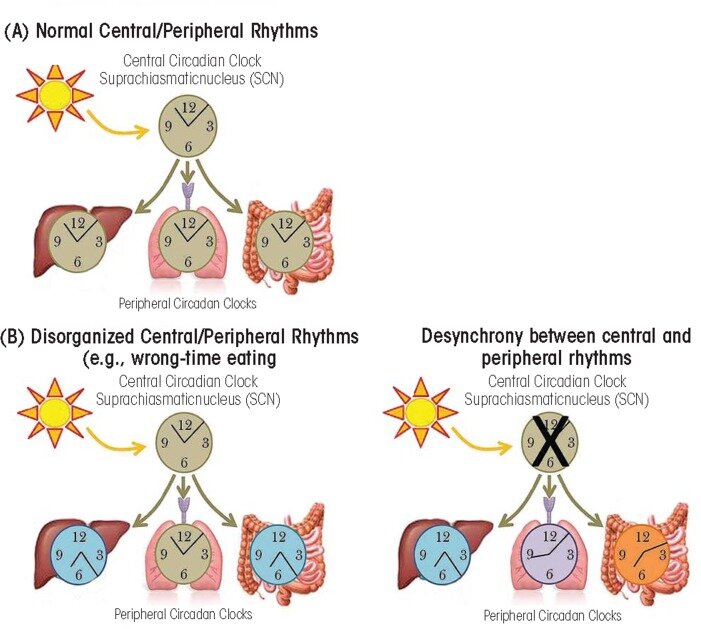
Maintaining a regular sleep schedule helps keep this internal timing system running smoothly. When your circadian rhythm is aligned with the daily cycle of light and dark, it's easier to fall asleep at night and wake up feeling refreshed.
Sleep's Impact on Health
Getting enough quality sleep is not a luxury; it's a biological necessity. While you sleep, your brain is busy processing the day's events. It strengthens important neural connections, forming new memories, and clears out irrelevant information and toxic byproducts that accumulate during waking hours.
This process, known as memory consolidation, is why a good night's sleep can help you solve a tricky problem or remember things you've studied. Deep sleep and REM sleep are both crucial for different types of learning and memory.
Sleep is crucial for memory consolidation, underpinning effective learning.
Sleep's benefits extend far beyond the brain. It's essential for physical health, too. During deep sleep, your body releases growth hormone to repair muscles and tissues. Your immune system gets stronger, helping you fight off infections. Sleep also helps regulate appetite hormones and blood pressure, contributing to heart health and metabolic stability.
In short, sleep is a cornerstone of cognitive function, emotional well-being, and physical vitality. Understanding its fundamental workings is the first step toward appreciating its profound impact on your daily life.
Time to check what you've learned about the science of sleep.
Which stage of sleep is considered the most restorative, during which the body repairs tissues and strengthens the immune system?
What is the primary environmental cue that regulates your body's internal 24-hour clock, or circadian rhythm?