Mastering Sleep for Peak Performance
Understanding Sleep
The Biological Necessity of Sleep
Sleep isn't just a period of inactivity. It's a fundamental biological drive, as essential for survival as food and water. While we rest, our bodies are hard at work performing critical maintenance that keeps us running at peak performance. This active state is crucial for conserving energy, repairing cells, and maintaining the intricate network of our brain.
Think of it as a nightly tune-up. During sleep, your body repairs muscles, strengthens its immune defenses, and balances hormones that regulate appetite and stress. Without this process, our physical and mental systems start to break down.
Sleep is foundational to good health, impacting everything from cognitive function and mood to cardiovascular health and immune function.
This nightly restoration is guided by our internal 24-hour clock, known as the circadian rhythm, which signals when it's time to power down. Ignoring these signals disrupts a host of vital functions.
The Architecture of Sleep
Sleep isn't a single, monolithic state. Instead, it's a structured journey through several distinct stages, which together form a sleep cycle. A typical night consists of four to six of these cycles, each lasting about 90 minutes.
There are two main types of sleep: Non-Rapid Eye Movement (NREM) sleep and Rapid Eye Movement (REM) sleep. NREM is further divided into three stages, each progressively deeper than the last.
NREM Stage 1 (N1): This is the brief, drowsy stage of light sleep, the transition from wakefulness. Your muscles relax, and your brain waves start to slow down. It's easy to be woken up from this stage.
NREM Stage 2 (N2): You spend about half your total sleep time in this stage. Your body temperature drops and your heart rate slows. Your brain produces rapid, rhythmic bursts of activity called sleep spindles, which are thought to be involved in processing memories.
NREM Stage 3 (N3): This is deep, slow-wave sleep. It's most prominent in the first half of the night. During N3, the body performs its most restorative work: repairing tissues, building bone and muscle, and strengthening the immune system. Waking from this stage leaves you feeling groggy and disoriented.
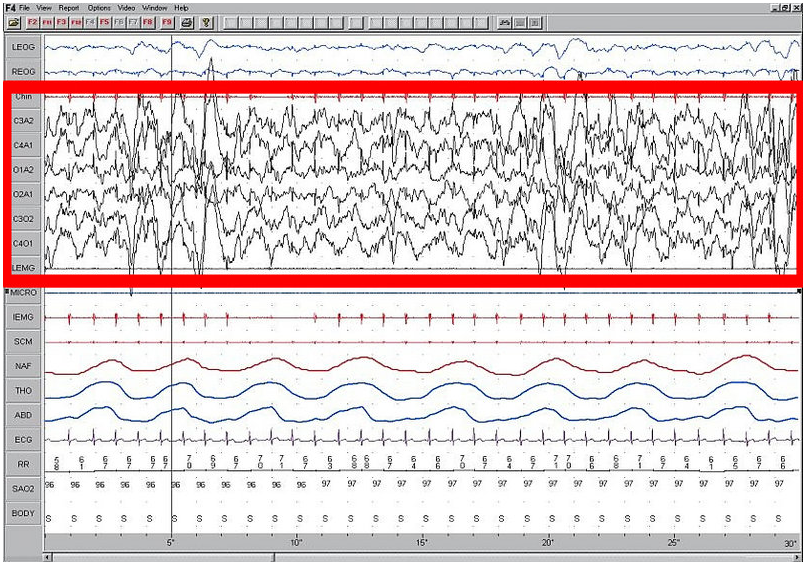
REM Sleep: About 90 minutes after falling asleep, you enter your first REM cycle. Your breathing becomes faster and irregular, your heart rate and blood pressure rise to near-waking levels, and your eyes dart back and forth. This is when most vivid dreaming occurs. To prevent you from acting out these dreams, your brain paralyzes your voluntary muscles.
Atonia
noun
The temporary, protective paralysis of voluntary muscles that occurs during REM sleep.
The Brain on Sleep
Sleep plays a housekeeping role that is vital for cognitive function. One of its most important jobs is memory consolidation. During the day, you accumulate countless experiences and facts. At night, your brain sorts through this information, transferring important memories from fragile, short-term storage to more robust, long-term networks. Slow-wave sleep (N3) seems crucial for cementing facts and knowledge, while REM sleep helps with procedural skills and emotional memories.
Beyond memory, sleep is when the brain cleans itself. The glymphatic system, a waste-clearance network, is most active during sleep. It flushes out metabolic byproducts that accumulate between brain cells during waking hours. This process helps maintain brain health and clear out potentially harmful toxins.
Emotional regulation is another key function. REM sleep, in particular, helps process the day's emotional experiences. It seems to strip away the intense feelings associated with memories, allowing you to learn from events without being overwhelmed by them. A good night's sleep helps reset your emotional compass, leading to a calmer, more balanced mood the next day.
Impact on Health
The benefits of sleep extend throughout the entire body. A well-rested immune system is more robust. During sleep, your body produces and releases cytokines, proteins that target infection and inflammation, creating an effective immune response. This is why you often feel the urge to sleep more when you're sick.
Sleep also influences the hormones that regulate hunger: ghrelin, which signals you're hungry, and leptin, which signals you're full. Proper sleep keeps these in balance, helping to maintain a healthy metabolism. Finally, the release of growth hormone during deep sleep is essential for repairing everything from skin cells to muscles after a workout.
Which statement best describes the fundamental role of sleep?
During which stage of sleep does the body perform its most significant restorative work, such as repairing tissues and strengthening the immune system?
Understanding the function of sleep is the first step toward improving it. It's an active, essential process that dictates how we think, feel, and perform.