Mastering Sleep for Peak Performance
Understanding Sleep Basics
The Stages of Sleep
Sleep isn't just one continuous state of rest. Your brain and body go through several distinct phases throughout the night. These are broadly categorized into two types: Non-Rapid Eye Movement (NREM) sleep and Rapid Eye Movement (REM) sleep. Most of your night is spent in NREM sleep, which is divided into three stages.
Stage N1 (NREM): This is the very light sleep you experience as you're dozing off. You might twitch, and you can be woken up easily. This stage usually only lasts for a few minutes.
Stage N2 (NREM): You're now in a more stable sleep. Your body temperature drops, your heart rate slows, and your brain waves become less active. This stage accounts for the largest portion of your total sleep time.
Stage N3 (NREM): This is the deepest stage of sleep. It's much harder to wake someone from this stage, and if you are, you'll likely feel groggy and disoriented. N3 sleep is critical for physical restoration. During this time, your body repairs tissues, builds bone and muscle, and strengthens the immune system.
Stage N3 is often called 'slow-wave sleep' because of the distinct, slow brain waves that occur.
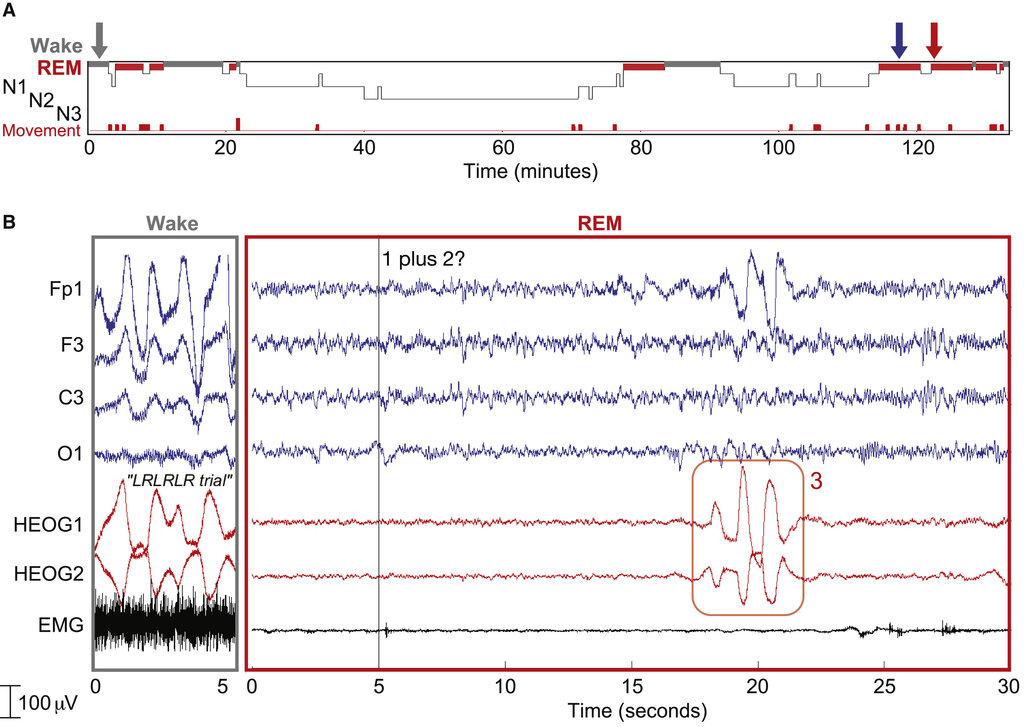
REM Sleep: About 90 minutes after you fall asleep, you enter your first REM stage. Your eyes move rapidly back and forth behind your eyelids, which gives this stage its name. Brain activity picks up to levels similar to when you're awake. This is when most of your vivid dreaming happens. Your muscles become temporarily paralyzed, which prevents you from acting out your dreams. REM sleep is crucial for memory consolidation and emotional regulation.
Sleep Cycles
Your night of sleep is structured in repeating cycles. You progress through the NREM stages (N1, N2, N3), then back up through N2, and finally enter a period of REM sleep. One complete cycle takes about 90 to 110 minutes.
As the night goes on, the composition of these cycles changes. In the first half of the night, you spend more time in deep N3 sleep. In the second half, your REM stages get longer, and your N3 stages get shorter or may disappear entirely. This is why you often wake up from a dream in the morning.
How Much Sleep Do You Need?
The amount of sleep you need changes significantly throughout your life. Children and teenagers need more sleep than adults because of rapid physical and mental development. The following table provides general guidelines.
| Age Group | Recommended Hours of Sleep |
|---|---|
| Newborns (0-3 months) | 14–17 hours |
| Infants (4-11 months) | 12–15 hours |
| Toddlers (1-2 years) | 11–14 hours |
| Preschoolers (3-5 years) | 10–13 hours |
| School-age (6-13 years) | 9–11 hours |
| Teenagers (14-17 years) | 8–10 hours |
| Adults (18-64 years) | 7–9 hours |
| Older adults (65+ years) | 7–8 hours |
Why Sleep Matters
Getting enough quality sleep is not a luxury; it's a biological necessity. Every stage of the sleep cycle plays a vital role in keeping you healthy.
Physically, sleep allows your body to repair itself. It strengthens your immune system, helps balance your hormones, and supports cardiovascular health. Mentally, sleep is just as critical. It's when your brain processes the day's events, solidifies memories, and clears out waste products that build up during waking hours. Consistent, quality sleep improves focus, creativity, and problem-solving skills, while also helping you manage stress and emotions.
Let's review some of the key ideas we've covered.
Now, let's test your knowledge.
Which stage of sleep accounts for the largest portion of your total sleep time?
Vivid dreaming and temporary muscle paralysis are characteristic features of which sleep stage?
Understanding the structure and importance of sleep is the first step toward improving it. By recognizing what your brain and body are doing while you rest, you can better appreciate why making time for quality sleep is essential for your overall well-being.