Mastering Skate Control and Fluidity
Edge Work Physics
The Power of an Edge
Every skate, whether it has wheels in a line or in a square, has edges. Think of the blade of an ice skate—it has two sharp edges. Your skate wheels function similarly. The edge on the side of your big toe is the inside edge. The one on the side of your pinky toe is the outside edge. All skilled movement in skating comes from controlling which of these edges you're using.
When you stand straight up, your weight is distributed evenly. But the moment you lean, you engage an edge. By angling your skate, you create a horizontal force against the ground. The ground pushes back with an equal and opposite force: friction. This is the force that propels you, stops you, and turns you. Mastering this depends on constantly adjusting your to stay balanced over the skate as you lean.
Inline vs. Quad Edges
How you engage an edge feels different depending on your skates. Inline skates have a single line of wheels, creating a narrow contact patch with the ground. This makes the transition from one edge to the other very quick and precise, much like an ice skate. It allows for deep, powerful leans once you have the balance for it.
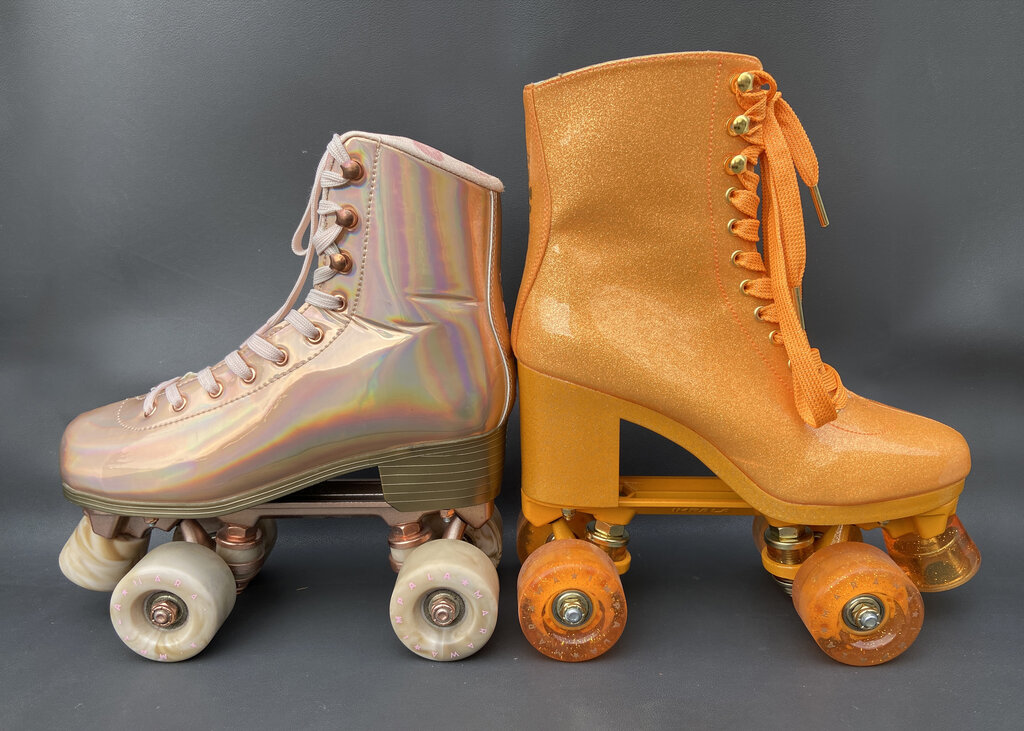
, with their two-by-two wheel setup, have a much wider and more stable footprint. Finding the inside and outside edges is more subtle. Instead of leaning the whole frame, you often apply pressure through your ankle and foot to one side of the skate's trucks. This provides inherent stability but requires a different kind of finesse to achieve sharp turns and powerful edge work.
Feeling the Flow
The best way to understand edge pressure is to feel it yourself. The classic 'swizzle' or 'lemon' maneuver is a perfect drill for this. It forces you to transition smoothly from your outside edges to your inside edges in a continuous motion.
To perform a swizzle, you start with your heels together and toes apart. You then push outward, rolling on your outside edges. As your feet reach their widest point, you begin to turn your toes inward and pull your legs back together, shifting your pressure to the inside edges. This continuous transfer of pressure and edge engagement is what generates propulsion without ever lifting your feet.
Ready to test your knowledge?
The edge of your skate on the side of your big toe is called the...
What fundamental force is generated when you angle your skate, which allows you to move, turn, and stop?
Understanding how your edges interact with the ground is the key that unlocks everything from powerful strides to graceful turns. Practice the swizzle, and you'll build the foundation for more advanced skills.