Mastering Single Entry System Design
Introduction to Single Entry Systems
What Is a Single Entry System?
In software architecture, a single entry system acts as the main door for all incoming requests. Instead of having multiple ways to access different parts of an application, clients communicate through one unified point. Think of it like the main entrance and reception desk of a large office building. Visitors don't just wander in through any door they find; they check in at the front, where a receptionist directs them to the right person or department.
This single entry point, often called a gateway, is responsible for receiving all requests, figuring out where they need to go, and then routing them to the appropriate internal service. This simplifies the overall system design from the client's perspective. The client doesn't need to know the complex inner workings or the specific locations of all the services it might need. It just needs to know the address of the main entrance.

The Upside of a Single Gateway
Using a single entry point offers several key advantages. The most significant is centralized control. When all traffic passes through one place, it becomes much easier to manage cross-cutting concerns—features that apply across many parts of the system.
Key advantages include:
- Centralized Access Control: You can enforce authentication and authorization rules in one location. Instead of securing every individual service, you secure the gateway. If a request isn't valid, it's stopped at the door and never reaches the internal services.
- Simplified Monitoring: With all requests flowing through a single channel, logging and monitoring become straightforward. You can gather metrics, track usage patterns, and detect anomalies for the entire system from a single vantage point.
- Enhanced Security: Beyond just access control, a gateway can handle other security tasks like rate limiting to prevent abuse, SSL termination to encrypt traffic, and filtering to block malicious requests.
By consolidating security at the gateway:
Developers can focus on building core business logic instead of reimplementing security in each service Authentication tokens can be validated once and trusted throughout the system Security policies can be updated in a single location rather than across multiple services
Potential Pitfalls
Despite the benefits, this pattern isn't without its drawbacks. The most critical risk is creating a single point of failure. If the gateway goes down, the entire application becomes inaccessible, even if the individual services behind it are running perfectly. It’s like the only bridge to an island being closed; all traffic stops.
Another concern is performance. Because every single request must pass through the gateway, it can become a bottleneck if it can't handle the traffic load. This can slow down the entire system, as requests get stuck in a queue waiting to be processed. Proper scaling and resource management for the gateway are crucial to avoid this.
The API Gateway in Action
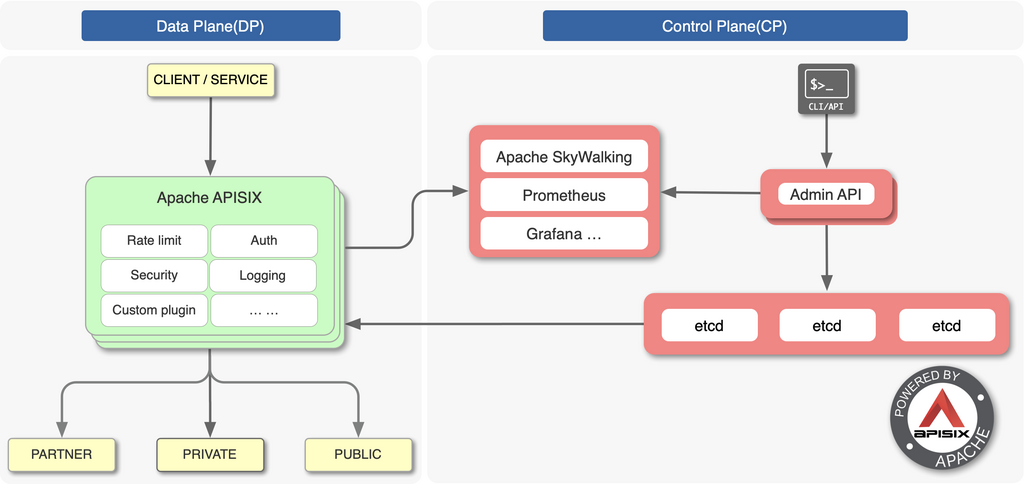
A common real-world implementation of the single entry system is the API Gateway, especially within microservices architectures. In a microservices setup, an application is broken down into a collection of small, independently deployable services. For example, an e-commerce site might have separate services for user accounts, product catalogs, shopping carts, and payments.
Instead of having the client application (like a mobile app or website) make separate requests to each of these services, it makes a single request to the API Gateway. The gateway then acts as a reverse proxy and request router, invoking the necessary downstream services and sometimes aggregating their responses into a single reply for the client. This decouples the client from the internal service architecture, making the system more flexible and easier to maintain.
What is the primary role of a single entry point, like an API Gateway, in a software architecture?
Which of the following represents the most critical risk of using a single entry point pattern?
This pattern provides a powerful way to manage complex systems by creating a simplified and controlled entry point.