Mastering Simultaneous Equations
Linear System Foundations
From Lines to Systems
You're already familiar with linear equations, which represent straight lines on a graph. But what happens when you have more than one equation working together? This is called a system of linear equations. Think of it as a set of rules that must all be true at the same time.
A system of linear equations is a collection of two or more linear equations that share the same variables.
The 'solution' to a system is the specific set of variable values that satisfies every single equation in that system. Geometrically, this is the point where all the lines intersect. If they don't cross at a single point, the nature of the solution changes.
Recognising the Forms
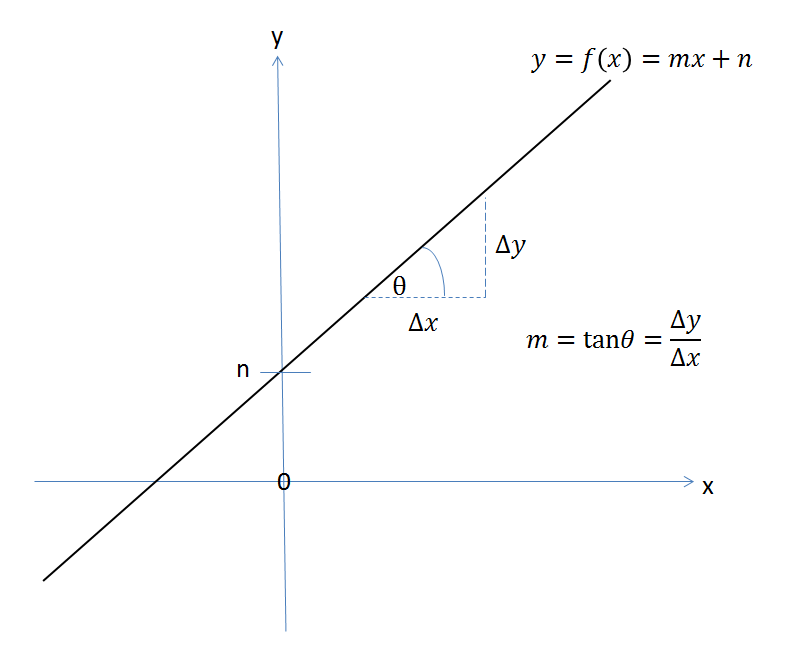
Linear equations in a system typically appear in one of two common forms. You don't need to rearrange them to understand the system; just recognising the format is key. The first is the slope-intercept form which is written as . This form is useful because it directly tells you the slope () and the y-intercept () of the line.
The second is the standard form, written as . While it doesn't immediately reveal the slope, it's particularly handy for finding both the x- and y-intercepts quickly and is often used in more complex algebraic methods.
For example, consider this system:
The first equation is in slope-intercept form, and the second is in standard form. They both use the same variables, and , so they form a system. The solution must be an pair that works for both.
One, None, or Infinite?
A system of two linear equations can have one of three possible outcomes, each with a clear geometric meaning. The number of solutions is determined by how the lines are oriented on the coordinate plane.
These three possibilities arise from the relationship between the slopes and y-intercepts of the equations in the system. A system with at least one solution is called a consistent system, while one with no solution is called inconsistent.
| Solution Type | Geometric Interpretation | Algebraic Property |
|---|---|---|
| One Solution | Lines intersect at one point | Different slopes |
| No Solution | Lines are parallel | Same slope, different y-intercepts |
| Infinite Solutions | Lines are coincident (the same line) | Same slope, same y-intercept |
When a consistent system has exactly one solution, it's called an independent system. When it has infinite solutions, it's called a dependent system because the two equations are not truly independent; one is just a multiple of the other.
Systems of linear equations are powerful tools for modeling real-world problems.
Understanding these classifications is the first step toward choosing the right method to solve the system, which is what we will explore next. Recognising the graphical relationship between the lines gives you a powerful mental model for what the algebraic solution represents.
Time to check your understanding of these foundational concepts.
What does the 'solution' to a system of linear equations represent geometrically?
An equation written in the form is in which form?
By classifying systems graphically, you can anticipate the nature of the solution before you even begin to calculate it.