Mastering Simplified Critical Thinking
Identifying Cognitive Clutter
Finding the Signal
Every complex decision is a battlefield. On one side, you have the core problem, the signal you need to decipher. On the other, a fog of war made of irrelevant data, conflicting advice, and your own mental shortcuts. This fog is cognitive clutter. To make better choices, you first have to learn to see through it.
Think of it as a signal-to-noise ratio for your brain. The 'signal' is the essential information required to solve a problem. The 'noise' is everything else: redundant data, emotional reactions, and the subtle pull of cognitive biases. A high-stakes business decision isn't just about the numbers on a spreadsheet; it’s also about the anxiety of a deadline, the pressure from a manager, and your gut feeling about a competitor. The first step in simplifying any problem is to audit these internal and external inputs to separate the signal from the noise.
Auditing the Outside World
External noise is often a problem of abundance. We have endless streams of data, reports, and opinions. The key is to identify which variables are truly essential. Imagine you're a marketing manager deciding whether to invest in a new ad campaign. You have data on demographics, past campaign performance, competitor spending, social media trends, and focus group feedback. It's overwhelming.
To filter this, ask: 'If this data point were the opposite of what it is, would it fundamentally change my decision?' If the answer is no, it's likely noise. Perhaps the exact color of a competitor's logo is irrelevant, but their 50% increase in ad spend is a critical signal.
The way choices are presented to us also creates clutter. This is known as choice architecture, the deliberate design of how options are framed. A software vendor might offer three tiers: Basic, Pro, and Enterprise. The Pro option is often priced to seem like the most reasonable choice, drawing your attention away from whether you need the software at all. Recognizing the frame helps you step outside it and evaluate the options on their true merits, not just their relative appeal.
This filtering process isn't just about deletion. It's about distillation. By ruthlessly cutting non-essential variables, you reduce the problem's complexity, or its —a measure of its uncertainty and randomness. A problem with fewer variables is a problem with lower entropy, making it easier to solve.
Auditing Your Inner World
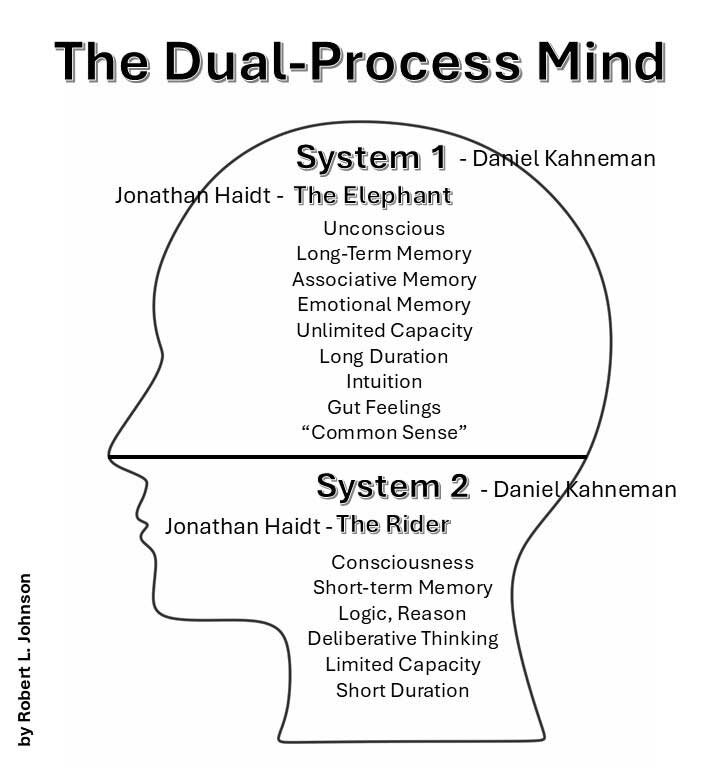
The most challenging noise to filter is the static inside your own head. Our brains are wired with cognitive biases, mental shortcuts that help us make quick judgments. But these shortcuts can lead us astray in complex situations.
One of the most common is —the tendency to favor information that confirms what we already believe. If you think a certain stock is a good investment, you'll naturally pay more attention to news stories praising the company and dismiss those that are critical. To fight this, you have to actively seek out disconfirming evidence. Ask yourself, 'What information would prove me wrong?' and then go look for it.
Another is the sunk cost fallacy, where we continue a course of action because we've already invested time, money, or effort, even when it's clear the plan isn't working. It's the internal voice that says, 'We've come too far to turn back now.' A proper cognitive audit requires you to evaluate a decision based on its future prospects, not its past investment. The money is already spent; the only question that matters is, 'What is the best move to make now?'
Conducting an internal audit means treating your own thoughts as data. When you feel a strong emotion or a gut instinct about a decision, pause and label it. Is it fear of loss? Is it excitement about a potential gain? By acknowledging these emotional inputs, you can assess whether they are valid signals or just noise clouding your judgment.
Ready to test your ability to spot cognitive clutter?
What is the primary goal of reducing 'cognitive clutter' when making a decision?
A project manager continues to pour resources into a failing project because 'we've already invested too much to stop now.' This is a classic example of which cognitive bias?
By learning to audit both the world around you and the one within you, you strip a problem down to its essential parts. This baseline of clarity is the foundation for any sound decision-making process.