Mastering Similar Triangles
Understanding Triangle Similarity
Same Shape, Different Size
Think about a photograph you've taken. You might have a large print framed on your wall and a smaller version on your phone. They show the exact same scene, with the same proportions, but they are different sizes. In geometry, we have a special term for this relationship: similarity.
Similar figures have the same shape but are not necessarily the same size. A perfect scale model is similar to the original object.
While many shapes can be similar, triangles are particularly interesting. For two triangles to be considered similar, they must meet two specific conditions. These conditions are the core properties of all similar triangles.
The Two Rules of Similarity
So, what makes two triangles similar? It boils down to two key rules that must both be true.
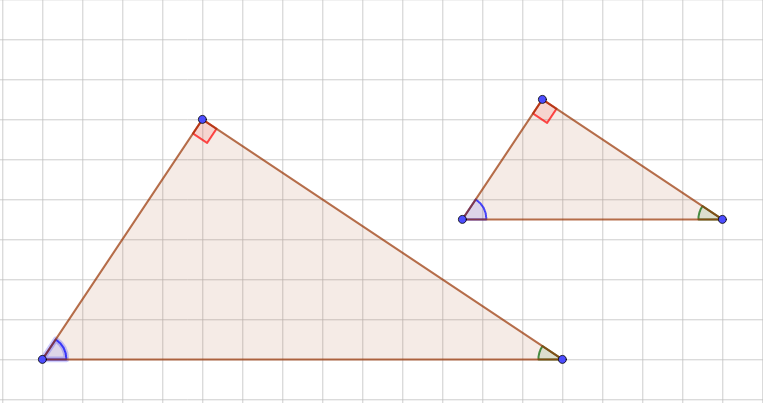
First, their corresponding angles must be equal. If you have and a larger , this means that must be equal to , must be equal to , and must be equal to . They must match up perfectly in this way.
Second, their corresponding sides must be proportional. This means the ratio of the lengths of corresponding sides is constant. The side opposite corresponds to the side opposite , and so on. If we call the side lengths and , then the ratios , , and must all be equal. This constant ratio is often called the scale factor.
If the scale factor is greater than 1, the second triangle is an enlargement. If it's less than 1, it's a reduction. If the scale factor is exactly 1, the triangles aren't just similar; they are congruent, meaning they are identical in size and shape.
Two triangles are similar if and only its corresponding angles are congruent and corresponding sides are proportional.
Why Similarity Matters
The concept of similar triangles is surprisingly powerful. It forms the foundation of trigonometry and allows us to calculate unknown distances and heights indirectly.
For instance, you can measure the height of a tall tree without climbing it. You can do this by comparing the triangle formed by the tree and its shadow with the triangle formed by a person (of known height) and their shadow. Because the sun's rays are parallel, the angles in both triangles are the same, making them similar. By measuring the shadows and knowing the person's height, you can calculate the tree's height using the ratio of corresponding sides.
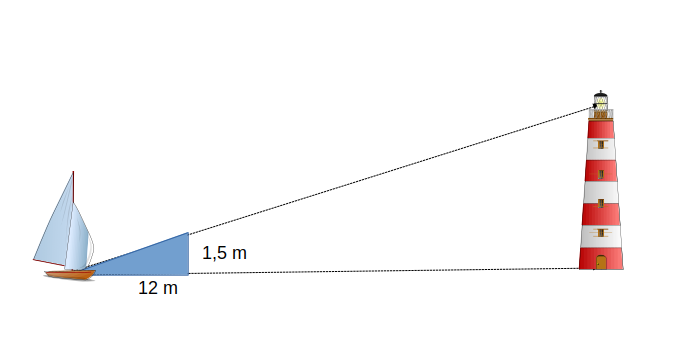
This principle is used in many fields, including architecture, engineering, and art. It helps in creating scale drawings, designing structures, and even in computer graphics to resize images without distorting them. Understanding similarity gives us a tool to relate shapes of different sizes and solve practical problems.
For two triangles to be classified as similar, which of the following conditions must be met?
If two triangles are similar and the scale factor is exactly 1, the triangles are also congruent.