Mastering Sight Reading for Guitar and Bass
Staff and Fretboard Geography
From Page to Fretboard
Standard notation is a map of pitches. The staff tells you what note to play, and the fretboard tells you where to play it. The key is learning to translate between the two instantly. Instead of memorizing every single note location, we'll focus on finding reliable 'anchor points'—notes that are easy to locate on both the staff and your instrument.
Guitar and the Treble Clef
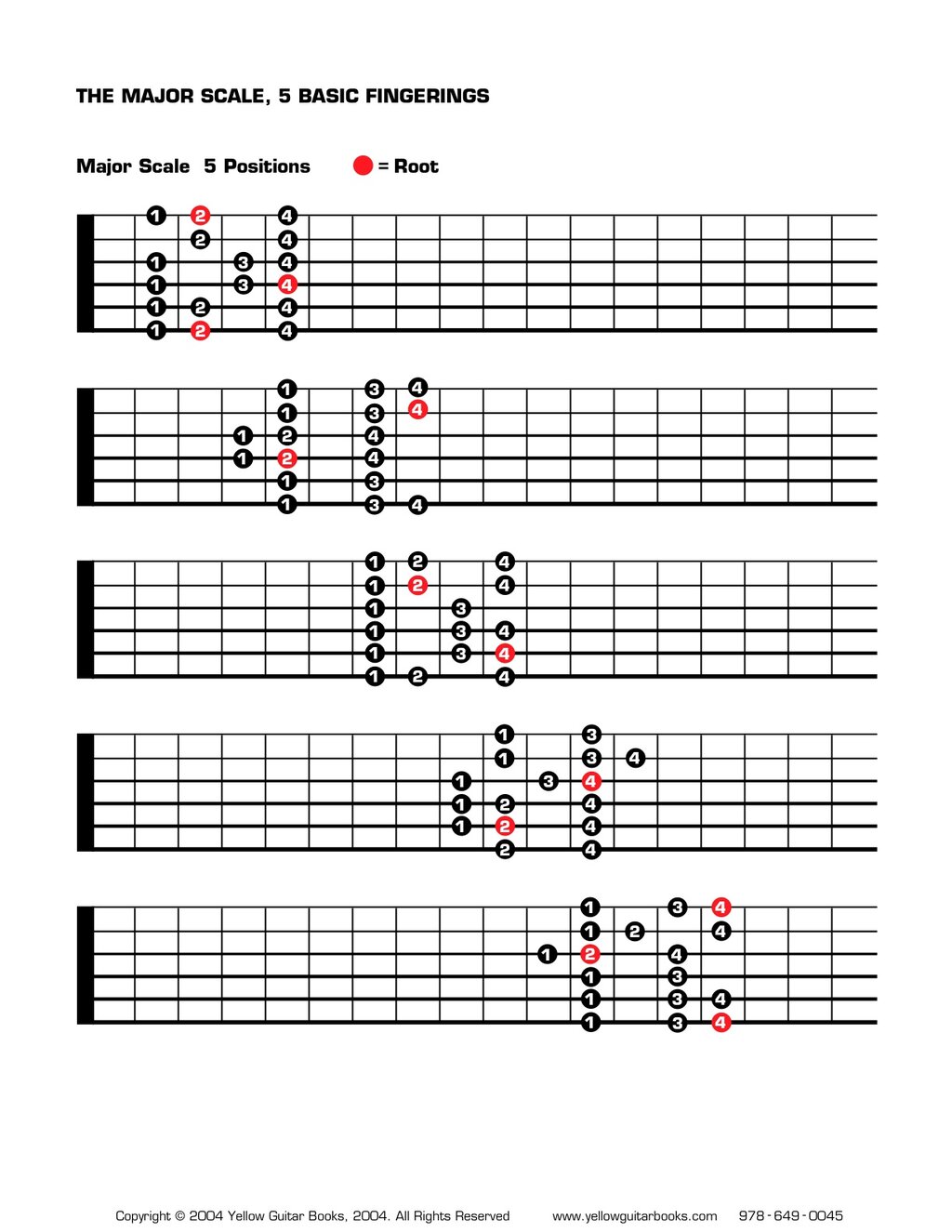
Guitarists primarily read music on the treble clef. The most natural anchor points are your open strings. Each open string has a fixed position on the staff. Committing these to memory creates a framework for finding all other notes.
Unlike a piano, where each note has only one key, a guitar offers multiple locations to play the same pitch. For example, the E note on the top space of the staff (E5) can be played as the open 1st string, the 5th fret of the B string, the 9th fret of the G string, and so on. This flexibility is powerful, but it also means you must understand the relationship between staff height and neck position.
As you move your hand up the neck to higher frets, the notes you play will appear higher on the staff. A shift in hand position directly corresponds to a vertical shift in notation.
Bass and the Bass Clef
Bassists read from the bass clef. The anchor points here are also the open strings: E, A, D, and G. Because the bass is a lower-pitched instrument, many of its notes fall below the standard five-line staff. To write these notes, we use ledger lines—short, extra lines that extend the range of the staff.
Navigating ledger lines is a crucial skill for bassists. The low E, for instance, sits on the first ledger line below the bass staff. The note below that, D#, would require two ledger lines, and so on. Thinking of the staff as extending infinitely in both directions will help you quickly place these lower notes.
The Universal Landmark
Musicians on all instruments use a common reference point: Middle C. On the grand staff, which combines the treble and bass clefs, Middle C sits on a ledger line exactly between the two.
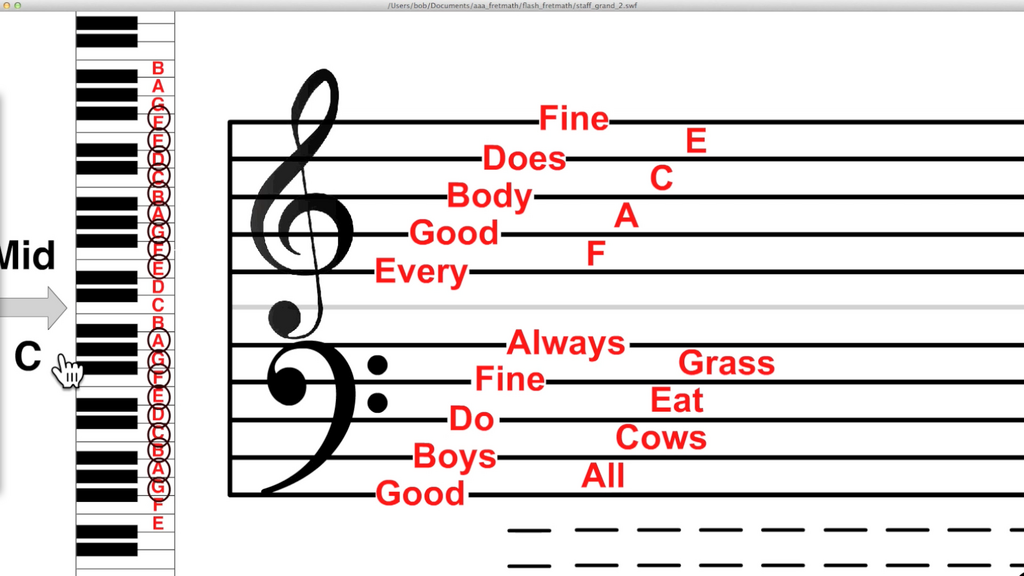
Knowing where Middle C is on your instrument connects your fretboard to this universal map.
- On Guitar: Middle C (C4) is found at the 1st fret of the B string, the 5th fret of the G string, the 10th fret of the D string, and so on.
- On Bass: Middle C is typically played at the 5th fret of the G string.
By locating Middle C and your open-string anchor points, you create a powerful mental grid. You can begin to triangulate the location of any other note on the staff by seeing its distance from these known landmarks.
Ready to test your map-reading skills? This quiz will check your understanding of how notes on the page translate to positions on the neck.
What is the primary relationship between the musical staff and the instrument's fretboard?
For a guitarist just beginning to read music, which notes serve as the most effective initial 'anchor points'?
Translating between the staff and the fretboard is a skill that develops over time. Keep practicing with your anchor points, and soon the connection will become second nature.