Mastering SIEM Systems
Introduction to SIEM
The Security Command Center
Imagine a busy airport control tower. Controllers watch dozens of screens, tracking every plane's location, speed, and altitude. They look for patterns, potential conflicts, and anything out of the ordinary to keep the skies safe. A Security Information and Event Management (SIEM) system is like that control tower, but for an organization's digital environment.
SIEM
noun
A solution that collects and analyzes security data from various sources across an entire IT infrastructure to spot potential threats and security incidents in real time.
In any organization, countless digital events happen every second. A server logs a user login, a firewall blocks a connection, an employee accesses a file. Each of these events is a piece of a much larger puzzle. A SIEM's primary job is to gather all these puzzle pieces from different systems, put them together, and see the whole picture.
Centralizing your identity and access logs into a SIEM (security information and event management) system provides a unified view of all activity, enabling you to spot threats in near real-time.
How SIEM Works
A SIEM system follows a logical, multi-step process to turn raw data into actionable security insights. It all starts with gathering information.
- Data Collection: The SIEM pulls in data from a huge range of sources: network devices like routers and firewalls, servers, security software, and even individual applications. This data, often in the form of logs, provides the raw material for analysis.
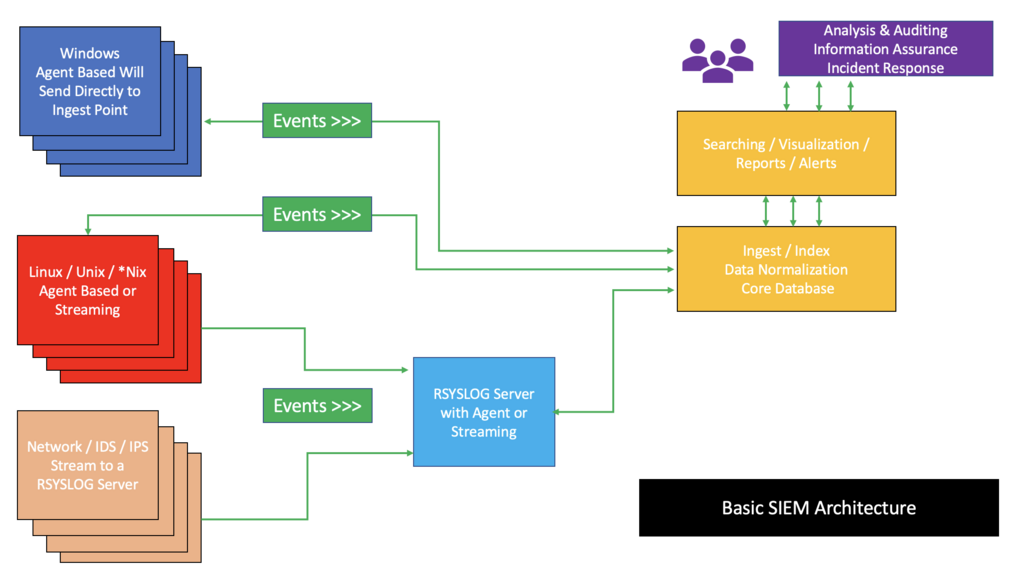
Once the data is collected, it's often messy and inconsistent. A log from a firewall looks very different from a log generated by a database. This brings us to the next crucial step.
- Normalization: The SIEM acts as a universal translator. It takes all the varied log formats and reorganizes them into a single, common format. An IP address is always labeled as an IP address, a user ID is always a user ID. This standardization is essential for the system to compare and analyze events from different sources accurately.
With all the data speaking the same language, the SIEM can begin its most important work: finding connections.
- Correlation: This is where the SIEM connects the dots. It uses a set of rules and statistical analysis to look for relationships between events. A single failed login is no big deal. But multiple failed logins from the same user across several different systems in a short period? That's a pattern. The correlation engine is designed to spot these suspicious sequences of events that a human analyst might miss.
- Alerting: When the correlation engine detects a pattern that matches a predefined rule for suspicious activity, it generates an alert. This isn't just a simple notification; it's a prioritized signal sent to security analysts, telling them exactly what happened, where it happened, and why it's considered a potential threat. This allows the security team to focus on real problems instead of getting lost in a sea of data.
Why It Matters
Beyond just finding active threats, SIEM systems play a vital role in an organization's overall security health. They provide a single, centralized view of security-related activity across the entire network. This unified visibility is critical for understanding what is happening at any given moment.
Furthermore, many industries are subject to regulations like HIPAA or PCI DSS, which require strict data protection and monitoring. SIEM systems help organizations meet these compliance requirements by creating a detailed, searchable audit trail of all activity. They can automatically generate reports that prove security controls are in place and working as intended, saving time and demonstrating due diligence to auditors.
Ready to check your understanding of how SIEM systems provide a unified view of security?
What is the primary function of a Security Information and Event Management (SIEM) system?
The text compares a SIEM system to an airport control tower. In this analogy, what do the individual planes represent?
By centralizing, translating, and analyzing security data, a SIEM empowers organizations to move from a reactive to a proactive security posture.