Mastering Seoul Korean Pronunciation
Korean Alphabet Basics
Meet Hangul
The Korean alphabet is called Hangul (한글). Unlike systems that use complex characters for whole words, Hangul is phonetic, just like the Latin alphabet. Each character represents a sound. It was created in the 15th century by King Sejong the Great to make literacy accessible to everyone, and it's known for being incredibly logical and easy to learn.
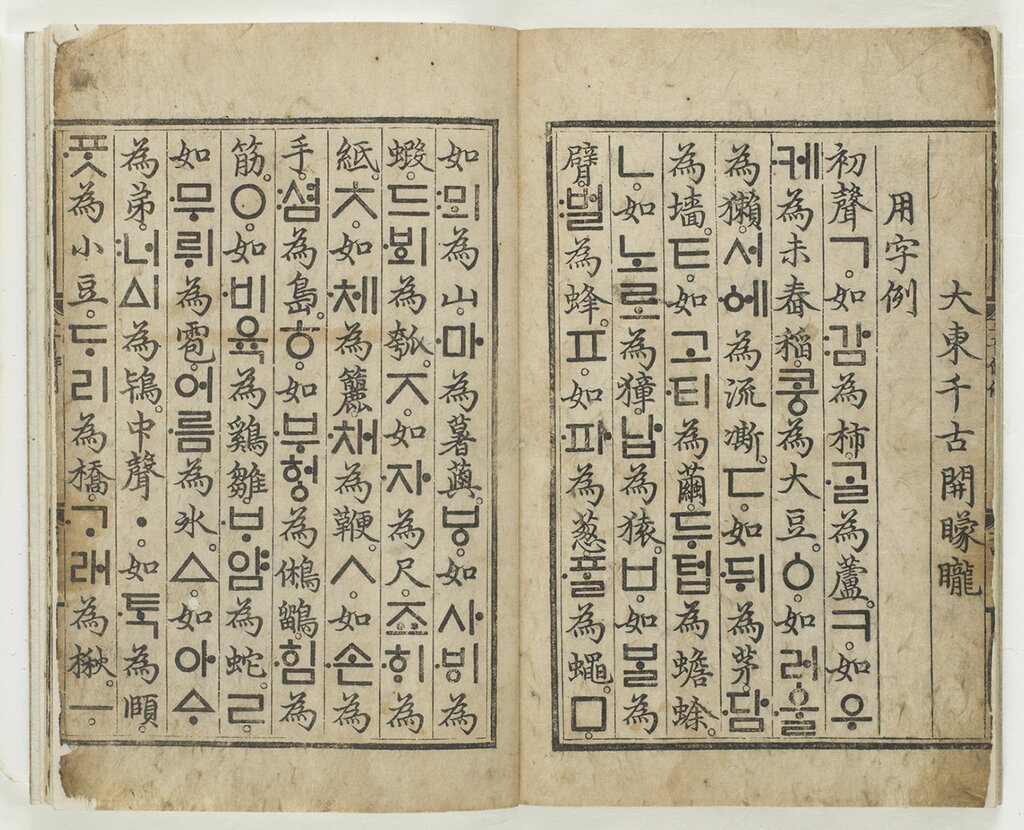
The key difference from the Latin alphabet is how letters are arranged. Instead of writing letters one after another in a straight line, Hangul groups them into syllabic blocks. Each block represents one syllable.
The simplicity of Hangul can be attributed to its format of syllabic blocks: rather than written linearly, vowels and consonants are grouped into syllables that consist of letters arranged in a square block.
The Building Blocks
Hangul is made up of basic consonants and vowels. Many of the consonant shapes were designed to mimic the shape of the mouth and tongue when making the corresponding sound. For example, ㄱ (g/k) looks like the back of the tongue raised to the roof of the mouth.
The vowel shapes are based on three simple elements: a dot for the sun (heaven), a horizontal line for the flat Earth, and a vertical line for a standing human. All other vowels are derived from these.
| Consonant | Sound |
|---|---|
| ㄱ | g/k |
| ㄴ | n |
| ㄷ | d/t |
| ㄹ | r/l |
| ㅁ | m |
| ㅂ | b/p |
| ㅅ | s |
| ㅇ | silent / ng |
| ㅈ | j |
The consonant ㅇ is a placeholder. When it starts a syllable, it's silent and just there to hold the spot. When it's at the end of a syllable, it makes the 'ng' sound, like in 'sing'.
| Vowel | Sound |
|---|---|
| ㅏ | a (as in father) |
| ㅓ | eo (like the 'u' in sun) |
| ㅗ | o (as in boat) |
| ㅜ | u (as in moon) |
| ㅡ | eu (like the 'oo' in good) |
| ㅣ | i (as in see) |
These are just the basics. There are also double consonants (like ㄲ, ㄸ) and combined vowels (like ㅐ, ㅚ), but they are all built from the fundamental shapes you see above.
Forming Syllables
Every Korean syllable block must contain at least one consonant and one vowel. The simplest structure is a consonant followed by a vowel.
Let's combine the consonant ㄴ (n) and the vowel ㅏ (a). Together, they form the syllable 나 (na).
Consonant + Vowel = Syllable ㄴ + ㅏ = 나
If a syllable has a vowel that is a vertical line (like ㅏ, ㅓ, ㅣ), the consonant goes to its left. If the vowel is a horizontal line (like ㅗ, ㅜ, ㅡ), the consonant goes on top.
- ㄱ (g) + ㅓ (eo) = 거 (geo)
- ㅁ (m) + ㅗ (o) = 모 (mo)
A syllable can also have a final consonant, called a batchim (받침). This consonant is always placed at the bottom of the block.
Consonant + Vowel + Final Consonant = Syllable ㅅ + ㅏ + ㄴ = 산 (san, meaning 'mountain')
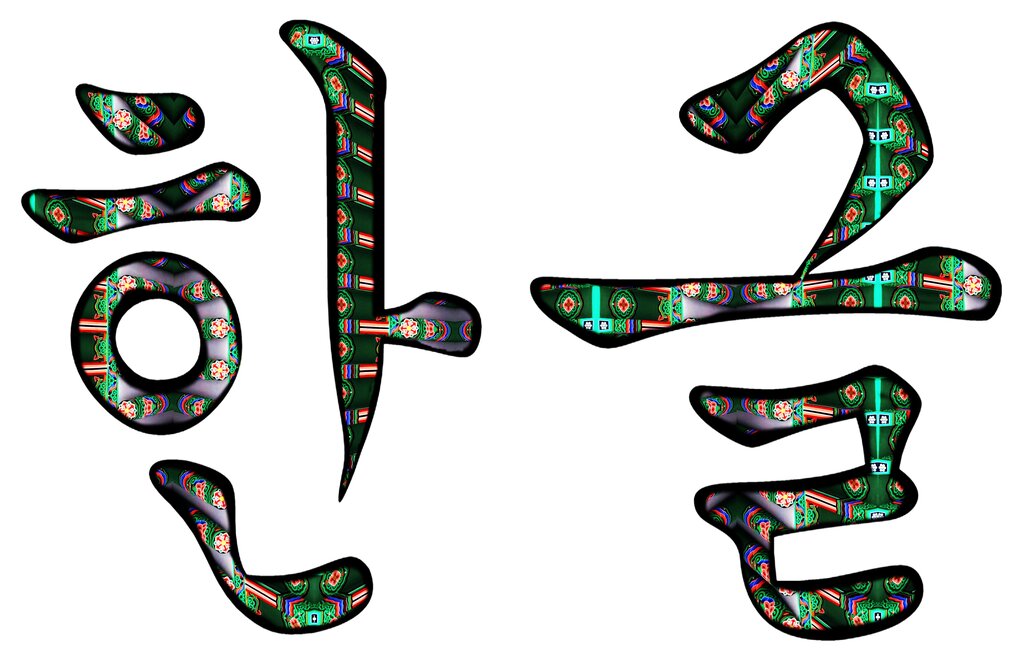
Let's look at the word for 'Hangul' itself: 한글.
The first block is 한 (han). It's made of ㅎ (h), ㅏ (a), and ㄴ (n). The second block is 글 (geul). It's made of ㄱ (g), ㅡ (eu), and ㄹ (l).
Now that you know the components, you can see how any Korean word is just a series of these blocks. Ready to test your knowledge?
Who created the Korean alphabet, Hangul?
What is the primary way Hangul differs from the Latin alphabet (used for English)?
Learning the alphabet is the first and most important step. Once you're comfortable with how these letters sound and combine, you'll be able to read any Korean word you see.