Mastering SEO
SEO Fundamentals
What Is SEO?
Search Engine Optimization (SEO) is the process of helping a website or a piece of content rank higher on search engines like Google, Bing, or DuckDuckGo. The goal is to get more visibility in the organic, or non-paid, search results. When someone searches for a term related to your business, you want your website to be one of the first things they see.
Think of SEO as the digital equivalent of choosing a prime location for a physical store. A great location on a busy street brings in more foot traffic. Good SEO brings in more web traffic.
Why does this matter? Because people who find you through a search engine are actively looking for solutions you might offer. They're not just stumbling upon you. This type of traffic is often called "organic traffic," and it's valuable because it's targeted and doesn't require paying for ads.
How Search Engines Work
To understand SEO, you first need to understand how search engines operate. They have three primary functions: crawling, indexing, and ranking.
First, search engines send out web crawlers, also known as bots or spiders, to discover new and updated content online. These bots travel from link to link, exploring the web.
Crawling
verb
The process by which search engine bots discover publicly available web pages.
Once a page is discovered, the search engine analyzes its content and stores it in a massive database called an index. This index is like a giant library of all the web pages the crawler has found.
Finally, when a user types a query into the search bar, the search engine digs into its index to find the most relevant results. This is the ranking stage. It uses a complex set of rules, or an algorithm, to sort through billions of pages and present the best answers in a specific order. The goal of SEO is to convince the algorithm that your page is the best result for a particular search.
Key Ranking Factors
While search engine algorithms are secret and constantly changing, the core principles of what they look for remain consistent. The three main pillars are relevance, authority, and user experience.
Relevance is about matching a user's search query. If someone searches for "how to bake chocolate chip cookies," a search engine will look for pages that are clearly about that topic. It does this by analyzing the words on the page, often called keywords.
Keyword
noun
A word or phrase that people type into search engines to find information.
Authority is a measure of how trustworthy and respected a website is. One of the main ways search engines gauge authority is by looking at backlinks. A backlink is a link from another website to yours. If a well-known, reputable site links to your page, it's like a vote of confidence, boosting your authority.
User Experience refers to how visitors interact with your website. Do they find it easy to navigate? Does the page load quickly? Do they stay on your site to read the content, or do they immediately click the back button? Search engines pay attention to these signals because they want to send users to pages that are not only relevant and authoritative but also helpful and easy to use.
On-Page vs. Off-Page SEO
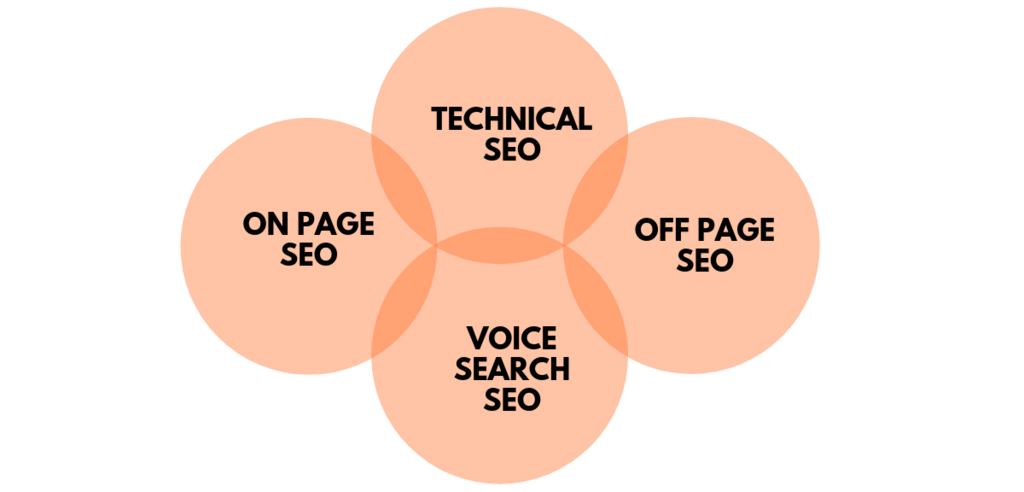
SEO strategies are typically divided into two main categories: on-page SEO and off-page SEO.
On-page SEO refers to all the actions you take directly on your website to improve its ranking. This includes things you can control, like your content and the HTML source code.
Off-page SEO includes all the activities you do away from your website to raise its authority and ranking. This is largely about building your site's reputation across the web.
| Tactic | On-Page or Off-Page? | Description |
|---|---|---|
| Writing content | On-Page | Creating high-quality, relevant articles and information. |
| Title tags | On-Page | Crafting the headline that appears in search results. |
| Building links | Off-Page | Getting other websites to link back to your content. |
| Social media | Off-Page | Promoting content to build brand awareness and earn links. |
| Site speed | On-Page | Ensuring your website loads quickly for users. |
Both are essential for a successful strategy. On-page SEO makes your site understandable to search engines, while off-page SEO builds the trust and authority needed to rank above the competition.
Now that you understand the basics, let's test your knowledge.
What is the primary goal of Search Engine Optimization (SEO)?
What are the three primary functions a search engine performs, in the correct order, to deliver results?
Understanding these core concepts is the first step. SEO is about making small, consistent improvements that, over time, can lead to a significant increase in visibility and traffic for your website.