Mastering Sentence Structures and Functions
Functional Sentence Classification
Beyond the Basics
Every sentence you write does a job. It might state a fact, ask a question, give an order, or express excitement. Understanding these functions helps you control your tone and guide your reader's response, whether you're writing a business proposal or a short story.
Since you already know how to build a sentence with subjects and verbs, let's focus on the four primary functions and how they work in practice. It’s less about rules and more about strategy.
When we describe a sentence based on its function, we are talking about its purpose.
Declarative Sentences
The declarative sentence is the workhorse of writing. Its job is to state a fact, make an observation, or convey information. It's direct, it's clear, and it ends with a full stop.
The quarterly report is due on Friday. Our new marketing campaign increased leads by 15%.
In professional writing, these sentences form the backbone of your communication. They establish facts and set expectations. The tone is neutral and objective. In creative writing, they build the world, describe characters, and move the plot forward. The of a declarative sentence, or how its context shapes its meaning, is usually straightforward: it's meant to be taken at face value.
Interrogative and Imperative
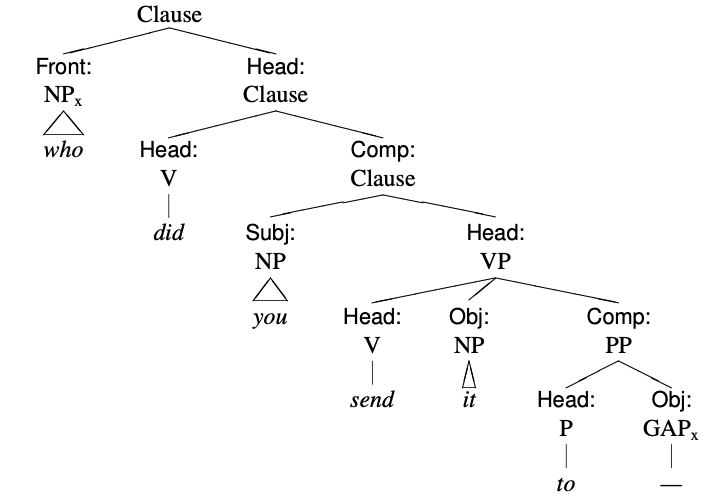
Interrogative sentences ask questions and end with a question mark. They are essential for gathering information and engaging your reader directly.
Have you submitted the report? What is the next step?
But they can also be used for persuasion. A well-placed rhetorical question can make a point more forcefully than a simple statement. Instead of saying, "Our competitors are not investing in this technology," you could ask, "Can we really afford to ignore this technology while our competitors fall behind?" The question doesn't seek an answer; it frames the situation and prompts the reader to agree with your implied conclusion.
Imperative sentences give a command, a request, or instructions. The subject is often an implied "you." These sentences can end with a full stop or, for emphasis, an exclamation mark.
Submit the report by Friday. Please review this draft.
In professional contexts, the tone of an imperative sentence is critical. "Complete this task now" sounds demanding. Softening it with words like "please" or framing it as a collaborative next step ("Let's complete this task before lunch") turns a command into a polite request. The choice depends entirely on the relationship with your audience and the urgency of the situation.
Exclamative Sentences
Exclamative sentences express strong emotion, like surprise, excitement, or frustration. They always end with an exclamation mark.
We won the contract! What a fantastic result!
These sentences add energy and personality to your writing, but they should be used sparingly in formal or professional contexts. Overusing them can make your writing seem unprofessional or overly emotional. In creative writing, they are powerful tools for conveying a character's state of mind. A single exclamation mark can reveal more about a character's shock or joy than a full paragraph of description.
| Sentence Type | Purpose | Common Punctuation |
|---|---|---|
| Declarative | To state a fact or information | Full Stop (.) |
| Interrogative | To ask a question | Question Mark (?) |
| Imperative | To give a command or request | Full Stop (.) or Exclamation Mark (!) |
| Exclamative | To express strong emotion | Exclamation Mark (!) |
What is the primary function of a declarative sentence?
Which sentence is an example of an imperative sentence?
Choosing the right sentence function is about making a conscious decision about the effect you want to have on your reader. By mastering these four types, you gain precise control over your tone and message.