Mastering Self Powered Doorbell Systems
Energy Harvesting Synthesis
Matching the Push to the Power
A self-powered doorbell faces a simple but profound challenge: capture the fleeting energy of a single finger press and convert it into a usable electrical signal. The success of this energy transfer hinges on a principle called mechanical impedance matching. Think of it like trying to throw a baseball. If you throw it at a brick wall (high impedance), the ball bounces right back, transferring very little energy. If you throw it at a sheet of paper (low impedance), the paper offers no resistance and absorbs little energy. But if you throw it into a catcher's mitt, which is designed to receive the ball's force, the energy transfer is highly efficient.
For a doorbell, the generator must act like the catcher's mitt. Its mechanical resistance must be tuned to the force and speed of a typical button press. If the generator is too stiff (high impedance), much of the user's energy is reflected. If it's too flimsy (low impedance), the internal mechanism won't be sufficiently actuated. The goal is to match the generator's impedance to the biomechanical input of a human finger to maximize the energy harvested from that one brief interaction.
Two Paths to Power
Once impedance is matched, the doorbell needs a transducer to perform the energy conversion. Two primary technologies dominate this space: piezoelectric and electromagnetic generators.
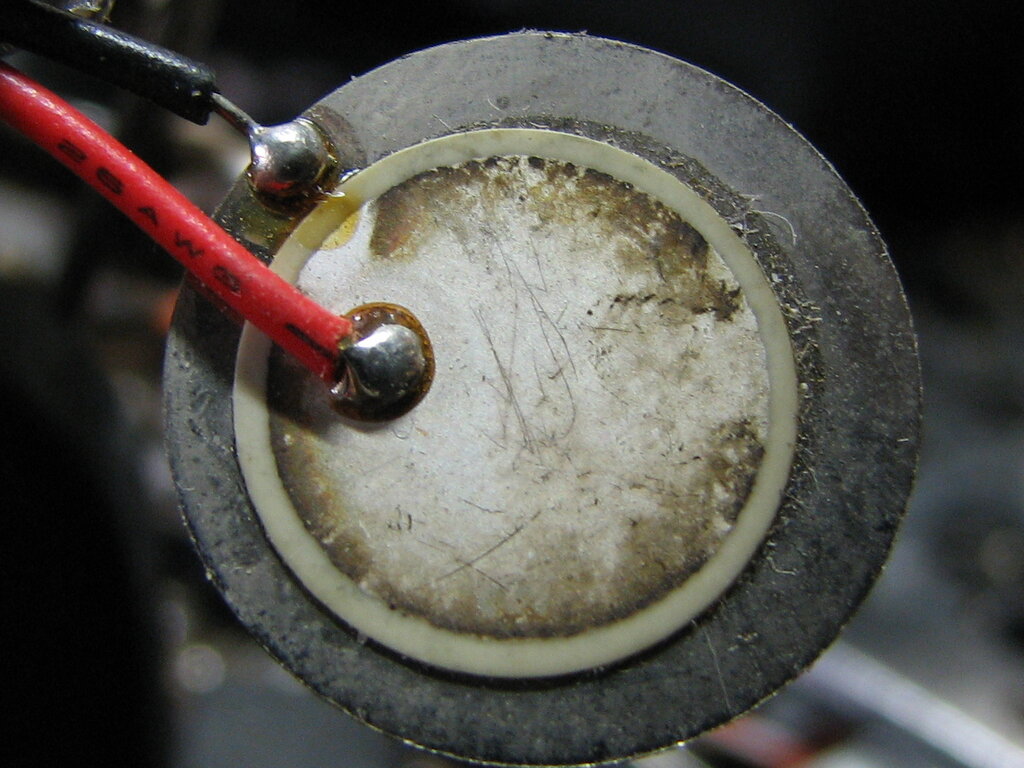
A piezoelectric generator works like a microscopic hammer strike. Certain ceramic or crystal materials produce a voltage when they are squeezed or deformed. In a doorbell, pressing the button applies a sharp mechanical stress to a small piezoelectric element. This creates an instantaneous, high-voltage, low-current electrical spike. The design is mechanically simple, often involving just the button mechanism pressing directly on the element.
An electromagnetic generator uses the principle of induction. Pressing the button moves a small permanent magnet through a coil of wire. As the magnetic field lines cut across the coil, they induce a current. This process generates power during both the press and the release of the button as the magnet moves back and forth. The output is typically a lower-voltage, higher-current pulse that lasts for the duration of the magnet's movement.
| Feature | Piezoelectric Generator | Electromagnetic Generator |
|---|---|---|
| Power Profile | Instantaneous high-voltage spike | Sustained low-voltage pulse |
| Mechanism | Direct stress on crystal | Magnet moving through coil |
| Mechanical Design | Very simple, few parts | More complex, moving magnet |
| Actuation | Best with sharp, quick impact | Works with smooth press/release |
| Energy Capture | Captures initial impact force | Captures energy on press and release |
Efficiency and Durability
Generating a raw electrical signal is only half the battle. The real goal is producing usable power. Conversion efficiency measures how much of the initial mechanical energy from the finger press makes it to the wireless transmitter's circuit. Neither generator produces a clean, steady voltage, so power conditioning circuits are needed to transform the raw spike or pulse into a form the electronics can use. This conversion process always involves some energy loss.
Beyond efficiency, there's the critical question of reliability. A doorbell must function for years, enduring tens of thousands of presses. This brings the issue of to the forefront. Piezoelectric ceramics, while mechanically simple, can be brittle. Repeated stress cycles can lead to the formation of micro-cracks, eventually degrading the material's performance or causing it to fail completely. Engineers must carefully design the mechanism to avoid focusing stress on weak points.
Electromagnetic generators face different wear-and-tear issues. Their moving parts, like the magnet and its housing, are subject to mechanical friction and wear over time. The springs used for the return mechanism can also lose their elasticity. However, these components are generally more robust against the kind of catastrophic failure that can affect brittle ceramics.
Ultimately, the choice between piezoelectric and electromagnetic systems involves a trade-off between the simple, high-voltage nature of the former and the more robust, sustained output of the latter. Both paths can lead to a successful self-powered device, but the engineering details of impedance matching, conversion efficiency, and long-term fatigue determine whether the doorbell will ring reliably for years to come.
What is the primary purpose of mechanical impedance matching in a self-powered doorbell?
Which of the following best describes the output of a piezoelectric generator in a doorbell?