Mastering Self Dietary Assessment
Modern Dietary Patterns
Beyond Single Nutrients
For decades, nutrition advice often felt like a numbers game. Track your vitamin C, limit your saturated fat, get enough iron, and count every calorie. This nutrient-centric approach viewed food as a simple delivery system for isolated compounds. But this perspective is changing, and for good reason.
Science now shows that the overall quality of your diet, or your 'dietary pattern', matters more than any single nutrient. Foods are complex. An orange isn't just a source of vitamin C; it's a package of fiber, water, antioxidants, and hundreds of other plant compounds (phytochemicals) that work together in ways we're still discovering. When you focus only on the vitamin C, you miss the forest for the trees.
This is the core idea behind the 2025-2030 Dietary Guidelines for Americans. Instead of obsessing over individual nutrient targets, the focus has shifted to the big picture: the combination of foods and beverages that make up your regular diet. This 'whole-food' approach is more practical and effective for long-term health.
Start with dietary pattern rather than obsessing over individual nutrients.
Thinking in patterns helps us understand why a diet rich in fruits, vegetables, and lean proteins consistently leads to better health outcomes, regardless of the precise levels of one vitamin or another. The synergy between components in whole foods is more powerful than the sum of their individual parts.
Flipping the Pyramid
To reflect this shift, our visual guides to healthy eating are also evolving. You might remember the old food pyramid, which placed grains and carbohydrates as the foundation of a healthy diet. New models are turning that idea upside down.
The 'Inverted Food Pyramid' is a concept that better aligns with a pattern-centric approach. Instead of building your diet on a large base of carbohydrates, many of which can be refined and low in nutrients, this model prioritizes nutrient density. The wide base of this new pyramid is filled with non-starchy vegetables, high-quality proteins (both plant and animal), and healthy fats. These are the foods that provide the most vitamins, minerals, and satiety per calorie.
As you move toward the smaller point of the pyramid, you find foods that should be consumed in moderation, such as whole grains and fruits. At the very tip are the foods to minimize: refined grains, added sugars, and ultra-processed foods.
A Tale of Two Plates
Another powerful tool for building a healthy dietary pattern is the plate model. The USDA's MyPlate is widely recognized, but the Harvard School of Public Health developed its own version, the Healthy Eating Plate, to provide more specific, evidence-based guidance.
Both plates divide your meal into four sections: fruits, vegetables, grains, and protein. However, the details matter.
- Grains: MyPlate simply says to make half your grains whole. The Harvard Plate specifies only whole and intact grains, like oats, quinoa, and brown rice, and limits refined grains like white bread and white rice.
- Protein: MyPlate's protein section is broad. The Harvard Plate is more selective, encouraging fish, poultry, beans, and nuts while limiting red meat and avoiding processed meats like bacon and sausage.
- Fats: The Harvard Plate explicitly adds a bottle of healthy oils (like olive and canola oil) to the visual, emphasizing their importance and encouraging avoidance of trans fats.
- Dairy: MyPlate includes a serving of dairy with every meal. The Harvard Plate suggests water as the primary drink and limits milk and dairy to one to two servings per day, noting that high intake is associated with certain health risks.
This comparison isn't about one plate being 'right' and the other 'wrong'. It shows the nuance involved in building a high-quality dietary pattern. The focus is on the quality of your choices within each food group.
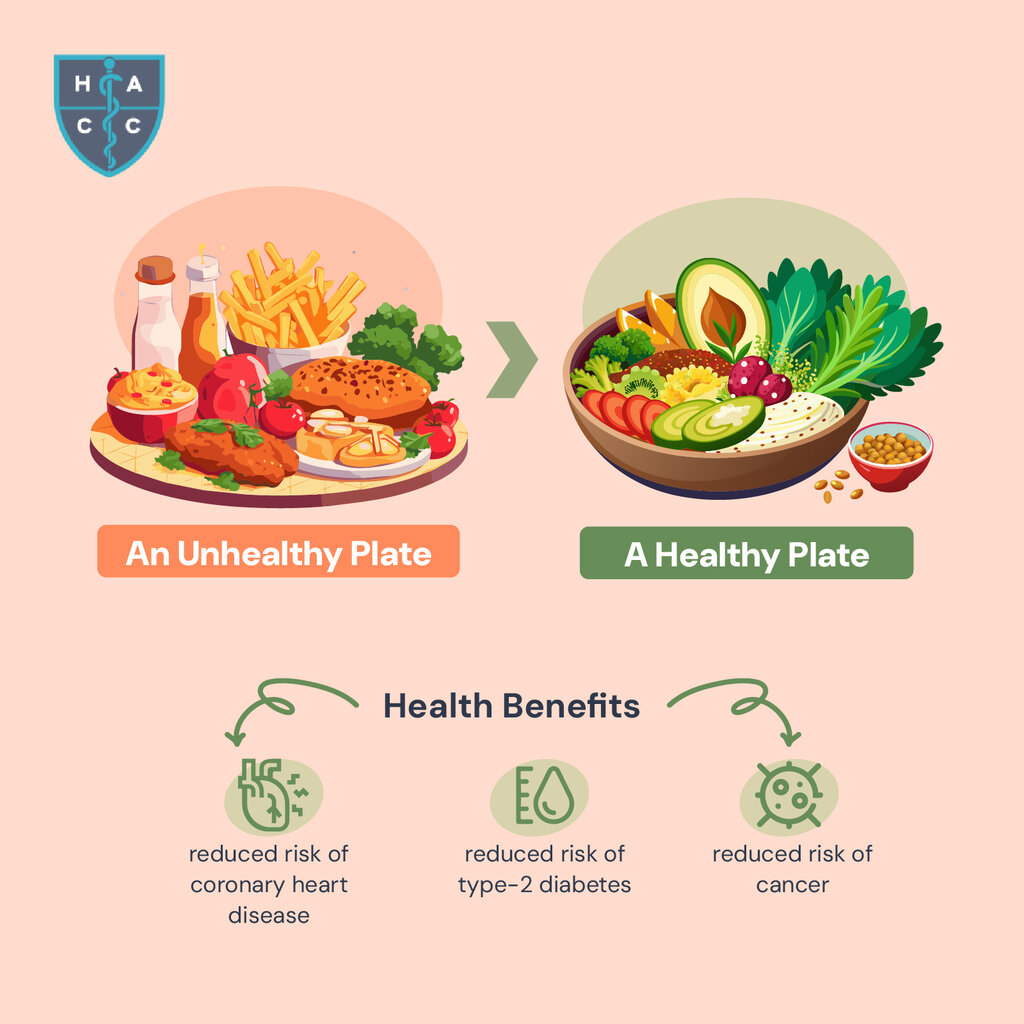
A high-quality dietary pattern is about making smarter swaps: whole grains instead of refined, lean proteins and plants instead of processed meats, and healthy fats instead of unhealthy ones. These choices, when made consistently, have a profound impact on long-term health, reducing the risk of chronic diseases like heart disease, type 2 diabetes, and certain cancers. It’s the pattern, not a single 'superfood' or 'bad' food, that ultimately shapes your health.
What is the primary shift in modern nutrition advice described in the text?
According to the 'Inverted Food Pyramid' concept, which food group should form the foundation (the widest part) of a healthy diet?