Mastering Seequent Slope3D for Geotechnical Success
Slope3D Core Features
Moving to 3D
For years, geotechnical engineers have relied on 2D cross-sections to understand if a slope will fail. This is like looking at a single slice of a loaf of bread to guess the shape of the whole loaf. It works, but it doesn't tell the whole story. Slope3D changes this by bringing analysis into the third dimension.
The software is designed to feel familiar, making the transition from 2D to 3D analysis straightforward. The main goal is to let you focus on the engineering problem, not on fighting with complex software. You can define your model's geometry, material properties, and water pressure conditions in a clear, logical workflow.
One Project, Multiple Geometries
Real-world projects are rarely simple. You might need to evaluate several different potential failure scenarios or analyze how a slope's stability changes through different stages of construction. Slope3D is built for this complexity.
Within a single project file, you can manage and analyze multiple 3D geometries. This means you can model the initial hillslope, a proposed excavation, and the final design all in one place. Each geometry can be analyzed independently, allowing you to compare results side-by-side. This keeps your work organized and makes it easy to track the impact of design changes on slope stability.
This capability is crucial for running sensitivity analyses or exploring different remediation options efficiently, all without cluttering your workspace with countless separate files.
A Connected Workflow
Slope3D doesn't operate in a vacuum. It's part of a connected ecosystem of geotechnical software, designed to create a seamless workflow from geological modeling to stability analysis.
One of its most powerful connections is with Leapfrog, a tool used to build 3D geological models from raw data like borehole logs and surveys. Instead of manually rebuilding this complex geology in your stability software, you can directly import the Leapfrog model. This link is managed through Seequent Central, a cloud-based platform for managing and tracking geological models. If a geologist updates the Leapfrog model, Seequent Central notifies you, and you can instantly pull the latest version into Slope3D. This ensures your stability analysis is always based on the most current understanding of the ground conditions.
The full Geotechnical Connected Workflow involves Leapfrog Works, Leapfrog Geo or Leapfrog Energy as a starting point, to create a 3D geological model from the incorporation and interpretation of digital site investigation data.
Slope3D also integrates tightly with SEEP3D, GeoStudio's tool for analyzing groundwater seepage. Water pressure within a slope is often the critical factor that triggers a landslide. With this integration, you can first model how water flows through the soil and rock in SEEP3D. Then, you can use those precise pore-water pressure results directly in your Slope3D stability analysis. This provides a much more realistic and comprehensive assessment of the slope's safety than using simplified assumptions about water levels.
Where It's Used
The ability to analyze complex, three-dimensional problems makes Slope3D valuable across many types of geotechnical projects.
In mining, engineers use it to design safe open pit mines, analyzing the stability of pit walls that have complex shapes and varied rock conditions. Failures in this environment can be catastrophic, and 3D analysis helps identify potential failure mechanisms that a 2D view might miss.
For civil engineering projects, Slope3D is used to assess the stability of dams, levees, and embankments. These structures are inherently three-dimensional. For example, the stability of an earthen dam abutment, where the dam meets the valley wall, is a classic 3D problem that cannot be properly analyzed with a 2D cross-section.
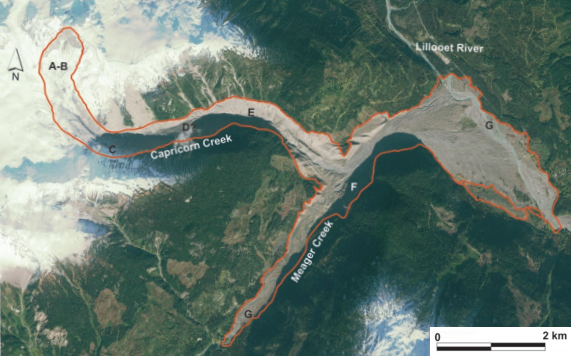
Finally, it's essential for analyzing natural hillslopes, especially in landslide-prone areas. The terrain and underlying geology are often highly irregular, and 3D analysis can help engineers understand the risks and design effective stabilization measures.
What is the primary limitation of traditional 2D cross-sectional analysis that Slope3D is designed to overcome?
How does Slope3D's integration with SEEP3D improve the accuracy of a stability analysis?
By providing a clear path from geological model to comprehensive stability analysis, Slope3D helps engineers make more informed decisions about the safety of natural and engineered slopes.