Mastering Search Engine Optimization
SEO Fundamentals
What Is SEO?
Search Engine Optimization (SEO) is the practice of improving your website so it appears higher in the organic—or unpaid—search results on engines like Google and Bing. Think of it as making your website's content more discoverable for the people who are actively looking for it.
Why does this matter? When someone searches for a solution to a problem, they're expressing a clear need. Showing up as a top result puts your website directly in their path at the exact moment they're interested. It's the difference between a user finding your well-documented API because it’s clearly structured and easy to search, versus it being buried in an obscure repository with no README file.
Search engine optimization (SEO) is the practice of optimizing a website to improve its visibility in search engines.
Good SEO builds trust and credibility. Users are more likely to trust a site that appears high in the organic search results than one that pays to be there.
How Search Engines See the Web
To understand SEO, you first need to know how search engines work. They perform three main tasks continuously: crawling, indexing, and ranking.
Crawling is the discovery process. Search engines send out web crawlers, also known as spiders or bots, to find new and updated content. These bots follow links from page to page, collecting information about what's out there.
Indexing comes next. After a page is crawled, the search engine tries to understand what it's about. It analyzes the content, images, and video files, and stores this information in a huge database called an index. Think of it like a giant, hyper-efficient index for a global library. If a page isn't in the index, it can't be shown in search results.
Ranking is the final step. When a user types a query, the search engine sifts through its index to find the most relevant and high-quality answers. It then uses a complex algorithm to rank those pages, aiming to show the best possible results at the top.
Organic vs Paid Results
When you look at a search engine results page (SERP), you'll see two main types of listings: paid and organic.
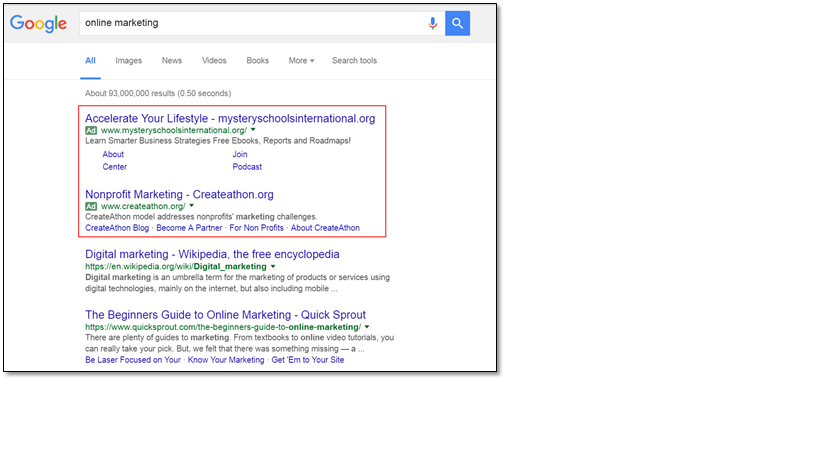
Paid results are advertisements. Businesses pay to have their websites appear at the top of the page for specific keywords. This is often called Pay-Per-Click (PPC) advertising because the advertiser typically pays a fee each time someone clicks their ad.
Organic results are the listings that appear because of their relevance to the search query, not because someone paid for them. These are the results that SEO aims to improve. While PPC can get you immediate visibility, it stops the moment you stop paying.
Organic traffic from SEO is sustainable. It's an investment that can continue to deliver results long after the initial work is done.
What Matters for Ranking
Search engine ranking algorithms are complex and constantly evolving, but they are built around a few core principles. While hundreds of factors are at play, they generally fall into three main categories.
| Ranking Pillar | Description | Why It Matters |
|---|---|---|
| Relevance | How well the content on a page matches the user's search query. | Search engines want to provide the most relevant answers. This includes matching keywords and understanding the topic's context. |
| Authority | The trustworthiness of a website, often measured by the quality and quantity of links from other reputable sites. | Backlinks act like votes of confidence. A link from a well-respected site signals to search engines that your content is valuable. |
| User Experience | Factors that affect how a user interacts with your site, such as page speed, mobile-friendliness, and intuitive navigation. | A site that is slow, confusing, or hard to use on a phone creates a poor experience, and search engines will avoid sending users there. |
As a software engineer, you have a direct impact on user experience factors. Optimizing code, ensuring fast load times, and building a responsive design are not just good development practices—they are also fundamental to good SEO.
What is the primary goal of Search Engine Optimization (SEO)?
Which of the following describes the 'indexing' phase of how a search engine works?
Understanding these fundamentals is the first step. SEO is about creating a great experience for both users and search engine crawlers, ensuring your valuable content gets the visibility it deserves.