Mastering Scientific Studies
Study Design
The Blueprint of Discovery
Every research project needs a plan, a kind of blueprint that guides the investigation from start to finish. This is called the study design. It’s the framework that shapes how a research question will be answered. Choosing the right design is crucial because it determines what a study can realistically discover and how much confidence we can have in its findings.
Study design is the framework that determines what questions researchers can answer and how reliable their conclusions will be.
Think of it like building a house. You wouldn't start laying bricks without a detailed plan. Similarly, researchers don't start collecting data without first deciding on the most appropriate structure for their study. The question they're trying to answer dictates the design they choose. Is the goal to test a new medicine? Or to understand a person's lived experience? Each requires a different approach.
Experiments and Observations
Most quantitative studies fall into two broad categories: experimental and observational. The key difference is the role of the researcher. In an experimental study, researchers are active participants. They introduce an intervention and observe the effect.
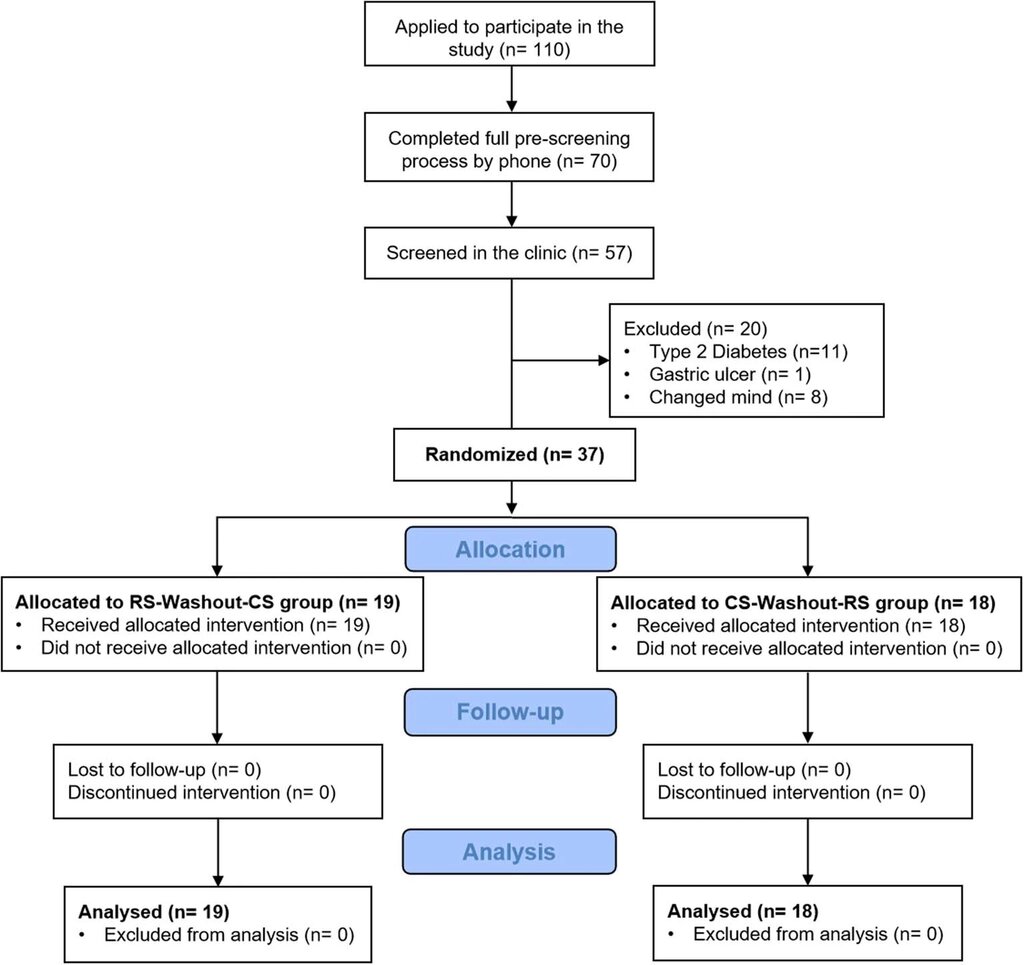
The gold standard for experimental studies is the Randomised Controlled Trial (RCT). In an RCT, participants are randomly assigned to one of two or more groups. One group receives the new intervention being tested (like a new drug), while the other group, the control group, receives a placebo or the current standard treatment.
Randomisation is the secret sauce. By randomly assigning people, researchers ensure that the groups are as similar as possible in every way except for the intervention they receive. This helps to isolate the effect of the intervention, making RCTs the most powerful design for determining if something directly causes an outcome.
In observational studies, researchers take a more passive role. They don't intervene; they simply observe and measure things as they naturally occur. The goal is to find associations or relationships between an exposure (like a lifestyle choice) and an outcome (like a health condition). There are three common types: cohort, case-control, and cross-sectional studies.
Tracking Over Time
Cohort studies are forward-looking. Researchers identify a group of people (the cohort) and follow them over a period of time. At the start, none of the participants have the outcome of interest. The cohort is divided based on whether they are exposed to a certain factor or not. For example, a study might follow a cohort of smokers and a cohort of non-smokers for years to see who develops heart disease.
Case-control studies work in the opposite direction; they are retrospective, or backward-looking. Researchers start with two groups of people: one group with the outcome of interest (the 'cases') and a similar group without it (the 'controls'). They then look back in time, often using interviews or records, to compare the past exposures of the two groups. This design is particularly useful for studying rare diseases, where it would be impractical to follow a large cohort waiting for the disease to appear.
Imagine investigating a food poisoning outbreak. The 'cases' would be people who got sick, and the 'controls' would be people who attended the same event but didn't get sick. You would then ask everyone what they ate to pinpoint the likely source.
A cross-sectional study is like a snapshot in time. It collects data from a population at a single point in time. This type of study can tell us about the prevalence of a condition or a behaviour in a population right now. For example, a survey asking about current exercise habits and symptoms of anxiety would be a cross-sectional study. It can show if there's a link between the two, but it can't tell us which came first.
Beyond the Numbers
Not all research questions can be answered with numbers. When the goal is to understand experiences, beliefs, or cultures, researchers turn to qualitative methods. These methods collect non-numerical data, such as words, images, or observations.
Qualitative
adjective
Relating to, measuring, or measured by the quality of something rather than its quantity. It aims to understand the 'why' and 'how' behind human behaviour.
Common qualitative methods include:
- Interviews: In-depth, one-on-one conversations that allow researchers to explore topics in detail.
- Focus Groups: Small group discussions guided by a moderator to gather opinions on a specific topic.
- Observations: Researchers watch and record behaviour in a natural setting. This is often used in fields like anthropology and sociology.
Qualitative research provides rich, detailed insights that can be missed by quantitative approaches. It helps to understand the context and meaning behind actions and events.
Making the Right Choice
So, how do researchers choose the best design? The decision always circles back to the research question. The table below summarises which design might be best suited for different research goals.
| Research Goal | Best Study Design(s) | Key Feature |
|---|---|---|
| Does an intervention cause an effect? | Randomised Controlled Trial (RCT) | Random assignment to groups |
| What is the link between an exposure and a future outcome? | Cohort Study | Follows groups forward in time |
| What past exposure might have caused a current outcome? | Case-Control Study | Looks back in time from outcome |
| What is happening in a population right now? | Cross-Sectional Study | A single snapshot in time |
| How do people experience or understand something? | Qualitative Methods | Gathers non-numerical, in-depth data |
Often, different study designs are used to build up a body of evidence. A cross-sectional study might first identify a potential link, which is then investigated more thoroughly with a case-control or cohort study. Finally, an RCT might be used to confirm a causal relationship.
Understanding these fundamental designs is the first step in being able to read and interpret scientific research. Each one offers a different lens through which to view a problem, with its own unique strengths and limitations.
What is the primary purpose of a research study design?
A study that collects data from a group of people at a single point in time to assess the prevalence of a condition is known as a: