Mastering Scientific Literature
Anatomy of Peer-Review
The Blueprint of a Scientific Paper
Scientific papers aren't written like novels. They follow a strict, standardized structure that acts as a roadmap for the reader. This isn't about stifling creativity; it's about clarity and efficiency. The goal is to let other scientists quickly grasp the core argument, evaluate the evidence, and understand the contribution to the field.
This structure is almost universally known by the acronym IMRaD: Introduction, Methods, Results, and Discussion. Before we dive into the main sections, let's start at the very beginning with the gatekeepers of any paper: the Title and Abstract.
The Title is the paper's six-word story. It should concisely state the primary finding or subject. The Abstract is the trailer. It gives you the entire plot—the question, the approach, the key results, and the main conclusion—in about 250 words. Reading the abstract first is the most efficient way to decide if the full paper is relevant to you.
Think of this framework as a logical argument. The authors are making a claim and must provide convincing evidence. Each section has a specific job to do in building that case. Understanding these roles allows you to read strategically, jumping between sections to find the information you need rather than reading from start to finish. This entire package is then submitted for , where other experts in the field scrutinize the work before it's published.
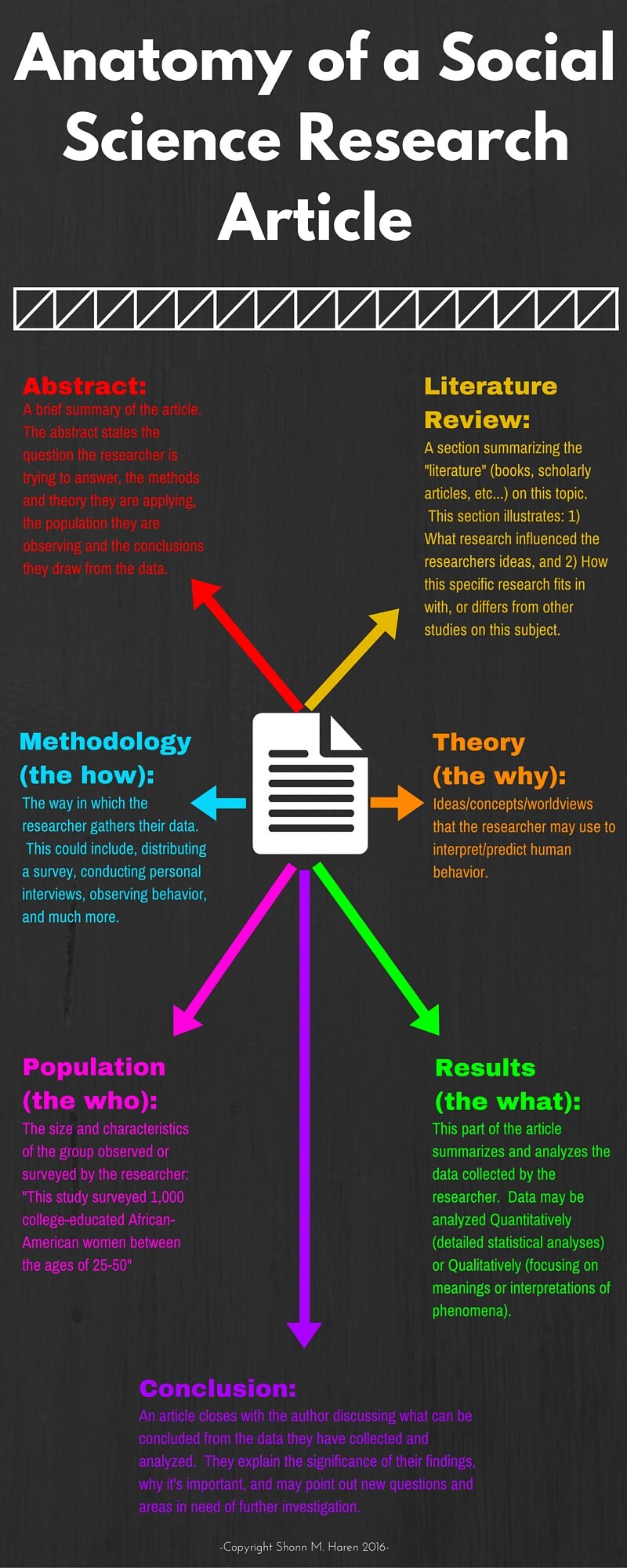
Navigating IMRaD
The IMRaD structure organizes the story of a scientific discovery in a logical sequence. It answers four key questions:
- Introduction: What was the problem/question?
- Methods: How did you study it?
- Results: What did you find?
- Discussion: What does it mean?
Most academic research papers follow a standard framework, often summarized as IMRaD: Introduction, Methods, Results, and Discussion.
Let's break down the role of each section.
Introduction and Discussion
The Introduction sets the stage. It acts like a funnel, starting with the broad state of the field and progressively narrowing down. First, it tells the reader what is already known about the topic. Then, it points out what is not known—the specific that this study aims to fill. Finally, it clearly states the research question or hypothesis the authors are testing.
A common mistake is to confuse the Introduction with the Discussion. They are mirror images of each other. The Introduction funnels down from broad context to a specific hypothesis. The Discussion, on the other hand, starts with the specific findings of the study and funnels out, explaining how they answer the initial question, how they fit into the broader field, what their limitations are, and what new questions they open up.
Methods and Results
The Methods section is the technical core of the paper. It's a detailed recipe, outlining the exact procedures, materials, and statistical analyses used. The goal is reproducibility. Another researcher should, in theory, be able to replicate the study precisely by following these instructions. For a casual reader, it's often the most technical and skippable section on a first pass. However, for a critical evaluation, this section is crucial—if the methods are flawed, the results are unreliable.
The Results section presents the findings of the study, period. It is a straightforward, objective report of the data. This section is filled with figures, tables, and statistical values. It should present the facts without interpretation or speculation. A good strategy is to look at the figures and tables first, trying to interpret them on your own before reading the authors' accompanying text. This helps you form an unbiased view of the evidence presented.
By understanding this blueprint, you can stop reading papers from front to back and start dissecting them. Jump from the Abstract to the Discussion to see the main takeaway. If it's interesting, dive into the Results to check the evidence. If you question the evidence, scrutinize the Methods. This is how you read a paper like a scientist.
Ready to test your understanding of how scientific papers are built?
What does the acronym IMRaD, which describes the standard structure of a scientific paper, stand for?
If you want to critically evaluate whether a study's conclusions are trustworthy, which section provides the necessary details to assess the experiment's validity and reproducibility?
Knowing the standard structure of a research paper transforms it from an intimidating document into a navigable resource, allowing you to extract key information efficiently.