Mastering Scientific Literature
Introduction to Scientific Inquiry
Thinking Like a Scientist
Scientific inquiry isn't just for people in lab coats. It's a structured way of asking questions and finding answers about the world around us. At its heart, it’s about being curious and methodical. Think about a simple problem, like why your houseplant's leaves are turning yellow. Your process of figuring out the cause—checking the soil, thinking about sunlight, wondering about water—is a form of scientific inquiry.
It’s a systematic process of exploration that turns curiosity into knowledge.
This process helps us move beyond simple guesses. Instead of just assuming the plant is sick, we can use a framework to find the real cause and a potential solution. That framework is often called the scientific method.
The Scientific Method
The scientific method is a series of steps that guide the inquiry process. It’s more of a cycle than a straight line, where each discovery can lead to new questions.
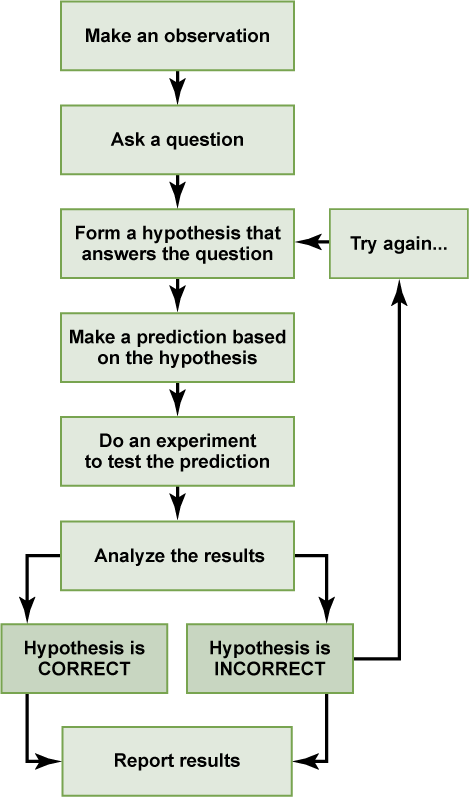
Let's walk through the steps using our yellowing plant example:
-
Observation & Question: You notice the leaves are yellow. This leads to the question: "Why are the leaves turning yellow?"
-
Hypothesis: You form a testable explanation. A hypothesis isn't just any guess; it has to be something you can prove right or wrong. For example: "The plant is turning yellow because it is not getting enough sunlight." This is specific and testable. A vague statement like "The plant is unhappy" isn't a good hypothesis because you can't test unhappiness.
-
Experimentation: Now you test your hypothesis. You could move the plant to a sunnier window for a week. The key is to change only one thing at a time—the variable you are testing (sunlight). If you also started watering it more, you wouldn't know which change made the difference.
-
Analysis: After a week, you examine the results. Are the new leaves green? Has the yellowing stopped? You collect and interpret this data. If nothing changed, your hypothesis might be wrong. That's not a failure; it's just as valuable because it helps you rule out a possible cause.
An incorrect hypothesis is still a success, as it narrows down the true cause of a phenomenon.
Questions Science Can Answer
Scientific inquiry can only tackle questions that are testable and falsifiable. Falsifiable means there's a way to prove the explanation wrong. The hypothesis about the plant needing more sunlight is falsifiable; if you give it more sun and it doesn't improve, you've shown the hypothesis is likely incorrect.
| Scientific Questions (Testable) | Non-Scientific Questions (Not Testable) |
|---|---|
| Does vitamin C reduce the length of a cold? | Is it wrong to lie? |
| What is the melting point of lead? | What is the meaning of life? |
| How does gravity affect plant growth? | Is vanilla better than chocolate? |
Questions about morality, ethics, or personal preference fall outside the scope of science because they can't be proven true or false through experimentation. Science can tell you the nutritional content of vanilla and chocolate, but it can't tell you which one tastes better.
Skepticism and Community
Science isn't done in a vacuum. It's a collaborative and skeptical process. Healthy skepticism means not accepting claims without evidence. Scientists are trained to question everything, including their own results and the work of others.
This is where peer review comes in. Before a study is published in a reputable scientific journal, other experts in the same field review it anonymously. They check the methodology, look for errors in the analysis, and assess whether the conclusions are supported by the data.

Peer review acts as a quality control system. It doesn't guarantee a study is perfect, but it ensures the research has been vetted by knowledgeable critics. This process helps filter out weak or flawed work and makes scientific knowledge more reliable over time. Ideas that withstand repeated testing and scrutiny from the scientific community are the ones that eventually become well-established theories.
Which of the following is the best example of a testable hypothesis?
In a scientific experiment, if the results do not support your hypothesis, it means the experiment was a failure.
This framework of inquiry, testing, and review is the foundation of how we build reliable knowledge about our world.