Mastering Scientific Literacy
Scientific Paper Architecture
The Architecture of a Research Paper
Most researchers are familiar with the IMRaD structure: Introduction, Methods, Results, and Discussion. But thinking of it as a simple checklist misses the point. A well-written scientific paper isn’t just a report; it’s a carefully constructed narrative designed to persuade the reader. Each section plays a specific role in telling a story that starts with a question and ends with a conclusion.
Most academic research papers follow a standard framework, often summarized as IMRaD: Introduction, Methods, Results, and Discussion.
Understanding this narrative structure allows you to read more efficiently. Instead of reading from start to finish, you can strategically navigate the paper to extract the information you need, whether it's the core finding, the specific technique used, or the broader implications of the work.
The IMRaD Narrative Arc
The IMRaD sections create a logical flow that mirrors the scientific process itself. The Introduction sets the stage by establishing what is known and, more importantly, what isn't. It funnels the reader from a broad topic area to a specific, unanswered question. This is where the authors justify their work. They present their hypothesis or primary objective as the logical next step in the field. High-impact journals often require authors to explicitly state the 'Significance' of their work here, making a clear case for why the research matters.
The Methods section is the technical core of the paper. Its primary purpose is to provide enough detail to allow another researcher to replicate the study. This commitment to reproducibility is a cornerstone of scientific integrity. This section should read like a precise recipe, detailing every step, material, and piece of equipment used. It's often dense, but it's the foundation upon which the paper's claims are built.
If a study can't be reproduced, its findings can't be independently verified. The Methods section is the key to that verification.
The Results section presents the findings without interpretation. It's a straightforward, objective report of the data. This section answers the question, "What did you find?" It will be filled with figures, tables, and statistical analyses. The text guides the reader through these visuals, pointing out the key outcomes. A common mistake is to look for the meaning of the findings here; that comes next.
Finally, the Discussion section provides the interpretation. It answers, "What does it all mean?" Here, the authors connect their results back to the original hypothesis from the Introduction. They explain how their findings fit into the existing body of knowledge, acknowledge the study's limitations, and often suggest directions for future research. This is where the story comes full circle.
Beyond the Main Text
The main IMRaD sections are just part of the story. Several other components provide crucial context and transparency.
The Abstract is a miniature version of the paper. There are two main types: structured abstracts, which have explicit subheadings (e.g., Background, Methods, Results, Conclusion), and unstructured abstracts, which are a single paragraph. While incredibly useful for a quick overview, abstracts are summaries and inherently lack detail. Never rely solely on the abstract to understand a study; it can sometimes oversimplify or even misrepresent the nuances of the findings.
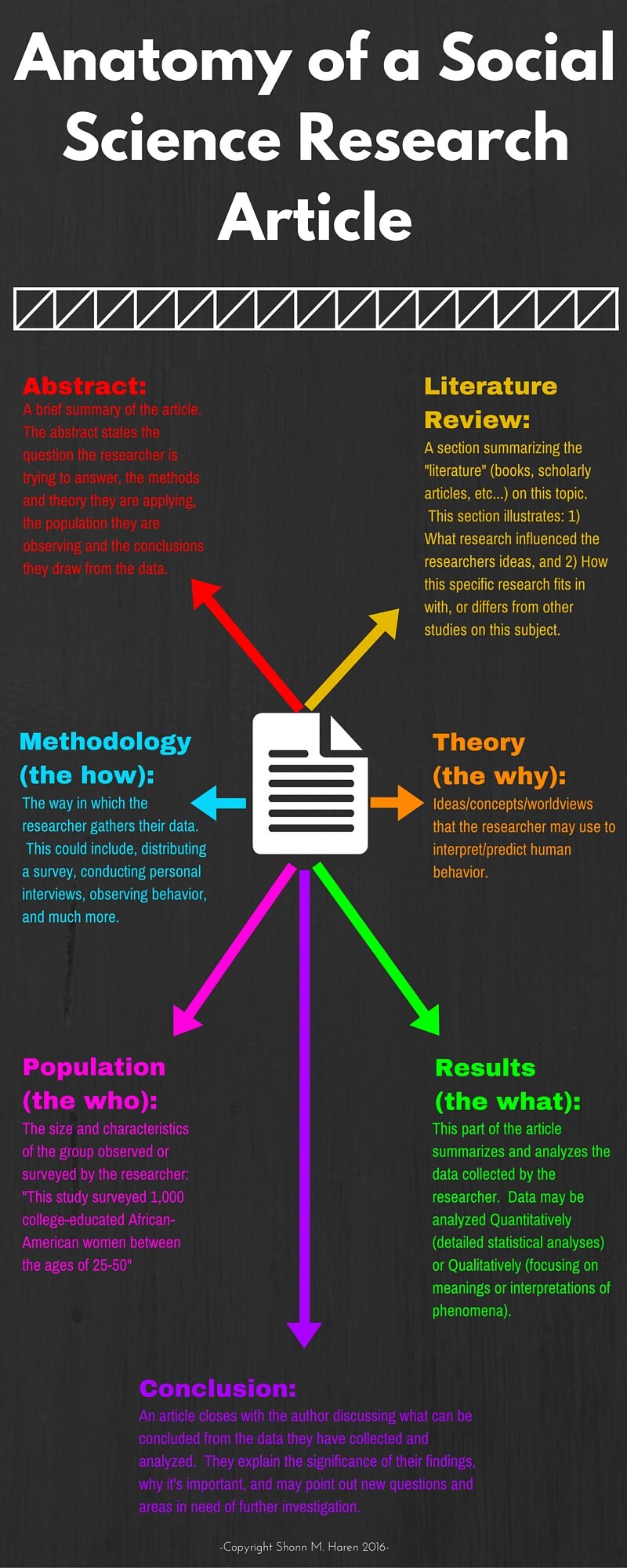
Increasingly, the most detailed information lives in the Supplemental Materials. This section, often available online as a separate file, contains the overflow from the main paper. It might include extended methods, extra figures and tables, raw datasets, or even videos. When you need to understand the nitty-gritty details of a study or access the underlying data, the supplemental section is the first place you should look. Data availability statements, now mandatory in many journals, will direct you to the specific repository where the study's data is housed.
Now, let's test your understanding of how to navigate a scientific paper.
What is the primary function of the IMRaD structure in a scientific paper?
If you wanted to find the authors' interpretation of their findings and how they fit into the existing body of scientific knowledge, which section should you read?
By understanding this architecture, you can move from being a passive reader to an active investigator, efficiently dissecting research papers to find exactly what you need.