Mastering Scientific Literacy
Anatomy of Papers
The Anatomy of a Paper
Scientific papers can seem dense and intimidating. The good news is that most follow a predictable structure. This standard format, known as IMRaD, is your roadmap to understanding the research efficiently. It stands for Introduction, Methods, Results, and Discussion.
Instead of reading a paper from start to finish like a novel, the best approach is strategic and non-linear. Your goal is to extract the key information without getting bogged down in details.
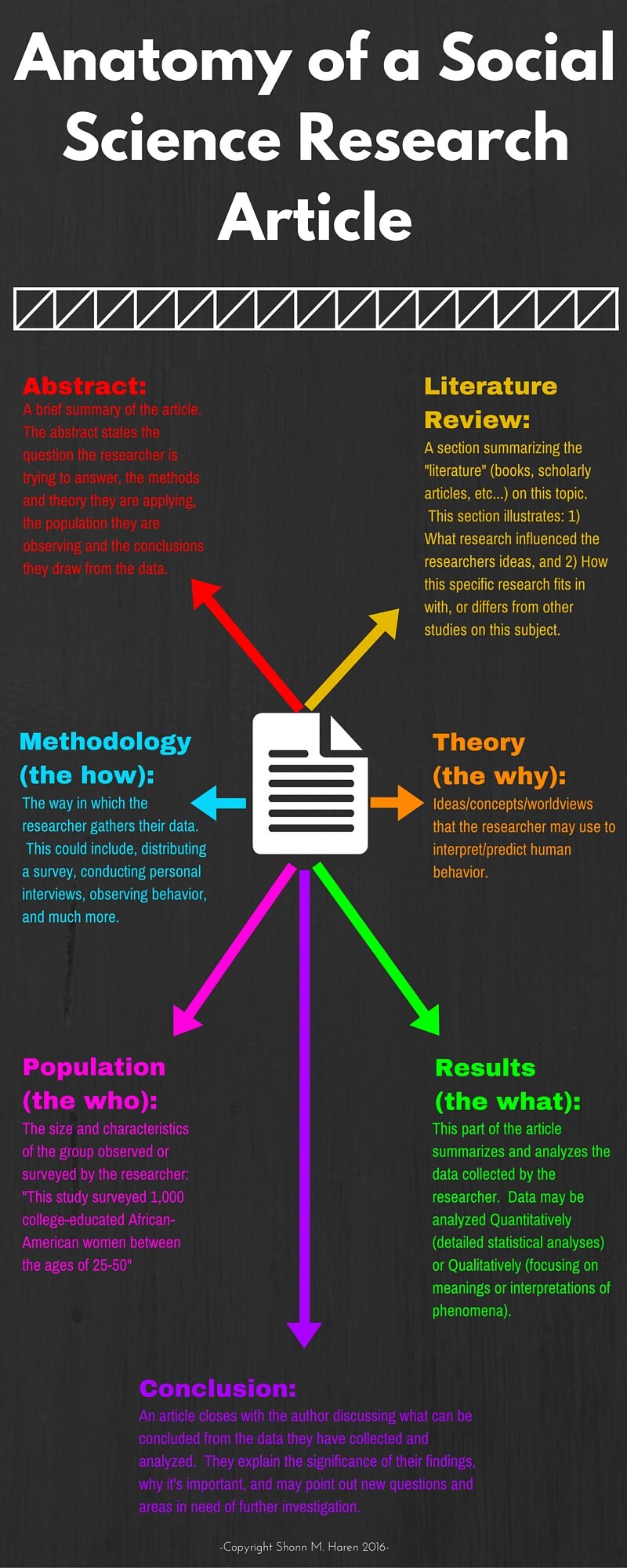
Each section serves a specific purpose:
- Introduction: Why did the authors do this study? It sets the scene by summarising existing research, identifies a gap in current knowledge, and states the research question or hypothesis.
- Methods: How did they do it? This section is a detailed recipe of the experiment, including the participants, materials, and procedures used.
- Results: What did they find? It presents the raw data and statistical analysis without any interpretation.
- Discussion: What does it all mean? Here, the authors interpret their findings, explain their significance, acknowledge limitations, and suggest directions for future research.
A Strategic Reading Order
Reading a paper linearly is rarely the best use of your time. A more effective strategy is to jump between sections to build your own understanding of the work before being influenced by the authors' interpretation.
This approach allows you to critically evaluate the research on its own terms. By looking at the Results and Methods first, you can decide for yourself what the data says. Only then should you read the Discussion to see how your interpretation aligns with the authors'.
Finding the Core Questions
The Introduction is where the authors make their case for why their research is needed. Your job is to find the 'knowledge gap' they aim to fill. This is often signalled by phrases like 'it is not yet understood...', 'previous research has not addressed...', or 'the role of X remains unclear'. This gap directly leads to the study's main goal.
A study often has one primary objective and several secondary ones. The primary objective is the main research question the entire paper is built around. Secondary objectives are additional questions the study explores, which might be less central to the main argument but still provide valuable insights.
For example, in a paper about a new drug, the primary objective might be to test its effectiveness against a specific disease. A secondary objective could be to document its side effects. The conclusion of the paper will hinge on the primary objective, so identifying it early helps you focus on the most critical information.
What does the acronym IMRaD stand for in the context of scientific papers?
In which section of a paper would you find a detailed description of the experimental procedures, participants, and materials used?