Mastering Scientific Literacy and Research Analysis
Methodology Analysis
Anatomy of a Method
The Methods section is the blueprint of a scientific study. It tells you exactly what the researchers did, how they did it, and who they did it with. Your job as a critical reader is to act as an inspector, checking that blueprint to see if the structure is sound. Not all research designs are created equal; some provide stronger evidence than others. This concept is often visualized as a pyramid.
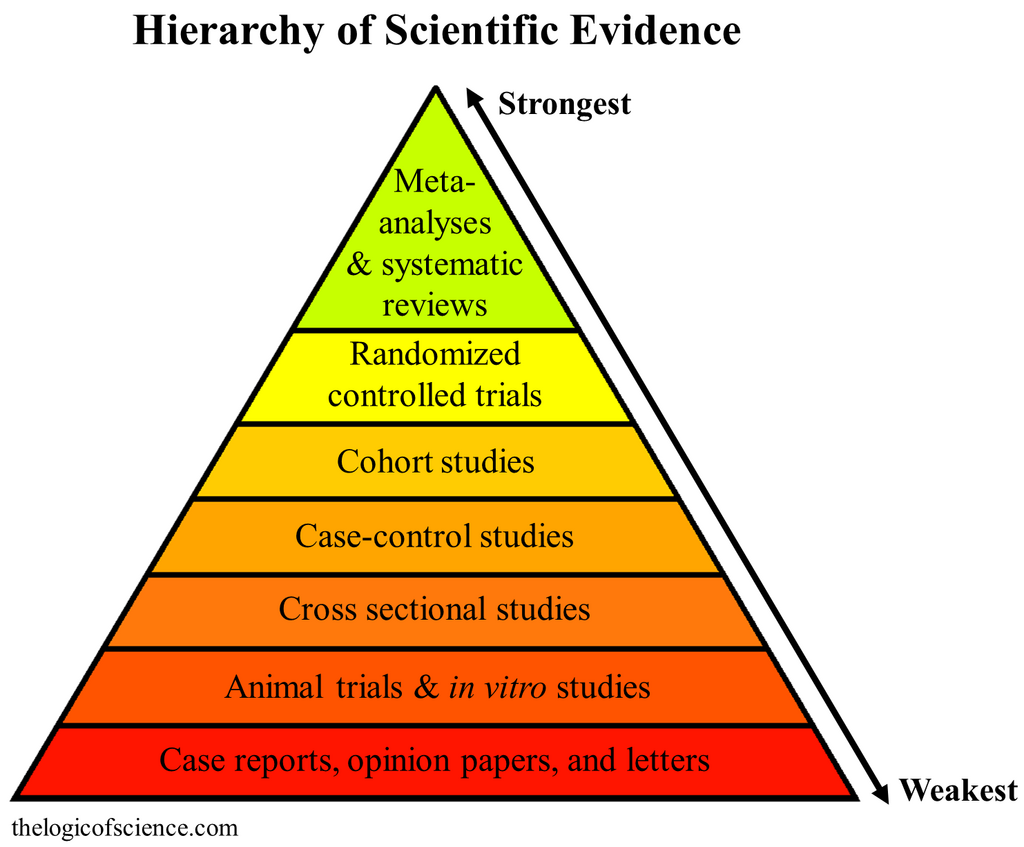
At the top are systematic reviews and meta-analyses, which synthesize the results of multiple studies. Below them are Randomized Controlled Trials (RCTs), often considered the gold standard for testing an intervention. Further down are observational studies, like cohort and case-control studies. Understanding where a study sits in this hierarchy is the first step in judging its strength.
Deconstruct the Question with PICO
Before you can judge a study's design, you need to be crystal clear on the question it's trying to answer. The PICO framework is a simple tool for breaking down a research question into its core components. It helps you clarify what's being tested, in whom, and against what.
| Component | Question | Example |
|---|---|---|
| Population | Who are the patients or subjects? | Overweight adults with type 2 diabetes |
| Intervention | What is the new treatment or exposure? | A new weight-loss drug |
| Comparison | What is the alternative? | A standard diet and exercise plan (or a placebo) |
| Outcome | What is the result being measured? | Change in blood sugar levels after 6 months |
By applying the PICO framework, you can quickly assess if the methodology chosen is actually capable of answering the stated hypothesis. If a study wants to know if a new drug lowers blood sugar (the Outcome), its method must include a way to measure blood sugar in the right Population, comparing the Intervention to a relevant Comparison.
The Gold Standard and Its Limits
Randomized Controlled Trials (RCTs) are powerful because they use random assignment to create two or more groups that are, in theory, identical except for the intervention being tested. One group gets the new treatment, while the control group gets the standard treatment or a placebo. Since the only key difference between the groups is the intervention, researchers can be more confident that any observed differences in outcomes are caused by that intervention.
This high degree of control gives RCTs high internal validity. That means we can trust the results for the specific group of people in the study. However, this strength can also be a weakness.
RCTs often have strict rules about who can participate, known as inclusion and exclusion criteria. For example, a trial for a new heart medication might exclude patients who have kidney problems or are over 75 years old.
This is done to create a uniform study population and isolate the effect of the drug. The trade-off is that the results might not apply to a 78-year-old with kidney issues, even if they have the same heart condition. This limitation is called low external validity—the findings are less generalizable to the real-world population of patients.
When Experiments Aren't an Option
What if you want to study the effects of smoking on lung cancer? You can't ethically run an RCT where you randomly assign people to a "smoking group" and a "non-smoking group." This is where observational studies come in. Instead of assigning an intervention, researchers simply observe groups of people and their outcomes.
The two most common types are cohort studies and case-control studies.
Cohort Study
noun
A study that selects a group of people (a cohort) and follows them over time to see who develops a particular outcome. The study compares the outcome rate between those who were exposed to a factor and those who were not.
A cohort study can be prospective (starting now and following people into the future) or retrospective (using past records to follow them forward in time from a point in the past).
A case-control study works in reverse. It starts with people who already have the outcome (the "cases," e.g., people with lung cancer) and compares them to a similar group of people who don't have the outcome (the "controls"). It then looks backward in time to see if there's a difference in their past exposure to a risk factor (e.g., smoking).
Choosing between these designs involves trade-offs. Prospective cohort studies can be very expensive and take decades to complete, but they provide strong evidence about cause and effect. Case-control studies are faster and cheaper, making them ideal for studying rare diseases, but they are more susceptible to bias because they rely on people's memory of past exposures.
Ultimately, the best method is the one that most appropriately and ethically answers the research question within the constraints of time, money, and feasibility.
When you read the Methods section, check the inclusion and exclusion criteria. These rules define the study's population. Ask yourself: Is this population well-defined? Do these criteria make sense for the research question? And most importantly, how do these criteria affect the study's external validity? A study on a new Alzheimer's drug that only includes patients aged 65-70 might not be applicable to someone diagnosed at 85. Recognizing these details is a key part of critical analysis.
Now, let's test your understanding of these methodological concepts.
Which of the following study designs is typically considered the 'gold standard' for establishing a cause-and-effect relationship between an intervention and an outcome?
In a study evaluating if a new mindfulness app reduces anxiety in college students compared to a standard relaxation pamphlet, what does the 'P' in the PICO framework represent?
Understanding a study's methodology is like looking under the hood of a car. It shows you how the engine of discovery works and helps you decide whether you can trust the journey's conclusion.