Mastering SAP ERP Systems and Integration
SAP Organizational Hierarchy
The SAP Blueprint
Unlike a standard corporate org chart, SAP organizes a business using a specific, rigid hierarchy. This structure isn't just for show; it dictates how data is stored, shared, and controlled across the entire system. Getting this blueprint right is one of the most critical steps in any SAP implementation, as it forms the foundation for every business process.
Defining an Organization structure is the very first configuration to be done during any SAP implementation.
Let's break down the key building blocks of this structure, starting from the very top.
Client and Company Code
The highest level in the entire SAP system is the Client. Think of it as the parent corporation or the entire corporate group. For example, a global conglomerate like The Coca-Cola Company would be represented as a single Client. The Client is a self-contained unit with its own set of master records and tables. Certain data, like user master records, are always client-specific.
One level down is the Company Code. This is the smallest organizational unit for which a complete, self-contained set of financial statements can be drawn up for external reporting purposes. Every company code is an independent legal entity with its own balance sheet and profit-and-loss statement. A single Client can contain multiple Company Codes. For instance, The Coca-Cola Company (the Client) might have separate Company Codes for its operations in the United States, Germany, and Japan, each with its own legally required financial reporting.
A Company Code must be assigned to one, and only one, Client. However, a single Client can house many different Company Codes.
This structure has a profound impact on data. Master data, like a list of approved vendors, can be created at the Client level and shared across all Company Codes. However, financial transaction data, such as an invoice posted for the German operation, is tied exclusively to the German Company Code. This allows for both centralized control and local autonomy.
Plant and Storage Location
Moving into the logistics side of the business, we have the Plant. A Plant is an operational unit within a company. It can be a manufacturing facility, a distribution center, a regional sales office, or even a corporate headquarters. It's a physical location where goods are produced, stored, or distributed.
A key rule in SAP is that a Plant must be assigned to a single Company Code. For example, a factory in Dallas would be assigned to the US Company Code. However, that US Company Code could have multiple Plants assigned to it: the Dallas factory, a warehouse in Miami, and a sales office in Chicago.
Finally, within each Plant, you can define one or more Storage Locations. This is the level where materials are physically stored and managed. A single Plant, like the Dallas factory, might have separate Storage Locations for raw materials, finished goods, and spare parts. This allows for precise inventory tracking within a facility.
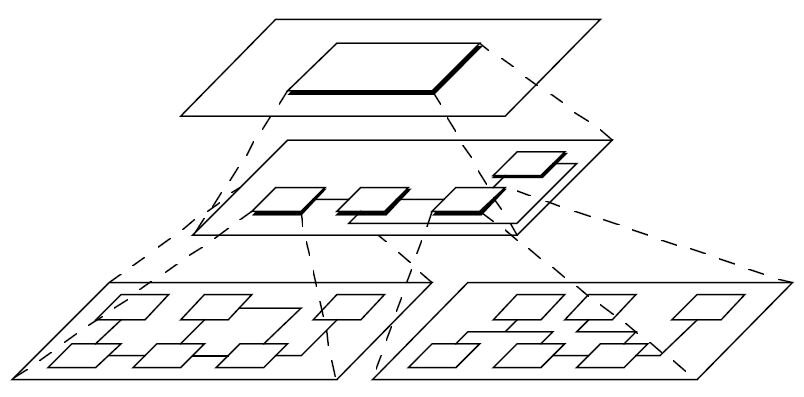
The full logistical hierarchy flows logically: A Client has Company Codes, which have Plants, which in turn have Storage Locations. This tiered structure ensures that every transaction, from a financial posting to a simple goods movement, is precisely located within the business.
Connecting It All
Different SAP modules rely on specific parts of this organizational structure to function. The way these units are linked together is what allows for the seamless integration SAP is known for. A sales order, for instance, triggers actions in finance, inventory, and logistics, all because the underlying organizational units are correctly connected.
| Module | Primary Org Units | Purpose |
|---|---|---|
| FI (Financial Accounting) | Company Code | Manages all financial transactions, legal reporting. |
| CO (Controlling) | Controlling Area | Manages internal costs and performance (can span multiple Company Codes). |
| MM (Materials Management) | Plant, Storage Location | Handles procurement, inventory management, and material valuation. |
| SD (Sales & Distribution) | Sales Organization, Plant | Manages the entire sales process, from orders to delivery and billing. |
For example, in Sales and Distribution (SD), you define a Sales Organization responsible for selling and distributing products. This Sales Organization is assigned to a Company Code. When it sells a product, it ships it from a specific Plant. This assignment between the Sales Organization and the Plant is what connects the sales process (SD) to inventory management (MM) and ultimately ties the revenue and cost of that sale back to the correct legal entity (FI).
This interconnected web of organizational units is the backbone of SAP. It provides the structure necessary to map complex global business operations into a single, unified system, ensuring data integrity and process consistency across the board.
In the SAP organizational hierarchy, what is the highest level, representing the entire corporate group?
A multinational corporation has legally distinct entities in France and Mexico that each require their own balance sheets for external reporting. Which SAP organizational unit should be used to represent each of these legal entities?