Mastering Rummikub Strategy
Initial Meld Strategy
To Meld or Not to Meld
You've got the 30 points. The rules say you can enter the game. So, you should lay down your tiles immediately, right? Not so fast. Your initial meld is the first major strategic decision you'll make in Rummikub, and rushing it can be a rookie mistake. The choice isn't just about meeting the point threshold; it's about control, information, and timing.
Don't rush to make your initial 30-point meld.
The central question is whether to meld early or to hoard your tiles. Melding early gets you on the board, allowing you to play on other players' melds and reduce the number of tiles in your hand. This is the safe, conservative play. But sometimes, the best move is to wait.
The Power of Patience
Hoarding tiles, or intentionally waiting to play your initial meld even when you have the points, can feel counterintuitive. You're forced to draw a new tile each turn, growing your hand while others shrink theirs. But this strategy is all about playing the long game. By waiting, you give yourself time to build a truly powerful and flexible hand.
Imagine you can make your 30 points with a set of three 10s. That's a valid move, but it's not a great one. Those 10s might be the only high-value tiles you have. A stronger approach is to wait until you can meld with long, connected runs, like a 4-5-6-7-8 of the same color. This strategy preserves the flexibility of your hand and improves your tile connectivity, giving you more options for rearranging the board later.
Keeping your tiles hidden also gives you a significant information advantage. As long as your tiles are on your rack, your opponents have no idea what colors or numbers you're collecting. They can't play defensively to block you. You're a wildcard, quietly amassing a hand that can potentially win the game in a few explosive turns.
The Risk of the Hoard
Of course, hoarding isn't without its dangers. The most obvious risk is the point penalty. If another player empties their rack while you're sitting on 15 tiles, you're going to take a massive hit to your score. Assessing this risk involves watching your opponents. How many tiles do they have? Are they playing aggressively or also holding back?
The draw pile is your clock. As it shrinks, the pressure mounts. Each tile drawn by an opponent could be the last one they need. If the pile is getting low and you're still holding a large hand, the risk of hoarding skyrockets. At that point, it's often better to play your meld and get in the game, even if it's not the perfect combination you were hoping for. Waiting too long can turn a clever strategy into a costly blunder.
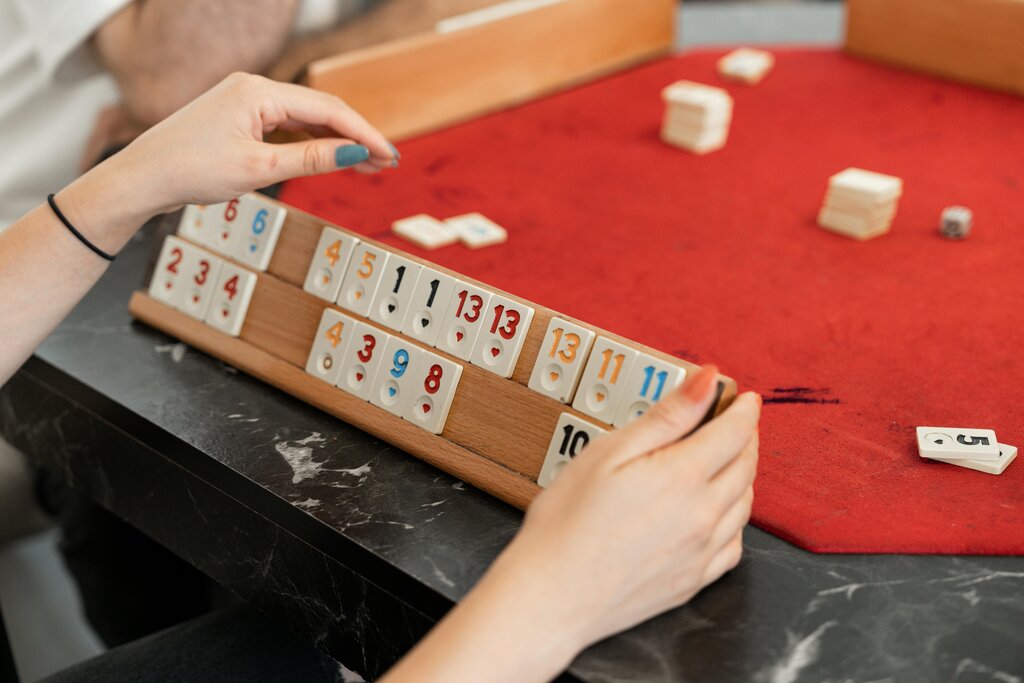
Ultimately, the decision to meld or hoard depends on a mix of factors: the quality of your hand, the behavior of your opponents, and the state of the draw pile. There's no single right answer. A good player knows how to read the game and decide whether it's time to play it safe or take a calculated risk for a bigger reward later on.
What is the primary advantage of making your initial meld as soon as you have the required 30 points?
Intentionally waiting to play your initial meld, even when you have enough points, is a strategy known as 'hoarding'.