Mastering Rowing Technique
Rowing Basics
Two Styles of Rowing
Rowing on the water comes in two main flavors: sweep and sculling. The difference is simple: how many oars each rower handles.
In sweep rowing, each person uses one oar. They work in pairs, with one rower on the port (left) side and another on the starboard (right) side of the boat to keep it balanced. These boats always have a coxswain (pronounced “kok-sn”) to steer and coach the crew. Sweep boats can have two, four, or eight rowers.
In sculling, each rower uses two oars, one in each hand. This allows for smaller boats, including singles (a scull for one person), doubles, and quads. Because scullers control both sides of the boat, they often don't need a coxswain and steer with their feet.
| Feature | Sweep Rowing | Sculling |
|---|---|---|
| Oars per Rower | One | Two |
| Common Boats | Pairs (2-), Fours (4+), Eights (8+) | Singles (1x), Doubles (2x), Quads (4x) |
| Coxswain? | Usually | Sometimes in Quads, never in Singles/Doubles |
Your Rowing Equipment
Rowers use specialized gear to move efficiently across the water. The boat itself is called a shell. Shells are long, narrow, and lightweight to minimize drag. The seats slide back and forth, allowing rowers to use their powerful leg muscles.
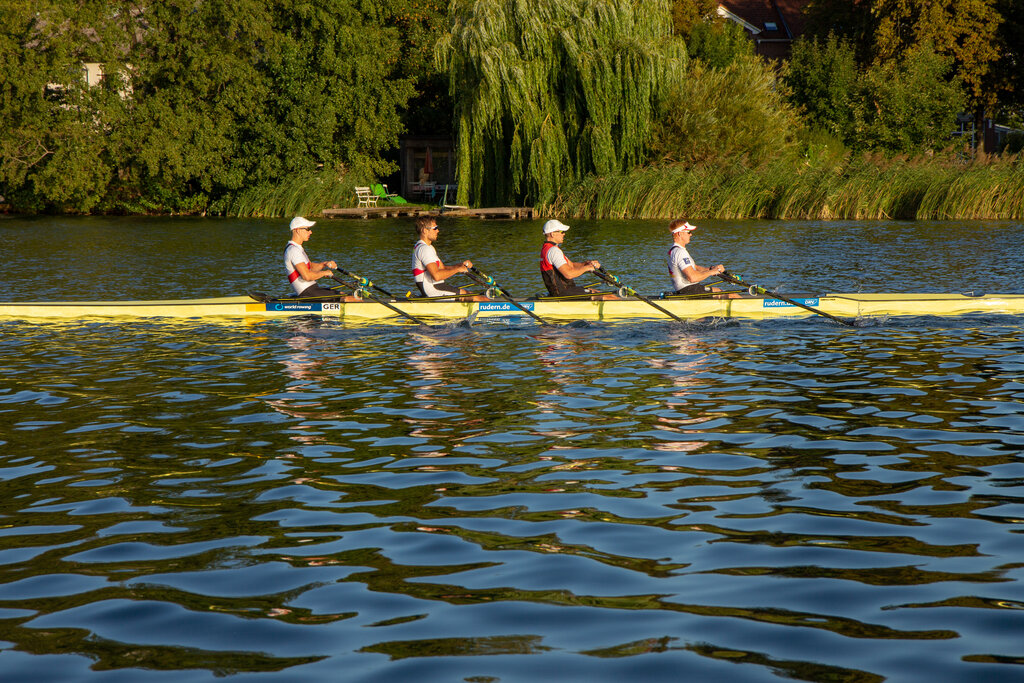
The oars are long poles with a flat blade at one end. They act as levers to propel the shell through the water. They attach to the boat at the oarlock, which pivots to allow the oar to move.
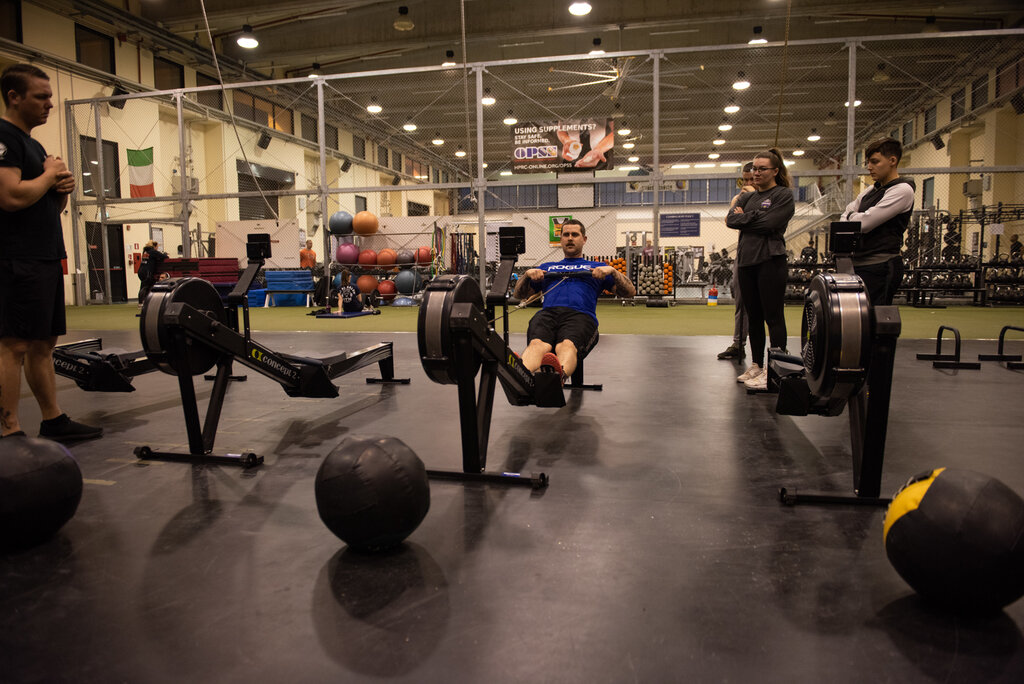
For training on land, rowers use an ergometer, or “erg.” This indoor machine simulates the rowing motion and provides a great full-body workout. It’s an essential tool for building strength and endurance when you can't get on the water.
The Four Parts of a Stroke
The rowing stroke is a fluid, continuous cycle broken down into four distinct parts. Mastering this sequence is key to powerful and efficient rowing.
- The Catch: This is the beginning of the stroke. The rower is coiled forward with arms straight, and the oar blade is dropped vertically into the water.
- The Drive: The power phase. The rower pushes forcefully with their legs, then swings their body back, and finally pulls the arms in. The oar blade is pushing water to move the boat forward.
- The Finish: The oar handle is drawn into the body, and the blade is lifted cleanly from the water. The legs are flat, and the rower is leaning back slightly.
- The Recovery: The rower moves back to the starting position. The hands extend, the body follows, and the seat slides forward, preparing for the next catch.
The drive is where the boat gets its speed. It's a common misconception that rowing is an arm-dominant sport. In reality, the power comes from the legs.
Rowing is a pushing sport - not a pulling one.
Think of the stroke as a dance: a powerful explosion followed by a graceful glide. Let's see what you've learned.
What is the primary difference between sweep rowing and sculling?
Which part of the rowing stroke is the power phase, where the rower propels the shell forward?
Understanding these fundamentals—the styles, the gear, and the stroke—is the first step to becoming comfortable and confident, whether on the water or on an erg.