Mastering Rhetorical Analysis
Introduction to Rhetoric
The Art of Persuasion
Have you ever tried to convince a friend to see a movie you love, or argued for a later curfew? If so, you've used rhetoric. Simply put, rhetoric is the art of effective or persuasive speaking and writing. It isn't about manipulation; it’s about understanding how to communicate your ideas clearly and compellingly.
The formal study of rhetoric began in ancient Greece, where citizens needed to speak persuasively in courts and public assemblies. Philosophers like Plato and Aristotle analyzed what made a speech successful. Aristotle, in particular, offered a definition that is still used today.
Aristotle defines rhetoric as “the faculty of observing in a given case the available means of persuasion,” which makes it distinct in that this function is not found in any other art.
In other words, rhetoric is the skill of finding the best way to persuade a specific audience in a specific situation. It’s a flexible art, not a rigid set of rules. To do this, Aristotle identified three main tools a speaker or writer can use.
The Three Appeals
Aristotle outlined three fundamental ways to persuade an audience. These are often called rhetorical appeals or persuasive strategies. They are ethos, pathos, and logos. Most effective arguments use a combination of all three.
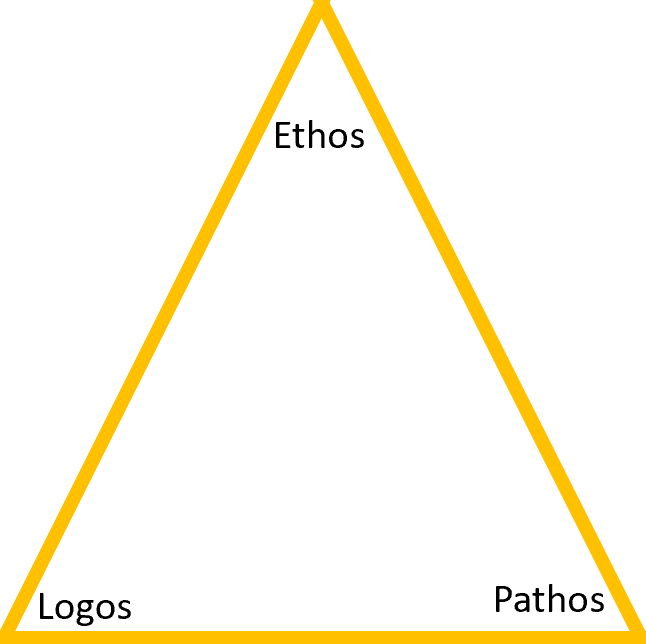
Let's break them down.
Ethos
noun
An appeal to the authority or credibility of the speaker. It's how you convince an audience that you are someone worth listening to.
You establish ethos by demonstrating expertise, good character, or goodwill. When a dentist tells you to floss daily, you listen because you trust their credentials. That's an appeal to ethos.
Pathos
noun
An appeal to the audience's emotions. It aims to evoke feelings like joy, anger, or sympathy to make the audience more receptive to the message.
Storytelling is a powerful tool for pathos. A moving anecdote can be more persuasive than a list of facts because it creates a personal connection with the audience.
Logos
noun
An appeal to logic and reason. This involves using facts, statistics, and clear, logical arguments to support a claim.
When you build an argument piece by piece and support it with evidence, you're using logos. It's the intellectual backbone of your message.
The Rhetorical Situation
Persuasion doesn't happen in a vacuum. The effectiveness of any communication depends on its context, which is often called the rhetorical situation. Understanding this situation helps you choose the right appeals and craft a more effective message.
The key components are the speaker, the audience, the purpose, and the context.
| Component | Description |
|---|---|
| Speaker | The person or group creating the message. Their credibility (ethos) matters. |
| Audience | The person or group receiving the message. Their beliefs, values, and knowledge shape how they interpret it. |
| Purpose | What the speaker wants the audience to do or think after receiving the message. |
| Context | The time, place, and cultural background of the communication. This includes current events or the medium being used (e.g., a speech vs. a text message). |
Think of a coach giving a halftime speech to their team. The coach is the speaker. The tired and discouraged players are the audience. The purpose is to motivate them to play better in the second half. The context is a high-stakes game, in a locker room, with limited time.
A successful coach will use strong pathos (rousing emotion), appeal to their ethos (as a trusted leader), and perhaps use logos (pointing out specific strategic errors). The speech would be completely different if the audience were sports journalists or the team's owners.
By analyzing the rhetorical situation, you can make smarter choices about how to persuade your audience.
According to Aristotle, what is rhetoric?
A commercial shows a group of sad, abandoned puppies in a shelter before asking for donations. Which rhetorical appeal is this commercial primarily using?
Mastering these foundational ideas of rhetoric gives you the tools to both craft more persuasive arguments and to critically analyze the messages you encounter every day.