Mastering Return to Play in Professional Football
Introduction to Return-to-Play Decision-Making
The Toughest Call in Football
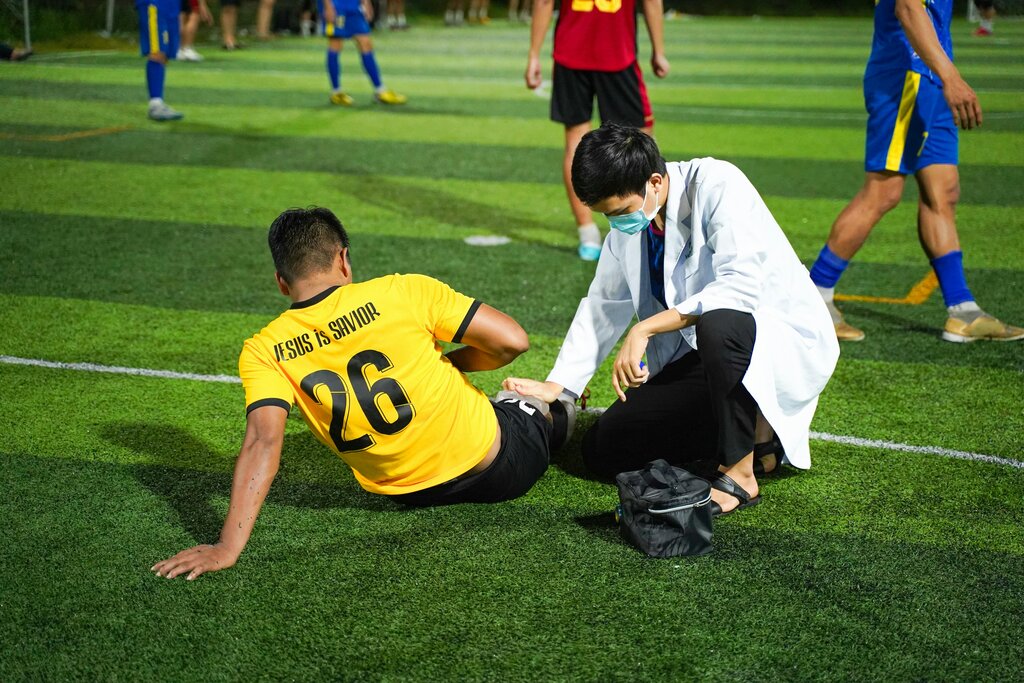
An athlete crumples to the turf. The stadium goes quiet. For a professional football player, an injury is more than just a physical setback—it's a threat to their career and their team's success. The moments and days that follow are filled with a critical process known as return-to-play, or RTP. This is the decision-making journey to determine when an injured player is ready to get back on the field.
It’s a high-stakes balancing act. Rushing a player back can lead to a more severe injury, potentially ending a season or even a career. Waiting too long, however, can cost the team crucial games. The RTP decision is where medicine, performance, and pressure all collide.
The Decision Makers
A return-to-play decision isn't made by one person. It’s a collaborative effort involving a team of experts, each with a unique perspective and priority.
-
The Athlete: No one knows the player's body better than the player themself. They can feel the pain, the weakness, or the readiness. However, their competitive drive and the pressure to perform can sometimes cloud their judgment, making them want to push through an injury before it's fully healed.
-
The Clinicians: This group includes team physicians, athletic trainers, and physical therapists. Their primary responsibility is the athlete's short-term and long-term health. They use medical knowledge and objective tests to evaluate the healing process and determine the risk of re-injury.
-
The Coaches: The coaching staff's main goal is to win games. They need their best players on the field to be successful. While they respect the medical process, their focus is on team performance, which can sometimes create tension with the more cautious medical perspective.
The core conflict often lies between the coach's need to win now and the medical team's duty to protect the player's future health.
Imagine the star quarterback injures his shoulder a week before the championship game. The coach sees the team's chances dwindling without him. The player, feeling the weight of expectation, insists he feels fine. But the doctor's MRI shows the ligament is still unstable. Whose voice carries the most weight? This is the central challenge of the RTP process.
How the Decision is Made
The RTP process isn't a single event but a continuum. It begins the moment an injury occurs and ends only when the player is fully competing without limitations. While every injury is different, the journey generally follows a few key phases.
-
Medical Evaluation: First, the medical team diagnoses the injury to understand its severity. This involves physical exams and often imaging like X-rays or MRIs.
-
Rehabilitation: The athlete works with trainers and therapists to restore strength, range of motion, and stability. This phase is carefully monitored to ensure the injured tissue is healing correctly.
-
Functional Testing: Once the injury has healed structurally, the player must prove they can handle the physical demands of football. Can they sprint, cut, jump, and tackle without pain or hesitation? These sport-specific drills are crucial for assessing true readiness.
-
Final Clearance: If the athlete passes all functional tests and the medical team is confident the risk of re-injury is low, they are cleared to return to practice and, eventually, game competition.
This progression from the training room back to the field is a careful, step-by-step process. Each stage builds on the last, ensuring the athlete is not just healed, but also prepared for the chaos of a live game. The final decision is a blend of medical science, coaching strategy, and the player's own confidence in their body.