Mastering Retrieval-Augmented Generation
Introduction to Large Language Models
Meet the Language Model
A Large Language Model, or LLM, is a type of artificial intelligence designed to understand and generate human language. Think of it as a super-powered autocomplete. It reads enormous amounts of text from books, articles, and websites to learn the patterns, grammar, and nuances of how we communicate. Its fundamental goal is to predict the next word in a sequence.
Large Language Models (LLMs) are machine learning models trained on vast amount of textual data to generate and understand human-like language.
By repeatedly predicting the next word across trillions of sentences, it builds a complex internal representation of language. This allows it to do much more than just complete a sentence. It can translate, summarize, and even write original content.
Architecture and Training
Most modern LLMs are built on an architecture called the Transformer, introduced in 2017. The key innovation of the Transformer is a mechanism called "attention," which allows the model to weigh the importance of different words in the input text when generating an output. This helps it understand context, even across long passages.
The training process is computationally intensive, requiring massive datasets and powerful hardware. The model is fed text and continuously adjusts its internal parameters—billions of them—to get better at predicting the next word. This initial phase is called pre-training. After that, it often undergoes a fine-tuning phase where it's trained on a smaller, more specialized dataset to improve its performance on specific tasks or to follow instructions better.
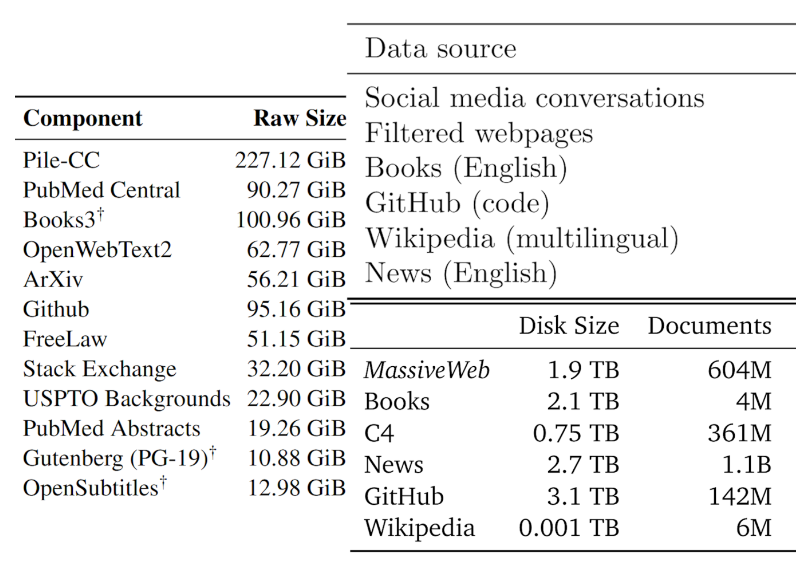
The "Large" in Large Language Model refers to the sheer number of these parameters. Models like GPT-3 have 175 billion parameters, while others have surpassed a trillion. These parameters are what hold the learned knowledge from the training data.
Strengths and Applications
The primary strength of LLMs is their versatility and fluency. They can generate text that is often indistinguishable from what a human would write. This ability makes them useful in a wide range of applications.
| Application | Example |
|---|---|
| Content Creation | Writing marketing copy, emails, or even poetry. |
| Summarization | Condensing a long article into a few key paragraphs. |
| Translation | Translating text from one language to another. |
| Question Answering | Providing direct answers to user questions. |
| Code Generation | Writing snippets of code based on a natural language description. |
The Cracks in the Armor
Despite their impressive abilities, LLMs have significant limitations. Understanding these is key to using them effectively and safely.
First, their knowledge is static. An LLM only knows about the world as it existed in its training data. It has no access to real-time information and cannot learn about events that happened after its training was completed.
Second, they can "hallucinate." This doesn't mean they're seeing things; it means they can confidently generate false or nonsensical information. Because their goal is to create plausible-sounding text, they will sometimes invent facts, sources, or details to fill in gaps in their knowledge.
Hallucination
noun
In the context of AI, the generation of information that is nonsensical or factually incorrect.
Finally, LLMs lack true understanding and reasoning. They are expert pattern matchers, but they don't possess consciousness or common sense. They can't verify the information they provide, and they can't explain why something is true. This makes it difficult to trust their outputs without external verification.
Now, let's test your understanding of these core concepts.
What is the fundamental goal of a Large Language Model during its initial pre-training phase?
The term "hallucination" in the context of LLMs refers to the model's ability to:
These limitations highlight a central challenge: how can we ground these powerful models in factual, up-to-date information? We'll explore a solution to that problem next.