Mastering Retrieval Augmented Generation
Introduction to RAG
The Open-Book Exam for AI
Large Language Models (LLMs) are like brilliant students who have memorized countless books. They can write essays, answer questions, and even code. But if you ask them to take a test, they have to rely purely on memory. Their knowledge is impressive, but it’s limited to what they were taught during their training. They can't look up new facts or double-check their work.
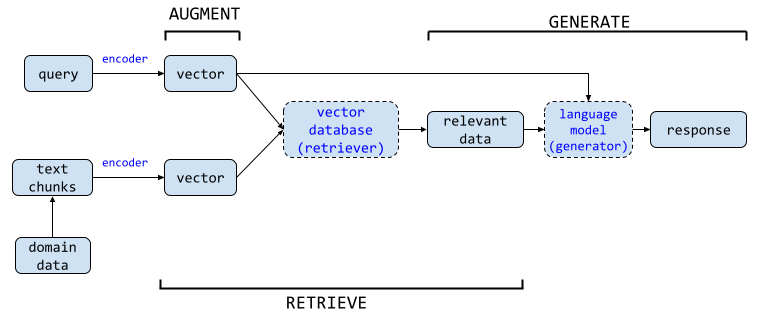
This is where Retrieval-Augmented Generation, or RAG, comes in. Think of RAG as giving the AI an open-book exam. Instead of just relying on its internal memory, the LLM can first retrieve relevant, up-to-date information from an external source, like a company's internal documents or a curated database. It then uses those retrieved facts to craft a much more accurate and relevant answer.
RAG connects a language model to an external knowledge source, allowing it to fetch and use real-time information when generating a response.
Solving Key LLM Challenges
Standalone LLMs face two major hurdles. The first is something called hallucination. This is when an AI generates plausible-sounding but completely false information. Because it's trying to predict the next most likely word, it can sometimes invent facts, sources, or figures with complete confidence.
The second problem is outdated knowledge. An LLM’s understanding of the world is frozen in time, ending when its training data was collected. It won't know about yesterday's stock market performance, the results of a recent election, or a company's latest policy update. Its knowledge gets stale.
Retrieval-Augmented Generation (RAG) is an AI framework that connects a language model to an external knowledge repository, allowing the model to fetch and include relevant information when generating an answer.
RAG tackles both of these issues directly. By grounding the model's response in specific, retrieved documents, it dramatically reduces the chance of hallucination. The answer is based on real data, not just the model's memory. It also solves the problem of stale information by connecting the LLM to live, up-to-date knowledge sources.
RAG in the Real World
The benefits of RAG make it useful in many different fields. In customer service, a chatbot powered by RAG can access a company's latest product manuals and support articles to provide accurate, helpful answers to customer questions. It doesn't have to be retrained every time a new product is released.
In healthcare, doctors and researchers can use a RAG system to query the latest medical journals and clinical trial results, getting synthesized answers based on cutting-edge research. Financial analysts can use RAG to get summaries of real-time market data and news, helping them make faster, more informed decisions.
By bridging the gap between an LLM's vast but static memory and the dynamic, specific information we need, RAG makes AI more reliable, trustworthy, and useful.
Ready to check your understanding?
What is the primary problem that Retrieval-Augmented Generation (RAG) is designed to solve for Large Language Models (LLMs)?
When an LLM generates plausible-sounding but completely false information, it is referred to as a(n) ________.