Mastering Retrieval-Augmented Generation
Introduction to RAG
Giving AI a Library Card
Large language models (LLMs) are incredibly powerful. They can write essays, generate code, and carry on conversations. But they have a major limitation: they only know what they were taught during their training. Their knowledge is frozen in time, and they can't access information from the outside world. This can lead to a problem called "hallucination."
Hallucination
noun
In AI, a confident response that is not justified by its training data. It can be nonsensical or factually incorrect.
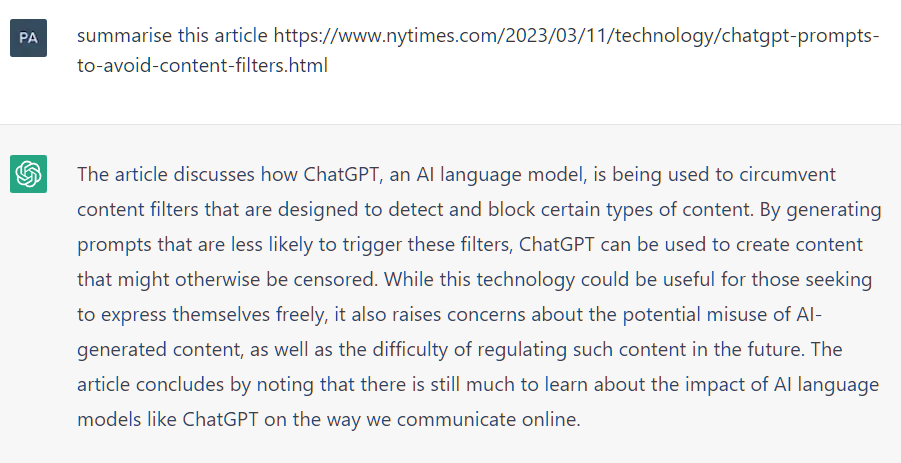
Because of this knowledge cutoff, a standard LLM can't tell you who won last night's baseball game or summarize your company's latest internal report. It might try to answer, but it would be guessing based on patterns in its training data. For applications that require accuracy and up-to-date information, this is a deal-breaker.
Enter RAG
This is where Retrieval-Augmented Generation, or RAG, comes in. Think of it as giving an LLM an open-book exam instead of a closed-book one. Instead of relying solely on its memory, the AI can look up relevant information from an external source before answering a question.
Retrieval-Augmented Generation (RAG) is an AI framework that connects a language model to an external knowledge repository, allowing the model to fetch and include relevant information when generating an answer.
RAG enhances an LLM by grounding it in facts from a specific, reliable knowledge base. This could be a collection of company documents, a legal database, a set of product manuals, or even the live internet. It allows the model to provide answers that are not only fluent and coherent but also accurate, current, and specific to a given context.
A Simple Framework
The architecture of a RAG system is straightforward. It adds a crucial step before the LLM generates a response: retrieval. When a user submits a prompt, the system doesn't immediately pass it to the language model. First, it searches the external knowledge base for information relevant to the user's query.
This retrieved information is then combined with the original prompt. This new, "augmented" prompt now contains both the user's question and the factual context needed to answer it. Finally, this detailed prompt is fed to the LLM, which uses the provided information to generate a precise and well-supported response.
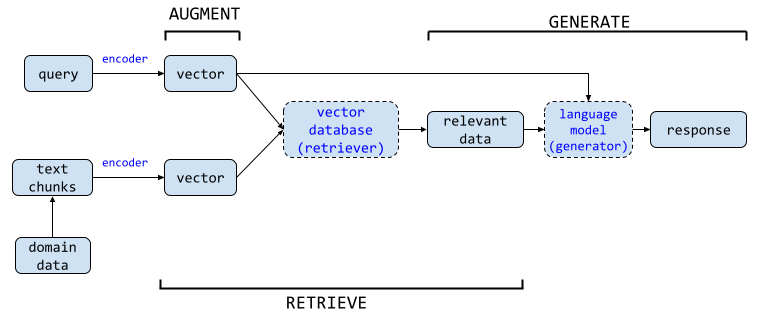
By adding this retrieval step, RAG dramatically improves the quality of the LLM's output. The benefits are significant.
| Benefit | Description |
|---|---|
| Improved Accuracy | Answers are based on verifiable facts from a knowledge source, not just the model's memory. |
| Current Information | The knowledge base can be updated continuously, giving the LLM access to real-time data. |
| Transparency | The system can cite its sources, allowing users to verify the information. |
| Reduced Hallucinations | By providing relevant context, RAG limits the model's need to guess or invent information. |
This makes RAG a foundational technology for building reliable and trustworthy AI applications, from customer support chatbots that know your company's latest policies to research assistants that can analyze the most recent scientific papers.
What is the primary limitation of standard large language models that Retrieval-Augmented Generation (RAG) is designed to address?
The passage describes RAG as giving an LLM an "open-book exam." What does this analogy signify?
In essence, RAG bridges the gap between the vast but static knowledge of LLMs and the dynamic, specific information needed for real-world tasks.