Mastering Retrieval-Augmented Generation
Introduction to Large Language Models
What Are Large Language Models?
A Large Language Model, or LLM, is a type of artificial intelligence designed to understand and generate human language. Think of it as a highly advanced autocomplete. It learns patterns, grammar, facts, and reasoning styles from the vast amount of text data it's trained on. Its core function is to predict the next word in a sequence, which allows it to perform a wide range of tasks, from answering questions and summarizing articles to writing code and translating languages.
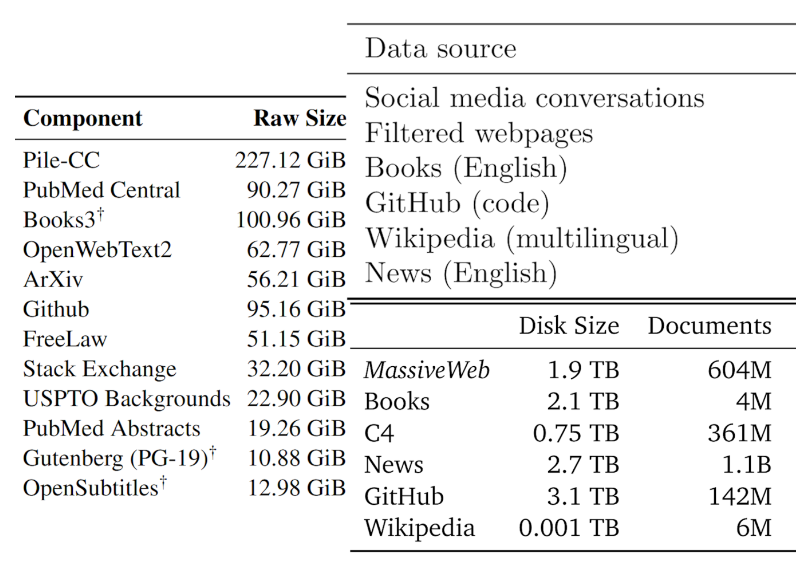
The “large” in the name refers to two things: the enormous size of the dataset it learns from (terabytes of text from the internet, books, and more) and the massive number of parameters in the model itself. A parameter is a value the model can tweak during training to improve its predictions. Modern LLMs have billions or even trillions of them, allowing for a very nuanced understanding of language.
At its heart, an LLM is a complex statistical tool that calculates the probability of which word should come next.
How an LLM Is Built
Training an LLM is like teaching a student by having them read a massive library. The model is exposed to a huge corpus of text and learns to predict the next word in a sentence. For example, if it sees “The cat sat on the ___,” it learns from countless examples that “mat” is a much more probable next word than “sky.”
This process relies on a powerful architecture called the Transformer, introduced in 2017. Before the Transformer, models struggled to keep track of context in long sentences. The key innovation of the Transformer is a mechanism called “attention.” It allows the model to weigh the importance of different words when predicting the next one. In the sentence, “The robot picked up the heavy box because it was strong,” the attention mechanism helps the model understand that “it” refers to the robot, not the box.
After this initial training, many models go through a fine-tuning phase. This often involves training on more specialized datasets or using human feedback to align the model's responses with desired behaviors, like being helpful and harmless.
Known Limitations
Despite their power, LLMs have fundamental limitations. One of the most significant is the knowledge cutoff. An LLM only knows about the world up to the point its training data ends. If a model was trained on data up to 2023, it wouldn't know who won the 2024 Super Bowl or be aware of major world events that happened after its training was complete.
This makes the model's knowledge static. It can't learn in real-time or browse the web for new information on its own.
Another critical issue is hallucination. This happens when the model generates text that is plausible and grammatically correct but factually wrong or nonsensical. Because the model's goal is to generate probable sequences of words, not to state verified facts, it can sometimes invent details, sources, or events with complete confidence.
hallucination
noun
In AI, the generation of false or nonsensical information that is presented as fact.
For example, an LLM might invent a legal case to support a fake argument or cite a scientific paper that doesn't exist. These limitations are important to understand because they highlight the challenges in using LLMs for tasks that require up-to-date, factual accuracy.
What is the primary function of the “attention” mechanism in the Transformer architecture used by LLMs?
An LLM's "knowledge cutoff" refers to its inability to access information published after its training data was collected.
These core concepts of how LLMs work and where they fall short set the stage for understanding more advanced techniques designed to overcome their weaknesses.