Mastering Remote Meetings
Understanding Remote Meeting Dynamics
The New Meeting Room
A remote meeting is any gathering where participants join from different physical locations using technology. It could be a simple phone call, but more often it involves video conferencing software that lets everyone see and hear each other in real time. These meetings can be fully remote, with every single person in a different place, or hybrid, where some people are together in a physical conference room while others join from afar.

The main goal is the same as any in-person meeting: to share information, collaborate on tasks, and make decisions. But the virtual environment changes the dynamic in important ways.
Advantages and Hurdles
Remote meetings offer incredible flexibility. They allow teams to collaborate across continents, save money on travel, and bring together diverse perspectives that would be impossible to gather in one room. This opens up opportunities for companies to hire talent from anywhere in the world.
But the convenience comes with its own set of challenges. Without being in the same room, it's easy to miss out on non-verbal cues like body language and tone of voice. This can lead to misunderstandings or a feeling of disconnection among team members.
However, remote meetings can also pose some challenges, such as technical issues, distractions, lack of engagement, and unclear expectations.
Technical glitches are another common frustration. A poor internet connection, a microphone that won't unmute, or software that suddenly crashes can bring a productive conversation to a halt. On top of that, home environments are full of distractions, from a barking dog to a sudden delivery at the door. Staying focused requires more discipline than in a traditional office setting.
Setting the Stage for Success
Two simple tools can solve most of these problems: thoughtful scheduling and a clear agenda.
When your team is spread across different time zones, finding a meeting time that works for everyone is the first hurdle. A 9 AM meeting in New York is 6 AM in California and 2 PM in London. Using a world clock or scheduling tool is essential to find an overlapping window that respects everyone's work-life balance. It's a small step that shows consideration and helps ensure everyone is alert and ready to contribute.
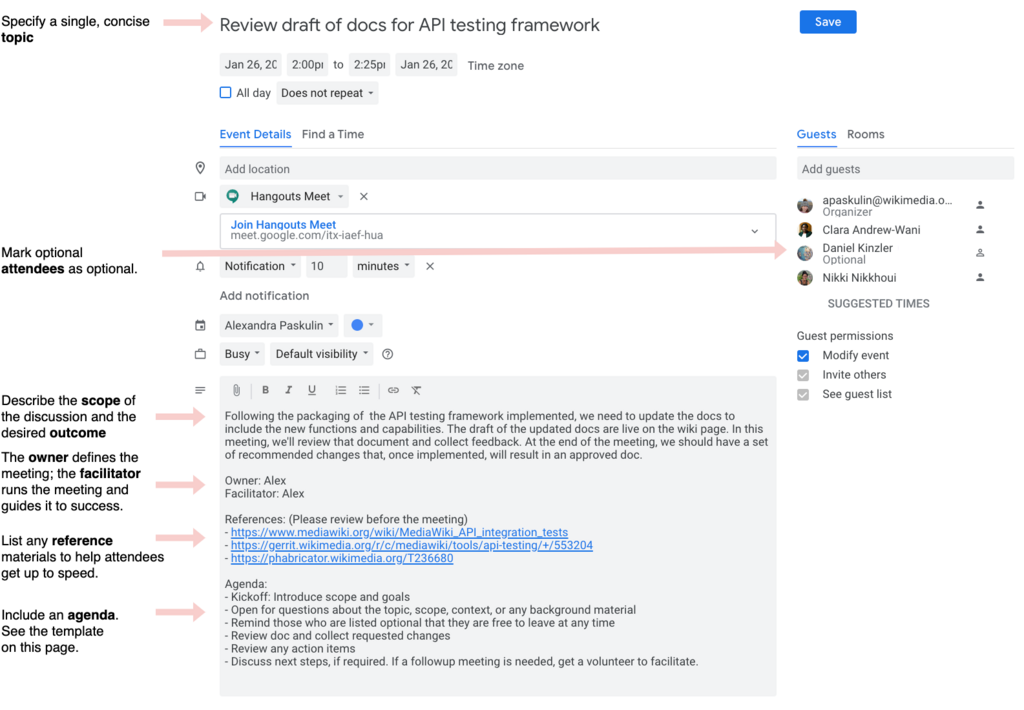
Even more critical is the agenda. A meeting without a clear purpose is often a waste of time. A good agenda doesn't just list topics; it defines the goal of the meeting. Is it for brainstorming, making a specific decision, or sharing a status update? It should also allocate a specific amount of time to each topic and note who is leading each part of the discussion.
Sharing the agenda beforehand gives everyone a chance to prepare. They can gather necessary information, think about the topics, and come ready to participate meaningfully. This simple document transforms a potentially chaotic call into a focused and productive session.
A clear agenda is the roadmap for your meeting. It tells everyone where you're going and how you plan to get there.
Ready to test your knowledge on remote meeting dynamics?
What is the primary difference between a 'hybrid' and a 'fully remote' meeting?
According to the text, which of the following is a challenge particularly prominent in remote meetings compared to in-person ones?
By understanding both the benefits and the potential pitfalls, you can start to navigate the world of virtual collaboration with confidence.