Mastering Reliable Trading Strategies
Defining Market Reliability
Reading the Market's Health
A successful trading strategy isn't just about picking the right direction. It's about trading in the right environment. A reliable market offers clear signals and allows for efficient execution, while an unreliable one is full of noise and hidden costs. The first step to professional trading is learning to tell the difference.
The foundation of a reliable market is liquidity. Think of it as the market's water pressure. High liquidity means you can buy or sell large quantities of an asset quickly without drastically changing its price. Low liquidity is like a weak trickle, where even a small order can cause a price surge or drop.
The key question is: Can I get in and out of my position at the price I expect?
The Order Book and Spreads
The most direct way to gauge liquidity is by looking at the order book. This is a live list of all the buy (bid) and sell (ask) orders for a specific instrument. A deep order book has a high volume of orders clustered around the current market price. This indicates a healthy, active market with many participants.
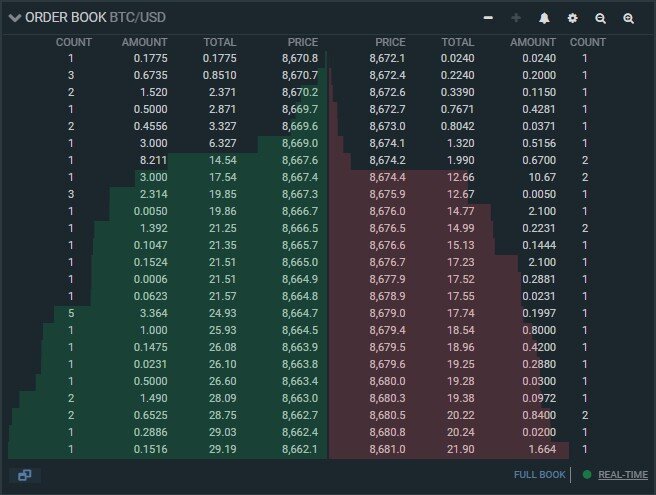
The difference between the best bid price (the highest price a buyer is willing to pay) and the best ask price (the lowest price a seller is willing to accept) is called the bid-ask spread This spread is a direct cost of trading. A narrow spread suggests high liquidity and strong competition between buyers and sellers, which is ideal. A wide spread means it costs more to enter and exit a trade, signalling lower liquidity.
| Price ($) | Bid Size (Shares) | Ask Size (Shares) | Price ($) |
|---|---|---|---|
| 100.02 | 500 | ||
| 100.01 | 800 | ||
| 100.00 | 1200 | 900 | 100.03 |
| 700 | 100.04 | ||
| 400 | 100.05 |
In the table above, the bid-ask spread is $0.03 ($100.03 - $100.00). The depth is also visible; there are 1200 shares wanted at $100.00 and 900 shares offered at $100.03, showing a decent amount of immediate liquidity.
When you place a market order in an illiquid market, you might experience slippage This happens when your order gets filled at a price different from what you expected. If you try to sell a large position in a thin market, your order might exhaust all the buy orders at the current best price and start filling at progressively lower prices. The result is a worse average price for your trade.
Slippage
noun
The difference between the expected price of a trade and the price at which the trade is actually executed.
Measuring Volatility
While liquidity tells you about the market's structure, volatility tells you about its personality. Volatility is the degree of variation of a trading price series over time. High volatility means prices are swinging wildly; low volatility means they're relatively stable. Neither is inherently good or bad—it depends on your strategy. A trend-following strategy might thrive in a volatile market, while a range-trading strategy needs stability.
A common tool for measuring this is the Average True Range (ATR). It doesn't indicate price direction, but it does measure the typical size of the price range over a given period. A rising ATR means volatility is increasing, and a falling ATR means it's decreasing. It helps in setting realistic stop-loss orders and profit targets that are adapted to the current market character.
Putting It All Together
A reliable trading instrument meets several criteria. It has high liquidity, evidenced by a deep order book and a tight bid-ask spread. This ensures you can enter and exit trades efficiently with minimal slippage. Its volatility, as measured by tools like the ATR, should also match your trading strategy's requirements.
Volume-at-price analysis, often shown as a horizontal histogram on a chart, complements this. It shows how much volume has traded at specific price levels. Areas with high volume are often significant levels of support or resistance, adding another layer of confirmation to your analysis of the market's structure.
When backtesting, factor in real-world trading elements like transaction costs, slippage, liquidity, and position sizing.
By focusing on these elements—liquidity, spreads, volatility, and volume—you move from simply guessing price direction to professionally selecting markets that offer a fair and reliable environment to execute your strategy.
Time to check your understanding of these core concepts.
What is the primary characteristic of a market with high liquidity?
A trader observes a very narrow bid-ask spread for a particular stock. What does this most likely indicate?
Selecting the right instrument is as crucial as the strategy itself. Always start by assessing the health of the market you plan to trade.