Mastering Reciprocating Compressor Sealing
Introduction to Sealing in Reciprocating Compressors
The Unseen Gatekeeper
In a reciprocating compressor, a piston moves back and forth within a cylinder to compress a gas. This simple action is the heart of countless industrial processes. But none of it would be possible without a critical, often overlooked component: the seal. The primary job of seals is to keep the high-pressure gas where it belongs, preventing it from escaping the compression chamber.
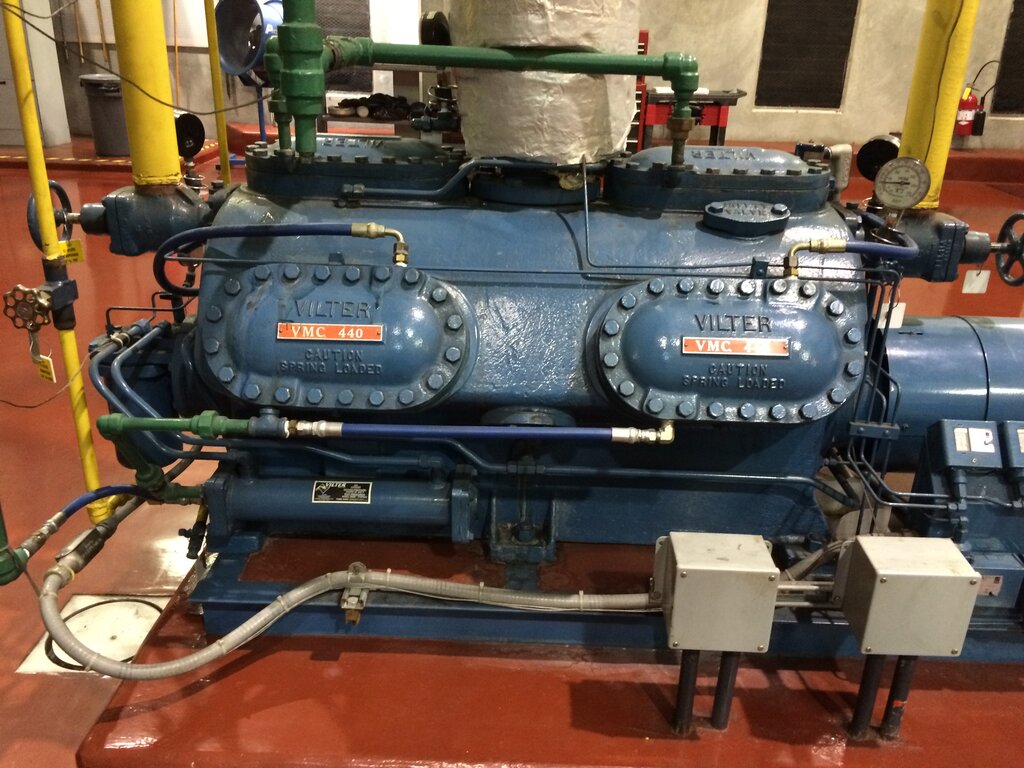
Think of it like pumping up a bicycle tire. If the pump's seal is worn, air leaks out with every push. You have to work harder, and less air actually makes it into the tire. The same principle applies to industrial compressors, but on a much larger scale. Effective sealing is directly tied to the compressor's efficiency. Even a small leak forces the machine to run longer and consume more energy to deliver the required volume of gas, driving up operational costs.
A High-Stakes Environment
Seals in a reciprocating compressor operate under extreme conditions. They must withstand high pressures, fluctuating temperatures, and the constant friction from the moving piston rod. Unlike the simple rotation in a centrifugal compressor, the back-and-forth motion here presents a unique challenge, constantly trying to pull and push the seal out of place.
There are two primary areas that need sealing. First, the piston rings create a seal between the piston and the cylinder wall, preventing gas from leaking from the high-pressure side to the low-pressure side. Second, the rod packing seals prevent gas from escaping the cylinder along the surface of the moving piston rod. This is arguably the more complex sealing challenge due to the rod's constant sliding motion.
The failure of these seals doesn't just reduce efficiency. Depending on the gas being compressed, a leak can pose serious safety hazards, such as fire or toxicity, and lead to environmental contamination.
Let's review the key terms we've discussed.
Now, check your understanding of the role seals play in compressors.
What is the primary function of seals in a reciprocating compressor?
A direct consequence of a worn or failing seal in a reciprocating compressor is a decrease in _______.
Understanding these challenges is the first step in appreciating the sophisticated engineering that goes into modern sealing systems.