Mastering Real-Time English Communication
Understanding English Sounds
The Building Blocks of Sound
The English alphabet has 26 letters, but the language has over 40 distinct sounds, called phonemes. This mismatch is why spelling can be so tricky. The letter 'a', for instance, sounds different in 'cat', 'father', and 'able'.
To master English pronunciation, you need to learn these individual sounds. They fall into three main categories: vowels, consonants, and diphthongs. Think of them as the basic ingredients you'll use to build every word.
Vowel Sounds
Vowel sounds are made with an open vocal tract. Air flows freely from the lungs, and your tongue, lips, and jaw shape the sound. There are no blockages or friction.
vowel
noun
A speech sound produced by a comparatively open configuration of the vocal tract, with vibration of the vocal cords but without audible friction.
Vowels are often grouped into 'short' and 'long' sounds. For example, the 'a' in 'cat' is a short vowel, while the 'a' in 'cake' is a long vowel. The length and sound depend on the position of your tongue and the shape of your lips.
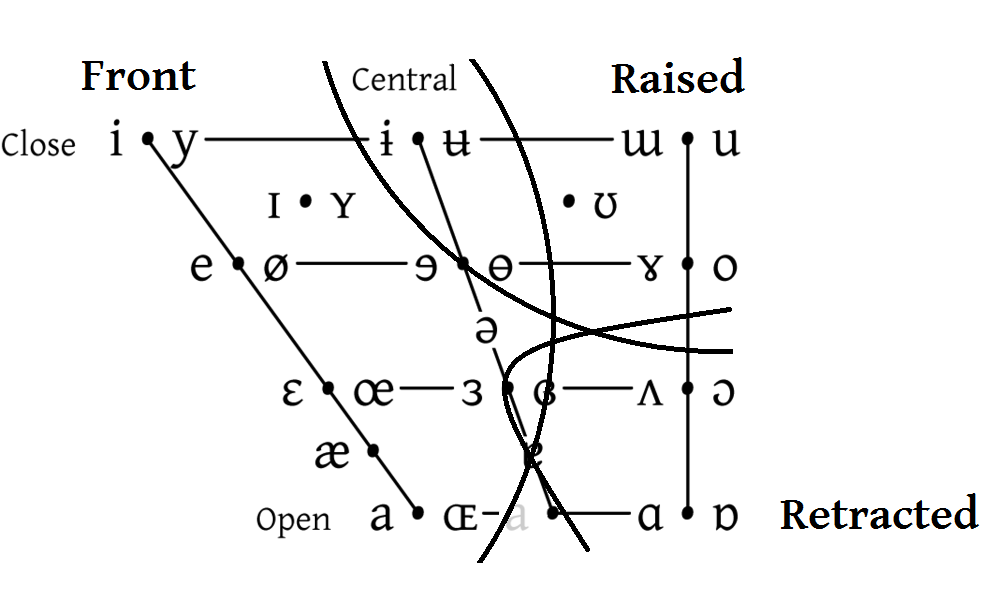
This chart shows how moving your tongue forward, backward, up, or down creates different vowel sounds. Don't worry about memorizing it. The key takeaway is that small changes in your mouth create entirely different sounds.
Consonant Sounds
Consonants are formed by partially or completely blocking the airflow with your tongue, teeth, or lips. This obstruction creates the distinct, sharp sounds of letters like 't', 'p', and 's'.
consonant
noun
A basic speech sound in which the breath is at least partly obstructed and which can be combined with a vowel to form a syllable.
A key difference among consonants is voicing. Some sounds use your vocal cords, and some don't. Place your fingers on your throat and say 'zoo'. You'll feel a vibration. That's a voiced consonant. Now say 'sue'. No vibration. That's a voiceless consonant.
Here are some voiced and voiceless pairs:
| Voiceless Sound | Example | Voiced Sound | Example |
|---|---|---|---|
| /p/ | pat | /b/ | bat |
| /t/ | tap | /d/ | dog |
| /k/ | cat | /g/ | go |
| /s/ | sip | /z/ | zip |
| /f/ | fan | /v/ | van |
Diphthongs The Vowel Glides
A diphthong is a single syllable where your mouth glides from one vowel sound to another. It feels like one smooth sound, not two separate ones.
diphthong
noun
A sound formed by the combination of two vowels in a single syllable, in which the sound begins as one vowel and moves toward another.
Think of the sound in 'boy'. It starts with an 'o' sound and glides into an 'e' sound. Other common examples include the 'ou' in 'house' and the 'a' in 'late'.
Diphthongs are like a two-for-one deal. Two vowel positions, one single, flowing sound.
Why Phonetic Symbols Help
Because English spelling is so inconsistent, linguists created the International Phonetic Alphabet (IPA) to represent each sound with a unique symbol. Learning a few of these symbols can unlock pronunciation for any word.
For example, the letter 'o' makes different sounds in 'go', 'do', 'not', and 'women'. In IPA, these are clear:
- go
- do
- not
- women
Notice how the symbol for the 'o' sound changes in each word. This system gives you a reliable guide to pronunciation that spelling alone can't provide.
Let's review the key terms from this section.
Ready to check your understanding?
Why can English spelling be inconsistent and difficult to master?
Which of the following best describes how a consonant sound is formed?
Understanding these fundamental sounds is the first major step toward clear and confident English pronunciation.