Mastering React Fundamentals
Introduction to React
What is React?
React is a popular JavaScript library for building user interfaces, or UIs. Think of it as a powerful toolkit for creating the parts of a website or app that users see and interact with. It was created by Facebook and is now used by companies big and small, from Netflix to the New York Times.
React.js: A JavaScript library for building user interfaces, it offers a component-based architecture that makes the UI construction logical and efficient.
At its core, React helps developers manage complexity. Modern web applications can be incredibly intricate, with data constantly changing. React provides a structured way to build these applications so they are both fast and easier to maintain.
Building with Components
The main idea behind React is its component-based architecture. Imagine building a complex structure with LEGO bricks instead of molding it all from a single lump of clay. Each brick is a self-contained, reusable piece. In React, these "bricks" are called components.
A component is a piece of the UI that has its own logic and appearance. A button, a search bar, or a user profile card could all be individual components. You can then combine these smaller components to build larger ones, like a navigation bar or a complete page.
This approach makes your code more organized and reusable. If you need another button, you just use the
Buttoncomponent again instead of writing the code from scratch.
This modularity makes it simple to update or change parts of your application without affecting everything else. Just swap out a brick or modify it, and the rest of the structure remains intact.
The Virtual DOM
Web browsers use something called the Document Object Model, or DOM, to represent the structure of a webpage. Think of it as a tree-like map of all the HTML elements on a page. When you want to change what's on the screen—like updating text or adding an item to a list—you have to modify this DOM.
Directly manipulating the DOM can be slow, especially in complex applications with many updates. React solves this by using a Virtual DOM.
The Virtual DOM is a lightweight copy of the real DOM that exists only in memory. Instead of changing the real DOM directly, React first updates its virtual copy.
When the state of a component changes, React creates a new Virtual DOM tree. It then compares this new tree with the previous one to figure out the most efficient way to update the real DOM. This process is called reconciliation.
React batches these changes and updates the real DOM in one go. This avoids unnecessary re-rendering of the entire page, making the application feel much faster and more responsive.
One-Way Data Flow
In React, data flows in a single direction. This is known as unidirectional data flow. Data is passed down from parent components to child components.
Think of it like a waterfall. Water flows from the top down, never the other way around. Similarly, in React, a parent component can pass data to its children, but a child component cannot directly modify the data of its parent. This makes the application's logic more predictable and easier to debug. If there's a bug, you know the problem must be in a specific component or its parent, not somewhere unrelated.
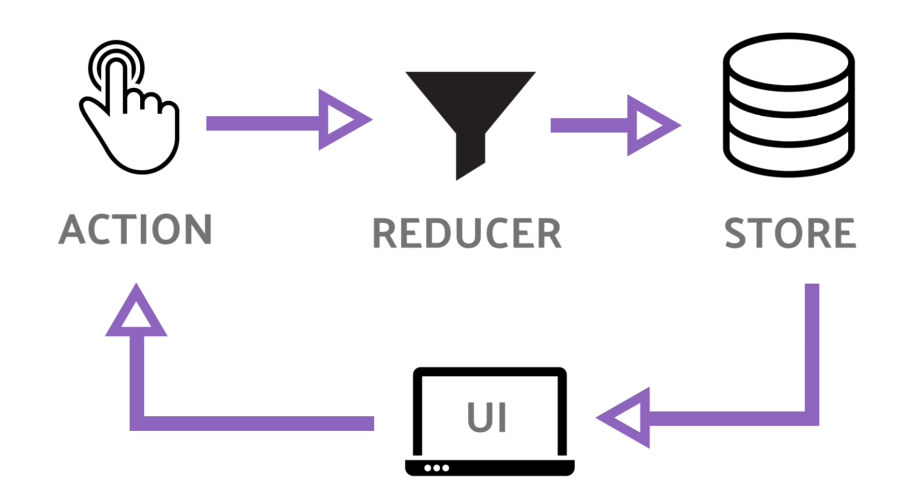
This structured approach—combining reusable components, an efficient Virtual DOM, and a predictable data flow—is what makes React a powerful tool for building modern, interactive user interfaces.
What is React primarily used for?
The core idea behind React is its component-based architecture. What is the main advantage of this approach?
Now that you've got the basics, you're ready to start exploring how to build with React.