Mastering RAG for Agents and Interviews
Introduction to RAG
Smarter AI with a Library Card
Large language models (LLMs) are powerful, but they have a fundamental limitation: they only know what they were taught during their training. Their knowledge is vast but frozen in time. This can lead to outdated answers or, worse, confident-sounding fabrications known as “hallucinations.” What if we could give an LLM a library card to look up fresh, relevant information before it answers a question?
That's the core idea behind Retrieval-Augmented Generation, or RAG. It’s a technique that enhances an LLM by connecting it to an external, up-to-date knowledge source.
Retrieval-Augmented Generation (RAG) is an AI framework that connects a language model to an external knowledge repository, allowing the model to fetch and include relevant information when generating an answer.
The Two-Step Process
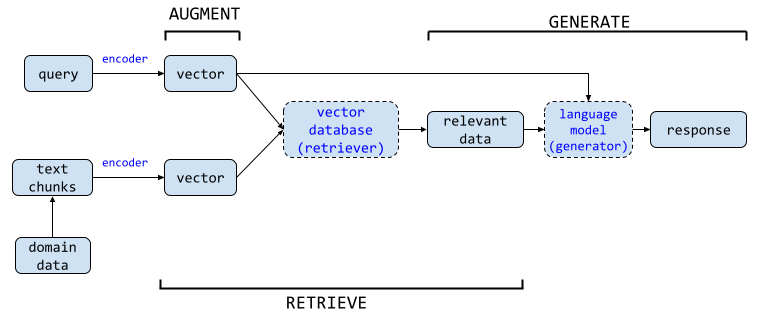
As its name suggests, RAG works in two main phases: retrieval and generation. Think of it as a research assistant working with a skilled writer.
1. Retrieval: First, the system retrieves relevant information. When you ask a question, the “retriever” component acts like a search engine. It scans a specific knowledge base—like a company's internal documents, a product manual, or a legal database—to find snippets of text that are relevant to your query.
2. Generation: Next, the LLM gets to work. It takes your original question and the information provided by the retriever. The model then synthesizes this material with its own internal knowledge to generate a comprehensive, accurate, and context-aware answer.
This process ensures the final response isn't just pulled from the LLM's static memory but is grounded in specific, timely data.
Why RAG Matters
Integrating external knowledge solves some of the biggest challenges with standard LLMs. By grounding the model in factual, specific documents, RAG dramatically reduces the chance of hallucinations. The answers are more trustworthy because they are based on verifiable data, not just the model's learned patterns.
RAG also overcomes the problem of knowledge staleness. A standard LLM's knowledge ends the day its training was completed. A RAG system, however, can be connected to constantly updated databases, ensuring its answers reflect the most current information available.
This has powerful real-world applications. Imagine a customer service chatbot that can access the latest product specs to answer questions, or a medical assistant that provides information from the newest research papers. In technical interviews, a RAG-powered tool could help an interviewer by pulling relevant questions and context from a company's own coding standards and project documentation, ensuring the interview is tailored and precise.
What is the primary purpose of Retrieval-Augmented Generation (RAG)?
The two main phases of the RAG process, in order, are ___ and ___.