Mastering Quranic Recitation and Memorization
Makharij Mastery
The Five Articulation Zones
Correct Quranic recitation isn't just about knowing the letters. It's about producing their sounds from the exact right place in the body. This science is called Makharij al-Huruf, or the articulation points of the letters. Think of your vocal tract as a musical instrument. To play it correctly, you need to know where to place your fingers. In recitation, your tongue, lips, and throat are those fingers.
There are five primary zones, or Makharij, where all Arabic sounds originate. Mastering these is the foundation for moving from basic reading to beautiful, accurate recitation.
The five zones are:
- Al-Jawf (The Empty Space): The open area in the throat and mouth. This produces the prolonged vowel sounds, like the 'aaa' in Alif (ا), 'eee' in Yā’ (ي), and 'ooo' in Wāw (و).
- Al-Halq (The Throat): Home to six distinct letters, produced without tongue or lip involvement.
- Al-Lisan (The Tongue): The busiest area, responsible for 18 letters. The sound depends on which part of the tongue touches which part of the mouth.
- Ash-Shafatayn (The Lips): Used for four letters, involving either one or both lips.
- Al-Khayshum (The Nasal Passage): Not for letters, but for the ghunnah sound, the nasalization accompanying Noon (ن) and Meem (م).
The Throat Letters
The throat, or Al-Halq, is divided into three parts, each producing a pair of letters. Getting these right is a common challenge, as some sounds don't exist in English. The key is feeling the vibration and airflow in the correct part of your throat.
| Throat Region | Letters | Description |
|---|---|---|
| Deepest Throat (Aqsa al-Halq) | ء (Hamza), ه (hā) | Produced from the lowest part of the throat, near the vocal cords. Hamza is a sharp stop, while hā is a light, airy sound. |
| Middle Throat (Wasat al-Halq) | ع (‘ayn), ح (ḥā) | The most difficult for many. ‘Ayn is a deep, constricted sound made by tightening the throat muscles. Ḥā is a sharp, breathy whisper from the same point. |
| Nearest Throat (Adna al-Halq) | غ (ghayn), خ (khā) | Produced from the top of the throat, near the back of the tongue. Ghayn is a gargling sound, while khā is a heavier, raspy sound like clearing your throat. |
To distinguish ح (ḥā) from ه (hā), place your hand in front of your mouth. For ح, you should feel a rush of hot air, almost like fogging a mirror. For ه, the air should be cool and light.
Heavy vs Light Letters
Arabic letters have personalities. Some are "heavy" (thick) and some are "light" (thin). This quality is known as tafkheem and tarqeeq (heaviness and lightness). A heavy letter, or istī'lā, is pronounced with the back of the tongue rising towards the roof of the mouth, creating a full, deep sound. A light letter, or istifāl, is pronounced with the tongue resting flat.
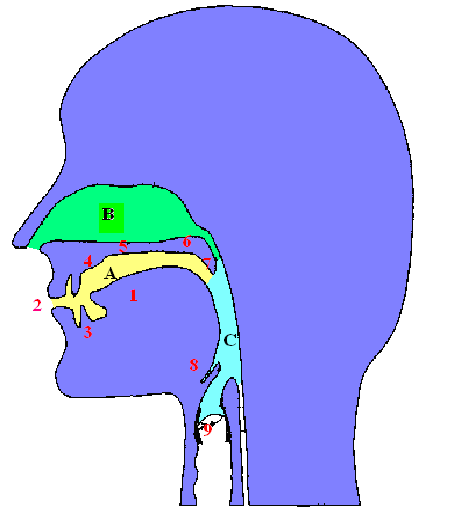
Mistaking a heavy letter for a light one, or vice versa, can change a word's meaning entirely. The seven permanent heavy letters are: خ (khā), ص (ṣād), ض (ḍād), غ (ghayn), ط (ṭā), ق (qāf), ظ (ẓā).
Pay close attention to the makharij (points of articulation) of the letters – where the sound comes from in your mouth.
Consider the difference between س (sīn) and ص (ṣād). Both are hissing 's' sounds. However, sīn is light, produced with a flat tongue and a smile. Ṣād is heavy; the back of the tongue rises, and the sound resonates deeply in the mouth. It sounds more like 'ssawd' than 'seen'.
A practical exercise for feeling this difference is to pronounce the letter while imagining your mouth is full of air for the heavy letters, and empty for the light ones. For ق (qāf), the back of your tongue touches the soft palate. For ك (kāf), which is light, it touches the hard palate slightly further forward.
Mastering the Letter Ḍād
The letter Ḍād (ض) is famously challenging. It has no equivalent in English or many other languages. It is not a 'd' sound. The correct articulation involves placing one or both sides of the tongue against the upper molars. As you pronounce it, you should feel pressure building and then releasing. It's a deep, compressive sound.
Practice Drill: Start by saying the English letter 'L'. Notice where the tip of your tongue is. Now, move the contact point back along the side of your tongue to your molars. Try to make a sound from that position. That's the starting point for a correct Ḍād.
Patience is key. Listen to expert reciters, focusing only on how they pronounce this letter. Try to mimic the sound, and if possible, record yourself to compare. Proper makhraj is a physical skill, and like any other, it requires consistent practice to develop muscle memory.
Ready to check your understanding of these articulation points?
What is the science of the articulation points of Arabic letters for Quranic recitation called?
Which articulation point is responsible for the most letters?
By focusing on these precise points of articulation, you elevate your recitation from simply reading words to honoring the sound and meaning of the Quran.