Mastering Quant Engineering
Financial Markets Overview
The Marketplace for Money
Financial markets are essentially giant marketplaces. But instead of selling fruits and vegetables, they connect people who have extra money with those who need it. Savers and investors provide capital, and companies or governments use that capital to grow, build, and innovate. This flow of money is the engine of the global economy.
These markets are split into two main types. The primary market is where new securities are born. When a company first offers shares to the public in an Initial Public Offering (IPO), that's a primary market transaction. It’s the company selling its own stock directly to investors to raise cash.
After that initial sale, the action moves to the secondary market. This is where investors trade those securities among themselves. Think of the New York Stock Exchange or Nasdaq. The company whose stock is being traded isn't directly involved in these transactions. The secondary market provides liquidity, which is just a fancy way of saying it makes it easy for investors to buy and sell their assets.
The Key Players
A functioning market needs buyers, sellers, and rule-keepers. In finance, these roles are filled by a few key groups. Understanding who they are makes the whole system much clearer.
| Participant | Role | Example |
|---|---|---|
| Issuers | They need capital and create securities to raise it. | A tech company selling stock to fund new research. |
| Investors | They provide capital by buying securities, hoping for a return. | An individual buying shares or a pension fund investing for retirement. |
| Intermediaries | They facilitate the connection between issuers and investors. | Investment banks, brokers, and stock exchanges. |
Issuers are the creators. They could be a government issuing bonds to fund a new highway or a startup selling equity to build a new app. Investors are the buyers, ranging from individuals with a retirement account to massive institutional investors like mutual funds that manage money for millions of people.
Intermediaries are the matchmakers and platform providers. Brokers execute trades on behalf of investors. Investment banks help companies structure their IPOs. Exchanges provide the physical or digital venue where trading happens.
The Products on the Shelf
Financial markets trade a wide variety of products, known as instruments or securities. While there are countless variations, they mostly fall into four main categories.
Equity
noun
A security representing an ownership interest in a corporation. Holders of equity (shareholders) are entitled to a portion of the company's profits and have a claim on its assets.
When you buy a stock, you're buying a small piece of a company. If the company does well, the value of your piece can go up. You become a part-owner, even if your stake is tiny. This is the most common form of equity.
Fixed Income
noun
An investment that provides a return in the form of fixed periodic interest payments and the eventual return of principal at maturity. The most common form is a bond.
Buying a bond is like giving a loan. A company or government borrows your money for a set period. In return, they promise to pay you periodic interest and return your original investment (the principal) when the bond "matures" or comes due. It's generally considered less risky than stocks because the payments are more predictable.
Derivatives are contracts whose value depends on, or is derived from, the price of another underlying asset. Common underlying assets include stocks, bonds, commodities, or currencies.
This might sound complicated, but the concept is straightforward. Imagine a farmer who wants to lock in a price for her wheat before it's harvested. She can enter a futures contract (a type of derivative) to sell her wheat at a specific price on a future date. The value of that contract is tied directly to the market price of wheat. Options and swaps are other common types of derivatives, often used to manage risk.
Finally, there's the foreign exchange market. This is where currencies are traded. If you've ever traveled abroad and exchanged your home currency for the local one, you've participated in the Forex market. It's crucial for international trade and investment, as it allows companies to do business in different countries.
Where Trading Happens
Securities don't just trade in the ether. The buying and selling happens in organized venues that ensure fairness and transparency.
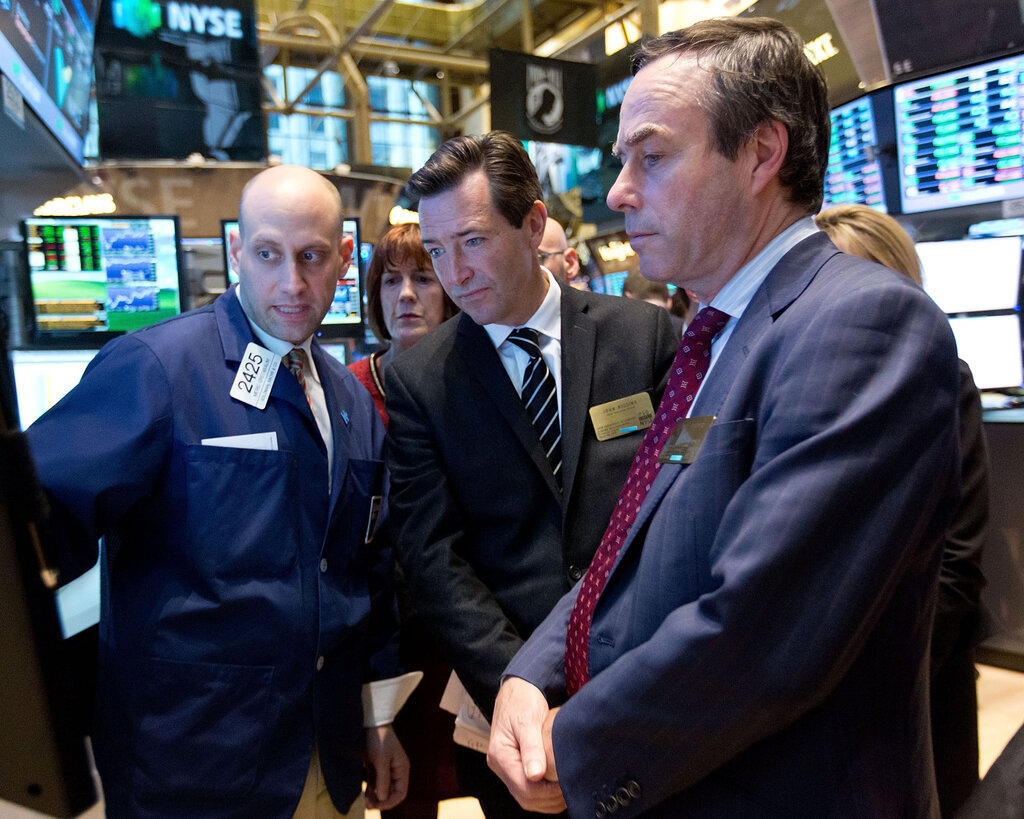
The most well-known venues are exchanges, like the NYSE or the London Stock Exchange. These are centralized locations (whether physical or electronic) where buyers and sellers come together. Trades are executed through a standardized system of bids and asks, and prices are publicly available. This centralization makes trading efficient and transparent.
Other trading occurs in over-the-counter (OTC) markets. Unlike exchanges, OTC markets are decentralized. Instead of a central hub, buyers and sellers trade directly with one another through a network of dealers. Many types of bonds and complex derivatives are traded this way. The Forex market is the largest OTC market.
Whether on an exchange or OTC, the goal is the same: to match buyers and sellers efficiently, allowing capital to move to where it can be used most productively.
What is the fundamental role of financial markets?
When a technology startup offers shares to the public for the very first time in an Initial Public Offering (IPO), in which market is this transaction taking place?