Mastering Public Speaking
Fundamentals of Public Speaking
Why Speak Up?
Public speaking is more than just talking in front of a crowd. It's a fundamental skill for sharing ideas, influencing others, and connecting with people. Whether you're presenting a project at work, giving a toast at a wedding, or arguing a point in a community meeting, clear communication is key. Mastering this skill helps build confidence that extends into all areas of your life.
Want a leg up professionally? Need a career boost? Become a better public speaker.
Being able to articulate your thoughts effectively can open doors you never thought possible. It helps you advocate for yourself, your ideas, and the causes you care about.
Know Your Audience
The single most important rule of public speaking is to know who you're talking to. A message that fascinates one group might bore another. Before you write a single word, think about your listeners.
What do they already know about your topic? What are their interests, concerns, or expectations? Are they experts or beginners? Tailoring your language, examples, and level of detail to your audience is the difference between a speech that connects and one that falls flat.

Think of it like giving directions. You wouldn't give a tourist complex backroad shortcuts. You'd provide clear, simple instructions based on major landmarks. In the same way, you need to guide your audience from their starting point of knowledge to the destination you have in mind.
Structure Your Speech
A well-structured speech is easy for the audience to follow and remember. The most timeless and effective structure is a simple one: the beginning, the middle, and the end. Every great speech, presentation, or story follows this basic pattern.
-
The Introduction: Start with a strong opening to grab your audience's attention. This could be a surprising statistic, a compelling question, or a short story. Clearly state your main message and briefly outline what you're going to cover.
-
The Body: This is the core of your speech where you present your main points. A good rule of thumb is to focus on three key ideas. Support each point with evidence, examples, or anecdotes to make your message clear and memorable.
-
The Conclusion: End with a powerful summary. Restate your main message in a new way and leave the audience with a clear takeaway or a call to action. A strong ending ensures your speech has a lasting impact.
The Power of Non-Verbal Cues
What you say is important, but how you say it can be even more powerful. Your body language, gestures, and eye contact are constantly sending messages to your audience. These non-verbal cues should reinforce your words, not contradict them.
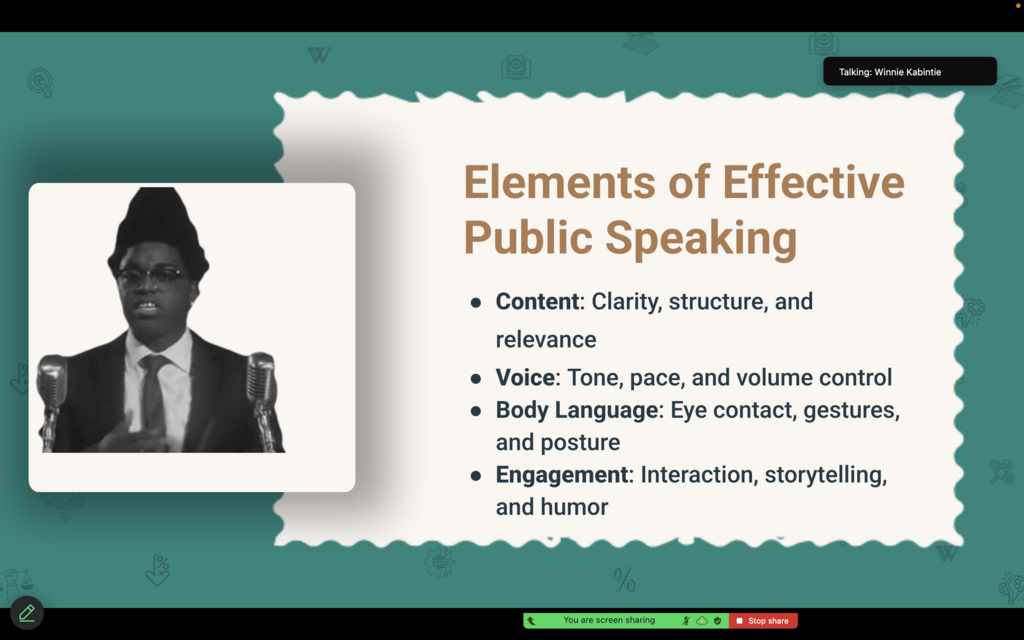
Here are a few key elements to be mindful of:
-
Eye Contact: Looking at your audience creates a connection and builds trust. Try to make eye contact with different people throughout the room, rather than staring at one spot or reading from your notes.
-
Posture: Stand up straight with your shoulders back. A confident posture signals to the audience that you believe in what you're saying.
-
Gestures: Use your hands to emphasize key points. Natural, purposeful gestures can make you appear more dynamic and engaging. Avoid fidgeting or keeping your hands locked in your pockets.
Your non-verbal communication speaks volumes. When your body language aligns with your message, your overall impact is significantly stronger.
Now, let's test your understanding of these core principles.
What is described as the single most important rule of public speaking?
A standard speech structure includes an introduction, a body, and a conclusion.
These fundamentals—understanding your audience, structuring your message, and using effective body language—are the building blocks of any successful speech. Practice them, and you'll become a more confident and effective communicator.